
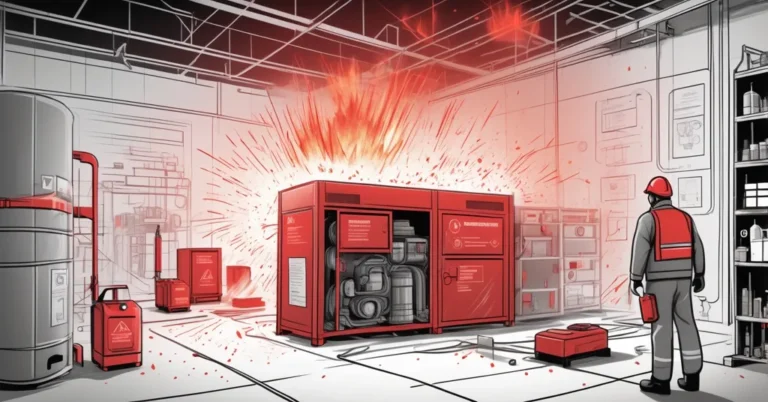
Why rechargeable batteries sometimes explode—and how to keep people and property safe
We carry a surprising amount of stored energy in our pockets: phones, laptops, power banks, e‑cigarettes and portable power stations are all packed with rechargeable batteries. Most of the time they’re safe, but when a lithium‑ion or lithium‑polymer cell fails it can fail violently—producing fires, shrapnel, molten material and toxic gases. ZDNET tracks roughly 1,500 house fires and about 5,000 overheating incidents per year linked to rechargeable batteries, with vape devices responsible for hundreds of injuries annually. Those figures make battery safety a practical risk-management priority for both households and businesses.
“Failures are uncommon, but when a lithium‑ion cell goes wrong it can release its energy suddenly and dangerously.”
Quick take: what to do right now
- Stop using any device with a swollen case, odd odor, visible damage or repeated overheating.
- Replace cheap or unbranded power banks and chargers with certified products from verified vendors.
- Avoid unattended overnight charging and do not leave charging devices in hot cars or direct sunlight.
- Ensure workplaces have a fire blanket and the correct type of extinguisher and that staff know to call emergency services immediately for battery fires.
- If you manage procurement, require vendor test reports (including UN 38.3) and certificates from accredited labs before accepting battery shipments.
Why lithium‑ion batteries fail
Three root causes account for most incidents: manufacturing defects, flawed or counterfeit designs, and physical damage or misuse. A brief primer on a key failure mode helps explain why these conditions are dangerous.
Thermal runaway — an accelerating, self‑heating reaction inside a cell — is the technical term for the cascade that turns a failing cell into a fire. It can start from an internal short (often due to contamination or a punctured separator), overcharging, excessive heat, or mechanical damage. Once thermal runaway begins, a cell can vent hot gases, ignite electrolyte, and transfer heat to adjacent cells, creating a rapid and intense fire.
Reputable manufacturers add protections: Battery Management Systems (BMS) that monitor voltage and temperature, overcharge/short‑circuit protection, and robust mechanical design. But no system is absolutely foolproof, and cheaper or counterfeit cells frequently omit one or more protections.
Everyday safety: consumers vs. businesses
Many simple habits eliminate most risk. Split into consumer and business actions, these steps are practical and immediately implementable.
Consumer actions
- Buy batteries, chargers and power banks from trusted brands and verified retailers. Beware listings with unusually low prices and missing certification information.
- Replace damaged or swollen batteries immediately. Do not continue to use a device that becomes warm to the touch during normal use.
- Avoid charging on soft surfaces (beds, sofas) that trap heat. Prefer hard, non‑flammable surfaces while charging.
- Use certified chargers and cables. Non‑certified chargers may lack current limiting or proper thermal cutoffs.
- Dispose of damaged batteries at approved recycling or hazardous‑waste facilities—do not throw them in household trash.
Business actions
- Procurement: require vendor-supplied test reports, product certificates (UL, CE where applicable) and UN 38.3 conformity for transported cells. Perform vendor audits and request chain‑of‑custody documentation.
- Storage: segregate charged and spare batteries, install temperature‑controlled storage where volumes are high, and use approved battery cabinets for large inventories.
- Charging policy: define safe charging locations, limit overnight unattended charging, and provide dedicated, ventilated charging stations with monitored power strips.
- Training: include battery hazards in safety inductions and run periodic drills that cover smoke detection, evacuation and first response for battery incidents.
- Insurance & continuity: notify insurers about significant battery inventories and include battery‑fire scenarios in business continuity planning.
If a battery catches fire: the right response
Human instincts often reach for water, but that can be the wrong tool for many battery fires. The guidance below balances household and professional response considerations.
“If a battery is burning, don’t throw water on most small lithium‑metal battery fires. Smother with a fire blanket if safe, use a rated extinguisher, evacuate, and call the fire department.”
- Do not use water on many lithium or lithium‑ion cell fires; water can react with hot cell contents or cause reignition. Use a Class D extinguisher if available, or a multi‑purpose extinguisher labeled for lithium/electrical fires where permitted by local guidance.
- Smother small device fires with a fire blanket if it is safe to do so. A fire blanket cuts off oxygen and is an effective first step for contained device fires.
- Evacuate immediately if flames spread, if smoke is heavy, or if the fire involves multiple battery packs. Toxic gases from burning electrolyte are harmful to inhale.
- Call emergency services without delay. Professional firefighters have protocols and equipment (including large‑volume water cooling for adjacent packs) to manage complex battery incidents safely.
- Seek medical attention for anyone exposed to fumes or with burns. Even brief inhalation of smoke from battery fires can require medical evaluation.
Note: in large commercial incidents involving many interconnected cells, trained firefighters may use water to cool surrounding packs and prevent escalation—another reason to involve emergency services early.
Procurement and supply‑chain rules that cut risk
For procurement teams and risk managers, a few contract and inspection controls reduce exposure immediately.
- Require vendor-supplied UN 38.3 test reports and certificates from accredited labs before accepting shipments of cells or packs intended for transport.
- Insist on third‑party certification (UL, TUV, Intertek, or equivalent) and verify certificate numbers directly with certifying bodies rather than relying on logos in product listings.
- Include acceptance testing clauses: sample incoming lots for visual defects, swelling, and perform basic electrical tests where feasible.
- Specify packaging and transport conditions (temperature limits, cushioning) and require supplier insurance for defective‑product incidents.
- Maintain an asset register for battery‑powered equipment, track warranty and recall notices, and register devices with manufacturers to receive safety updates.
Disposal, recycling and shipping considerations
Damaged or swollen batteries are hazardous waste. Most communities have designated drop‑off points or retailer take‑back programs. For businesses shipping battery cells or assemblies, UN 38.3 testing is mandatory for transported cells and many carriers have strict packing and documentation requirements—noncompliance risks both safety and regulatory fines.
How AI, IoT and automation reduce battery risk
Beyond procurement and behavioral controls, modern tech can turn reactive safety into proactive risk management. Sensors, connectivity and machine learning help spot problems earlier and automate mitigation.
- IoT monitoring: temperature, voltage, current and impedance sensors stream live data from battery packs to cloud dashboards. Early deviations trigger alerts and prevent escalation.
- Predictive maintenance: ML models trained on charge/discharge telemetry detect subtle patterns of cell degradation long before visible swelling or failure.
- Smart charging: adaptive chargers modify charge profiles to reduce stress on aging cells, lowering the chance of thermal events and extending battery life.
- Automated supplier screening: image recognition and NLP tools can flag suspicious product listings and mismatched labels on marketplaces, helping procurement avoid counterfeit parts.
- Training & response agents: AI assistants can generate role‑specific checklists, run scenario drills, and push targeted alerts to staff during an incident.
These technologies reduce incidents, limit downtime and can produce measurable savings in insurance and replacement costs. For many organizations the ROI on telemetry + predictive analytics pays for itself when scaled across large fleets of devices or battery inventories.
Common questions — quick answers
How dangerous are rechargeable batteries?
Failures are rare but can be dramatic. ZDNET reports roughly 1,500 house fires and about 5,000 overheating incidents annually linked to rechargeable batteries; vape devices contribute hundreds of injuries each year. The concentrated energy inside modern cells makes the consequences of failure severe.
Why do batteries catch fire?
Most failures trace to manufacturing defects, counterfeit or poorly designed products, and physical damage or misuse that compromises cells or their safety circuitry.
Can I spot counterfeit or dangerous batteries reliably?
Visual inspection catches a large share of problems—swelling, mismatched labels, poor fit or odd smells—but lab testing is the only way to be certain. Verify vendor certificates with issuing bodies.
What should I do with a swollen or damaged battery?
Stop using it. Place it on a non‑flammable surface away from combustible materials if safe to do so and take it to a battery recycling or hazardous‑waste facility; never dispose of it in regular trash.
Resources and next steps
A few practical next steps lower risk immediately: audit your device inventory, replace suspect chargers, enforce a no‑unattended‑charging policy, and require vendor test reports for future battery purchases. For teams managing larger fleets, consider piloting an IoT + ML monitoring stack on a subset of devices to measure early‑warning value.
Request a one‑page workplace checklist, an executive procurement brief with contract language and supplier checks, or a slide‑ready staff training deck to distribute across teams. These can be adapted for household safety programs or scaled for enterprise procurement and operations.