
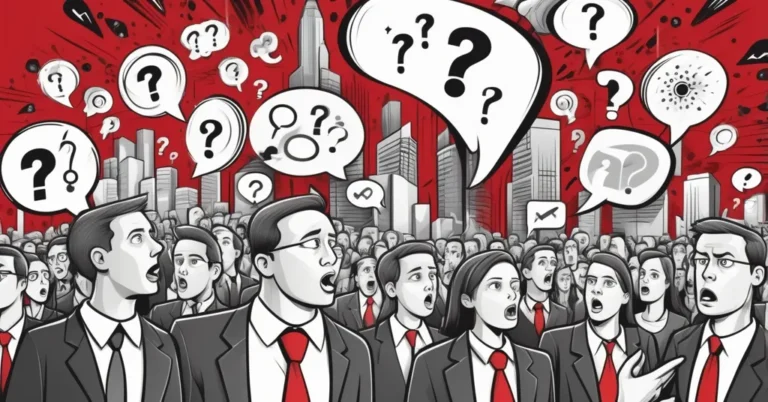
When the AI Voice Becomes the Public Voice: The Business and Political Costs of Bland AI Tone
A nonfiction author discovered multiple misattributed or fabricated quotes in a published book after relying on generative tools for research. A prize-winning short story was flagged for bearing the “hallmarks” of machine-generated prose. These are not technical curiosities — they are warning lights for editors, marketers, and leaders who treat AI for research and writing as a convenience rather than a process change.
Large language models (LLMs) like the engines behind ChatGPT are reshaping how organisations produce words at scale. But three linked effects demand attention: the flattening of individual voice into an identifiable “AI voice” or AI tone; the growth of confident but false outputs known as AI hallucinations; and the human tendency toward cognitive offloading, where tools do mental heavy lifting that people once did themselves.
What the problem looks like — three failures, three consequences
- Standardised AI voice (AI tone) — Short, hedged, vaguely friendly copy now inhabits customer support replies, press releases, social posts and opinion pages. For brands this can mean bland customer experiences and a loss of distinctiveness: fewer subscriptions, weaker loyalty and a brand that sounds like every other bot.
- AI hallucinations — Generative models can invent facts, misattribute quotes and assert false claims with confidence. For publishers and legal teams, that leads to retractions, damaged reputations and costly corrections.
- Cognitive offloading — When people let tools search, summarise or draft for them, they do less of the critical thinking and verification that used to catch errors and shape original voice. Over time that erodes skills across teams and flattens strategic insight.
(LLMs = large language models; AI hallucinations = fabricated or misleading outputs from generative models; cognitive offloading = shifting mental work onto tools.)
Why this matters for business leaders and political communicators
Words are currency in business and politics. Language carries brand identity, trust and the signals that audiences use to decide whether to buy, vote or rely on information. A steady shift toward a neutral, advertorial AI tone changes incentives:
- Marketing and customer-service automation (AI for business, AI automation) can scale cheaply, but if every interaction sounds identical the brand loses a marketable personality.
- Editors who accept AI-sourced leads without verification risk publishing confident falsehoods that go viral, costing subscriptions and trust.
- In political communication, a default hedged, centrist phrasing can shrink expressive space — rewarding minimalist messaging and allowing actors who specialise in sensationalism or disinformation to cut through the fog.
Nesrine Malik (paraphrase): “The AI voice is a tinny chant — short, declarative, advertorial, mimicking personhood without depth.”
That “tinny chant” isn’t neutral. It is a tonal default that flattens risk-taking and penalises the uneven, human work that produces memorable messaging.
Evidence and real-world risk
High-profile reporting has exposed how seductive convenience collides with error. The New York Times and other outlets have documented cases where AI-assisted research produced fabricated quotes and misattributions. Steven Rosenbaum, reporting on his experience, acknowledged that generative output can be “staggeringly wrong” yet still tempting because it’s fast and useful.
There’s also a cognitive dimension. Research into the “Google effect” (people outsource recall to search tools) showed how external tools change memory and attention; Time and other outlets have reported that using LLMs can similarly reduce active cognitive engagement during learning and problem solving. The takeaway: when systems supply polished-sounding answers, people stop exercising the mental checks that spot subtle errors and cultivate distinctive judgment.
Practical actions: an executive checklist
Leaders don’t need to choose between full rejection of AI and blind adoption. The right stance is governed integration: use the speed and scale of AI for business while protecting voice, verification and trust.
- Policy first: Require documented verification for any AI-sourced fact or quote. Example policy line: “All leads and citations suggested by AI agents must be traced to a primary source and logged before publication.”
- Verification workflow:
- Trace AI-suggested fact to a named primary source (link, page, author).
- Confirm the source directly (access the original text, contact the source where applicable).
- Editor signs off on provenance and accuracy before publication.
- Log verification steps for auditability and internal learning.
- Disclosure that means something: Tag content that relied on AI-assisted research and show what human checks were performed. Cosmetic disclosure without verification invites cynicism.
- Design guardrails: Push vendors and internal teams to surface provenance metadata, confidence scores, and mandatory source links in the UI. Introduce “uncertainty nudges” that require writers to edit and contextualise AI drafts deliberately.
- Train people, not just tools: Upskill teams in questioning model outputs, recognising hallucinations, and preserving authorial voice when using AI for ideation or first drafts.
- Measure trade-offs: Track speed gains from AI automation against error rates and brand impact metrics (mentions, retractions, churn, customer satisfaction).
Steven Rosenbaum (paraphrase): “AI output can be wildly incorrect, yet people still use it because it’s seductive and useful.”
What good looks like
Imagine a midsize newsroom that uses ChatGPT-style tools to surface investigative leads, but routes every AI-suggested claim through a two-step verification process: a reporter confirms the primary source, and an editor signs off on provenance. The result: faster reporting cycles, preserved investigative rigor, and an editorial voice that remains distinct. The newsroom publishes a short explainer tag on stories with significant AI assistance, describing what was checked. Readers get transparency; the organisation retains credibility.
Design fixes for product teams and vendors
Engineers and product leaders can make practical design choices to preserve voice and encourage verification:
- Expose provenance by default: responses must include explicit source citations and links when generated facts are asserted.
- Provide calibrated confidence scores so users see model uncertainty instead of a veneer of certainty.
- Force active editing: require an explicit human edit and a short rationale before publishing AI-generated copy.
- APIs that return provenance metadata and the prompt history so organisations can audit why a claim was generated.
Balancing benefits and risks
There are clear, measurable returns to AI for business: sales teams use AI agents to generate personalised outreach at scale, customer support benefits from automation, and creative teams accelerate brainstorms with ChatGPT. Those are real productivity wins.
The point is not to halt adoption but to manage trade-offs deliberately. Where speed matters more than nuance (simple FAQs, templated workflows), automation makes sense. Where trust, legal exposure or brand identity matter (investigative pieces, legal claims, political messaging), human-led verification must be the default.
George Bernard Shaw (paraphrase): “The real punishment for a liar is not disbelief alone but the loss of ability to trust others.”
Short playbook for leaders
- Create an AI usage policy — Define where AI agents may be used and what verification is required.
- Mandate provenance — Require source chains for factual claims generated by models.
- Log and audit — Keep an auditable trail of AI prompts, outputs and human checks.
- Measure impact — Add error-rate and trust metrics to ROI calculations for AI automation projects.
- Protect voice — Reserve authored, voice-sensitive communications for trained humans or tightly supervised human+AI workflows.
Final note — a competitive advantage
AI will remain a disruptive force in communication. Leaders who treat it as a tool requiring new processes — not a magic switch that removes human judgment — will capture both efficiency and trust. Prioritise verification, preserve authorial voice, and design systems that nudge users into active engagement. Those choices are not merely ethical; they are strategic. Organisations that commit to clear provenance, robust editorial workflows and practical AI ethics will win the reputational advantage in an era where trust is the scarcest resource.