
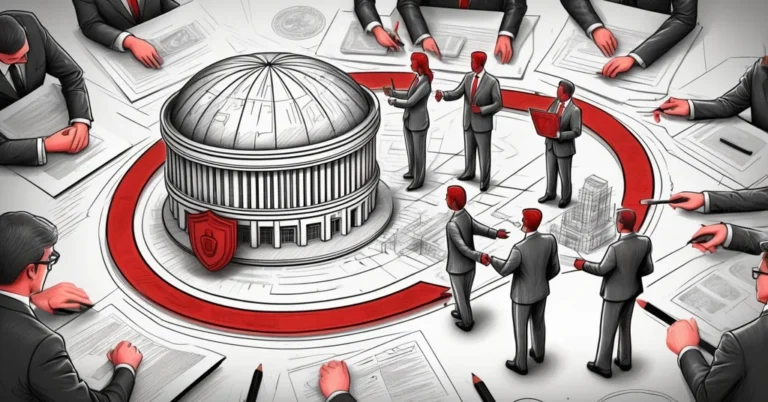
When startups meet the Pentagon: why AI for business must learn national‑security rules
TL;DR: The OpenAI–Anthropic–Pentagon episode exposes a governance gap: venture‑backed AI vendors are optimized for rapid growth, not for being trusted pieces of national‑security infrastructure. C-suite teams should treat “AI and national security” as an operational risk—add legal, procurement and supply‑chain controls now.
What happened — a short timeline
- Public Q&A on X: Sam Altman held a public Q&A on X (around 7 p.m. ET) to explain why OpenAI accepted a Pentagon contract that Anthropic had declined. Altman emphasized deference to democratic processes and public policy in several answers.
- Anthropic’s stance: Anthropic negotiated contractual limits on surveillance and automated weaponization and ultimately walked away from the DoD contract rather than accept broader use cases.
- Defense response: Defense Secretary Pete Hegseth signaled the department may label Anthropic a “supply‑chain risk” — a designation that can trigger directives to cloud, hosting and chip providers to sever ties.
- Public fallout: Employees, investors and the public reacted strongly, sparking debate about whether private companies or elected institutions should control powerful AI systems.
The institutional mismatch
A single Pentagon contract revealed a fundamental mismatch between two worlds. Startups are built for speed: rapid product cycles, open hiring, and investor‑driven growth. Legacy defense suppliers are built for continuity: long procurement cycles, cleared personnel, and institutional insulation from short‑term political swings.
That gap creates friction when the government treats AI vendors as critical infrastructure or potential supply‑chain vulnerabilities. For startups, a supply‑chain risk designation is more than reputational pain; it can cut off access to GPUs, cloud regions, or managed hosting that the business depends on.
“I very deeply believe in the democratic process,” — Sam Altman
Altman’s answer is straightforward political philosophy, but it side‑steps the operational reality: when an AI model becomes part of a defense capability, the vendor is suddenly subject to national‑security rules and expectations that go beyond consumer privacy or content policy. Startups rarely have the cleared workforces, compliance teams, or contractual patience to handle that role without structural changes.
The mechanics and consequences of a “supply‑chain risk” designation
“Supply‑chain risk designation” is jargon for a powerful administrative lever. Here’s what it can practically do to a company:
- Formal determination: The DoD (or another agency) declares a vendor a risk to national security based on technical, ownership, or policy concerns.
- Provider directives: Cloud and hardware providers can be required, pressured, or incentivized to cut or limit services—everything from managed hosting to GPU allocation.
- Operational impact: Loss of access to critical compute or storage can halt model training, degrade inference performance, block customer deployments, and interrupt revenue streams.
- Commercial ripple effects: Partners, investors, and customers may renegotiate or exit contracts. The company can face lengthy and costly remediation to regain access.
That chain of events isn’t hypothetical. Cutting off access to GPUs or a major cloud region can create days to weeks of downtime, expensive data migrations, and regulatory headaches—costs startups are often ill‑equipped to absorb.
“Even if Secretary Hegseth backs down and narrows his extremely broad threat against Anthropic, great damage has been done… Most corporations, political actors, and others will have to operate under the assumption that the logic of the tribe will now reign.” — Dean Ball
Employees, investors and the politics of trust
Political tribalism is reshaping investor networks and employee expectations. Startups now manage at least three constituencies at once: customers who want AI automation, employees demanding ethical guardrails, and governments asserting national‑security priorities. Misalign any one and the others respond—sometimes punitively.
Leaders who thought that careful PR and Congressional testimony (a la 2023 hearings) would suffice are discovering those tools are now necessary but insufficient. The debate has moved from abstract ethics to hard governance: who sets the boundaries for surveillance‑capable AI systems, and how are those boundaries enforced?
How legacy defense suppliers adapted — quick case studies
Palantir and Anduril offer contrasting reference points for startups that want defense work:
- Palantir built multi‑year contracts, invested in cleared teams, and accepted opaque procurement processes to operate inside classified environments. Its business model emphasizes long sales cycles and deep integrations with government workflows.
- Anduril focused on productizing defense‑grade hardware and software and hiring from the defense and national‑security community, accepting the slower cadence of procurement and compliance as part of the go‑to‑market strategy.
Both firms traded speed and some openness for predictability, compliance capabilities, and the institutional relationships that the DoD expects. Startups that want similar access will have to make similar tradeoffs or find novel governance models that bridge the gap.
Could startups be good partners? (A counterpoint)
Yes—if they change how they operate. A pathway exists that preserves innovation while protecting national security:
- Consortia and neutral intermediaries: Pools of vendors under shared standards can reduce single‑vendor risk.
- Escrow or air‑gapped models: Sensitive components run under stricter controls while non‑sensitive parts remain in commercial clouds.
- Independent auditors and third‑party verification: Regular, transparent audits can give governments confidence without permanently handing over control to vendors.
These approaches require investment, patience, and legal clarity—but they’re a realistic way for startups to remain relevant to both enterprise and government customers.
Boardroom AI security checklist
- 1. Add AI to the enterprise risk register: Treat national‑security exposure like cyber risk; set thresholds that trigger escalation.
- 2. Diversify infrastructure providers: Avoid single‑vendor dependencies for GPUs, storage and hosting to blunt supply‑chain leverage.
- 3. Prepare contracting playbooks: Include clauses on permitted use, indemnities, audit rights, and clear exit/remediation terms for government work.
- 4. Build a cleared/compliance lane: If you expect defense work, hire cleared personnel or partner with entities that have them.
- 5. Strengthen employee engagement: Have transparent policies and forums to discuss sensitive contracts before they become public scandals.
- 6. Run tabletop exercises: Test scenarios of deplatforming, supply‑chain directives and site‑loss to estimate downtime and recovery costs.
- 7. Engage policymakers early: Proactively share red‑team results and technical governance with regulators and standard bodies.
- 8. Insure and plan for escrow: Consider contractual escrow of models or data and specialized insurance that covers vendor decoupling risks.
Questions for your next board meeting
- Do we depend on a single cloud or GPU vendor?
No → good. Yes → plan for immediate redundancy and cost modeling for migration.
- Would our contracts survive a supply‑chain designation?
Review clauses on force majeure, regulatory interruption, and customer SLAs now.
- Are we prepared to communicate decisions on defense work to employees and customers?
Create a communications playbook that balances security, transparency and legal constraints.
Policy and standards to watch
Executives don’t need to quit to understand governance—focus on a few frameworks that will shape enforcement and procurement:
- NIST AI Risk Management Framework (AI RMF) — a technical and procedural baseline for risk assessment and mitigation that enterprises can adopt.
- DoD AI policies — procurement requirements and safety expectations specific to defense contracting.
- CFIUS and export controls — ownership, foreign nexus, and dual‑use technology rules that can trigger national‑security reviews.
- Sectoral standards — industry consortia and third‑party auditors that develop shared verification protocols for safety and non‑weaponization.
Practical next steps for C‑suite teams
Start with a rapid but thorough risk assessment. Map your dependencies (cloud, GPUs, data centers), identify contracts with national‑security exposure, and run a two‑week tabletop on the effects of a supply‑chain cut. Engage legal to review contract language around permitted use and indemnities and connect with compliance or outside counsel experienced in CFIUS and DoD procurement.
Operationally, build two lanes inside the company: one for commercial growth that retains agility, and another for any defense‑grade effort that demands cleared staff, stricter change controls, and longer sales cycles. If you can’t justify the investment in both, be explicit externally and internally about what you will—and won’t—do.
The strategic choice and what it means for AI for business
Market forces will push some vendors toward defense work and others away. Either decision is strategic and should be treated as such. For many enterprise AI vendors, being able to serve government customers is a growth vector—but only if the company prepares its governance, contracts, infrastructure and workforce to meet those expectations.
Regulatory arms of democracies will continue to flex power. That’s a feature of democratic governance, not a bug. But the tools used—supply‑chain designations, procurement rules, export controls—can be blunt. Companies that prepare will avoid being collateral damage; those that improvise will learn the hard way that the old startup playbook doesn’t translate to national‑security partnerships.
Boards and executives should treat the OpenAI–Anthropic episode not as a one‑off public drama but as a practical warning shot: AI for business is increasingly AI for national security. The governance gap is bridgeable, but it requires deliberate investment, clearer contracts, and a willingness to accept slower cadences where safety and sovereignty demand it.
Action item: Schedule an immediate AI risk tabletop with legal, IT, HR and product within 30 days and add AI national‑security exposure to the next board risk register.