
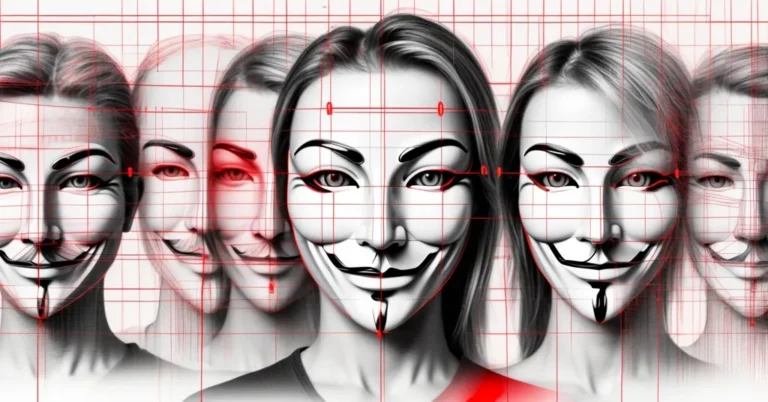
At the Perth Royal Show, three police operations ran in a crowd that had come for showbags and rides. Western Australia Police say those operations scanned 223, 749 faces, and reported 15 alerts, three arrests, and seven interactions with registered sex offenders. The Show is not a miniature of the trial. Its 15 alerts cannot be scaled up, and the full-trial totals are a different measurement. They are large enough to sound like certainty. They are not.
A marked police vehicle at a showground is not your problem. The slide is. This is how an AI performance slide gets built: a tiny error rate, a stack of outcomes that are not the same event, and a deletion promise standing in for an audit. Door-access matches, fraud flags, and account reviews get sold the same way.
Police have ended what they describe as a five-month overt trial of real-time facial recognition and withdrawn the marked vehicles (the vans used for the deployments) from public use. Deployments began on 22 June, according to an official update first published on 22 September. The concluding figures were reported on 2 November 2026. From the first reported deployment to that account is a little over four months, so “five months” is the police description of the exercise, not a span the dates themselves lock down. A precise final day has not been stated. As of the 2 November reporting, the vehicles were already off public deployment, pending an internal review.
Their tally, as police reported it: 1, 380, 882 faces scanned, 100 deployments, 43 metropolitan and regional sites, 122 arrests, officers engaged with 146 registered sex offenders, 10 people located for welfare checks, and nine incorrect alerts.
Read “faces scanned” as scan events. Police have not said they removed repeat visits. Across 100 deployments at 43 sites, the same person can pass the lens more than once. These figures are not a count of 1.38 million different people, and that makes a percentage of “all faces” even less of a portrait of the crowd.
What the cameras were actually doing
This was not a search of old footage after the fact. Cameras mounted on, or positioned near, marked police vehicles scanned faces in designated public areas and matched them against an alert list drawn from police databases. The official name of the exercise was an overt live facial recognition trial. Police say images of people who were not on the list were pixelated in real time and deleted immediately, with no record kept. An earlier official progress update described the same safeguard. It remains an official claim. Nothing independent has verified the deletion, and the claim does not say what happened to images that did match, or to alert logs, officer notes, and location data.
The 22 September update, covering deployments since 22 June, stood at 905, 117 scans, 79 arrests, and eight incorrect alerts. From that snapshot to the final totals, reported activity rose by 475, 765 scans, 43 arrests, and one incorrect alert. That is a volume comparison. It does not say how many people on the alert list passed a camera and were never flagged. Without that miss count, a low number of incorrect alerts is precision without recall. Another chart that flatters the machine.
“Arrests, ” “engaged, ” and “interactions” are different reported outcomes. They should not be added into a single success score. Across the trial, police said officers engaged with 146 registered sex offenders. At the Show, they reported seven interactions. Police have not said whether those are the same kind of encounter, what either word meant in practice, or whether the encounters were voluntary. They have not defined the circumstances behind the 10 people located for welfare checks. The categories on the alert list are not fully public either.
The 122 arrests sit alongside the scan totals. Police have not published how many of them followed a match, as distinct from arrests that happened during a deployment for some other reason. Until that link is published, the accurate verb is alongside, not led to.
The flattering denominator
A police spokesperson put the nine incorrect alerts at 0.00065% of the scans. The arithmetic is right. Nine divided by 1, 380, 882 is about that figure, if you express a handful of bad alerts as a percentage of every scan event. In plainer terms, that is about 6.5 incorrect alerts per million scans. A percentage can be correctly calculated and still be the wrong chart, especially when the denominator is passes, not people, and not alerts.
Commissioner Col Blanch has been plain that the technology was not perfect, and that police knew that before the trial. On the nine incorrect alerts, he said each one produced an interaction and questions.
“No one was arrested. No one made a complaint.”
That “no one complained” line is Blanch’s statement, not a published complaints register. Nine people were still questioned because a match was wrong. For them, the relevant rate was not 0.00065%. It was one.
Bill Rowlings, chief executive of Civil Liberties Australia, called the police figure “severely gilding the lily, ” argued the scans were done “with no reasonable suspicion whatsoever, ” and said the incorrect rate will not be known until the 122 people arrested have their day in court. His illustration (if half of the 122 were not convicted, the “incorrect” rate would be 50%) is a hypothetical, not a court result. No one has published how many of those arrests produced charges, convictions, withdrawals, or releases.
Those are not the same measurement. Police are counting incorrect alerts against every scan. That does not say what share of alerts was wrong, because the full-trial alert total has not been released, and the Show’s 15 alerts cannot stand in for it. A case can also collapse for evidentiary or procedural reasons even when the identity match was right. The nine false alerts, which police say did not lead to arrests, are a separate pile from arrests that never become convictions.
Think of it the way a board should think about an automated lead system. The stakes differ. The arithmetic mistake does not. Judging bad calls against every person who walked past the building will always make the machine look brilliant. The useful questions are narrower: of the alerts the system actually raised, how many were wrong, and of the actions staff took, how many held up?
Overt is not the same as uncontroversial
Marked vehicles and designated public areas are not a hidden camera in a doorway. That distinction matters, and it does not answer Rowlings. You can be open about a watch and still run it on people who have done nothing to attract individual suspicion.
When the trial was announced, the Office of the Information Commissioner WA said it was not involved in implementing it. Reporting around that period described the privacy commissioner as not consulted. Those are process claims, not a court finding that the trial was unlawful. Non-involvement is not a finding of unlawful surveillance.
The office warned of “collective privacy harms”: effects on the public as a group, not only on the person who is stopped. People often adjust how they speak and move if they feel watched. The commissioner warned that more deployments, a shift to covert technology, or bolting the same matching onto fixed, widespread CCTV would significantly increase those risks.
The commissioner has also said responsible biometric use can serve public safety, provided privacy risks are eliminated or mitigated and the process is transparent. That was a response to media inquiries, not a sign-off on these results. The office pointed to the Office of the Australian Information Commissioner’s community attitudes research for the view that “comfort with the use of biometric analysis remains generally low.” No survey percentages were set out with that warning. The sentence does not say whether a police operation and a camera over a shop floor draw the same reaction, and that difference is not settled here.
A law on the books, and a review that has not reported
The commissioner cited the Privacy and Responsible Information Sharing Act 2024 as the first Australian law regulating personal information in automated decision-making, including biometric technology used in law-enforcement decisions. As the commissioner described it, Information Privacy Principle 10 requires an entity that automates all or part of a decision to assess risks of bias, harm, and discrimination, and to show those risks are being addressed.
Whether that duty applied to this trial, whether WA Police completed such an assessment, and whether any requirement was missed are open questions. Police say they are reviewing on-the-ground performance, community impact, safeguards, and “whether all requirements were met.” No result of that review is public.
Critics have also raised algorithmic bias. Watchlists can echo who is already over-represented in police data, and earlier facial-recognition testing has shown higher false-match rates for some groups, including people with darker skin. This trial has not released a demographic breakdown of the nine false alerts, the alert list, or the 122 arrests. Claiming the deployment was biased, or that it was proven fair, is ahead of the evidence.
Questions worth asking before anyone calls this a win
- Does 0.00065% mean the system was almost perfectly accurate?
No. That figure is nine incorrect alerts divided by every scan event, about 6.5 incorrect alerts per million scans. Police have not said the scans were unique people. It is not the share of alerts that were wrong, and it is not a court outcome. The full alert total has not been published.
- Were the people behind the false alerts arrested?
Commissioner Col Blanch said no. He said each false alert still led to questioning, that no one was arrested, and that no one complained. The no-complaint claim is his account, not an independent audit.
- Will the 122 arrests tell us the real error rate?
Not by themselves. Court results are still unreported, and a failed prosecution is not the same thing as a false match. Those results matter. They measure a different failure from the nine incorrect alerts, and they still leave the misses uncounted.
- Did police keep a picture of everyone who walked past?
They say non-matches were pixelated and deleted immediately, with no record kept. That has not been independently verified, and it does not describe retention of matches, logs, notes, or location data.
- Was the privacy commissioner part of the design?
The Office of the Information Commissioner WA said it was not involved in implementing the trial, and reporting described the commissioner as not consulted. The office warned of collective privacy harms, including the risk that people change how they speak and move because they feel watched. That is not a legal ruling that the trial broke the law.
- Is the system still on the street?
No. The marked vehicles have been withdrawn while police review performance, community impact, and whether safeguards and requirements were met. Whether the system will be expanded, restricted, or dropped has not been announced.
- Before treating a vendor slide as a win, what should you ask?
What the denominator is, what share of alerts was wrong, what was retained on a hit, and who reviewed the system before launch. This trial has not published the alert total, the court outcomes, an independent check of deletion, or a completed safeguards review.
The vans are off the road. The evaluation is not out. Until it is, the most honest number in this trial is not 0.00065 percent. It is the distance between a scan, an alert, an arrest, and a result no one has published yet. Any leader tempted to copy the slide should measure that distance before they measure the crowd.