
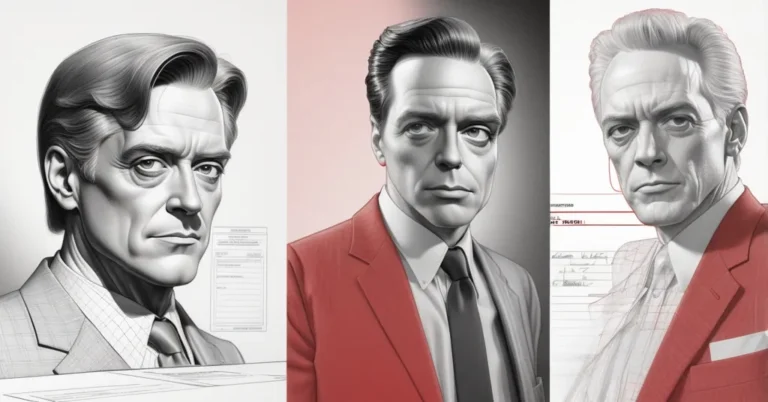
The line is almost too neat: “Don’t fear the dead, and don’t fear me.” It comes from an AI likeness of Val Kilmer in the first trailer for As Deep as the Grave, unveiled at CinemaCon in Las Vegas. Kilmer had already been cast. He never got to shoot the part. His family later said yes to a digital version of him anyway.
Set that beside Tilly Norwood, a synthetic performer with no person behind the face except the one a studio assembled, and Hollywood’s AI fight snaps into focus. These are two different contracts. Mix them up and you will get both the creative risk and the backlash wrong.
A part he already had
Kilmer died in 2025 at 65. Years earlier he had been cast in As Deep as the Grave, an indie historical drama directed by Coerte Voorhees, in the role of Father Fintan. Living actors still carry the rest of the film. The digital part sits inside an otherwise conventional production, not in place of one.
Production started in 2020 in New Mexico and stalled in the pandemic. Declining health kept Kilmer from filming. Generative AI was not the original plan. Voorhees told ABC News the team returned to the role once the technology “actually can do this properly.”
Hold that “properly.” It is a director’s claim, not a finished verdict. What the reporting establishes is the permission chain. ABC, citing Coerte and his brother, producer John Voorhees, says the estate, including Kilmer’s daughter Mercedes, approved the project, was compensated, and contributed family photographs and voice recordings. John Voorhees said they were “working with his family, ” in a manner “true to what Val wanted to do when he gave this permission, this blessing, to fulfill this character.”
The trailer character speaks. Producers say the footage shows him at more than one age, from a younger priest to a ghost-like figure, and that he is on screen for more than an hour. No release date has been announced. The deal terms are not public. Whether the face has any of Kilmer’s timing is something audiences still have to judge. A trailer is not a performance review.
One distinction matters if you are writing policy rather than a eulogy. After throat cancer, Kilmer had already used software to rebuild his voice, and ABC notes that restored voice was later used in Top Gun: Maverick. A living actor repairing his own instrument is not the same act as generating a full performance after his death. The new film sits in the second category, even where it borrows recordings from the first.
John Voorhees has also pitched the project as a model, telling ABC they are “demonstrating what we think is a good way to appropriately handle a performance like this in an ethical way.” That is a company position. The photographs and recordings were supplied. Whether the likeness was trained only on those materials is not in the public account.
This is continuity of a cast role the actor could not finish. The next premiere is something else: a worker with no person behind it.
A character booked like a colleague
The Guardian reported on 30 September 2025 that AI talent studio Xicoia unveiled Norwood at the Zurich film festival. Eline Van der Velden, who launched Xicoia, had already put out a short called AI Commissioner through Particle6, which she said was “100% AI generated.” Her defense was the craft argument: AI as “a new paintbrush, ” in the family of animation, puppetry, and CGI, “an act of imagination and craftsmanship… not unlike drawing a character.”
Emily Blunt, then starring in The Smashing Machine, heard a threat to the job, not a new brush. On a Variety podcast, reported by The Guardian, she said, “Good Lord, we’re screwed. That is really, really scary, ” and told agencies, “Come on, agencies, don’t do that. Please stop. Please stop taking away our human connection.”
The union went further than one star’s flinch. SAG-AFTRA condemned the synthetic performer and said it “is opposed to the replacement of human performers by synthetics.” The line that belongs in the contract file is this one, as The Guardian reported it:
‘Tilly Norwood’ is not an actor, it’s a character generated by a computer program that was trained on the work of countless professional performers, without permission or compensation.
The union accused the creators of “using stolen performances” and putting livelihoods at risk. Natasha Lyonne said any talent agency that engages with this “should be boycotted by all guilds, ” and called that involvement deeply misguided. She is an awkward witness for anyone who wants a simple anti-tech camp: The Guardian reports she is herself working on a feature that uses what she frames as ethical AI, and she still told agencies to stay away.
A paintbrush is not a worker
Clayton Davis, Variety’s chief awards editor, told ABC the practice in plain language. “Right now we are in the wild west of AI usage.” He drew the line people are actually arguing: AI as a tool “to make it better, not the replacement, ” versus AI as “the ultimate money saver.”
That “wild west” describes how fast the work is moving. It does not mean the rulebook is empty. The 2023 SAG-AFTRA deal already requires consent and compensation before a signatory producer uses a performer’s own digital replica. Those terms cover one person’s likeness. They do not turn a synthetic character, one the union says was built from other performers’ work without permission or pay, into a legal hire. Voorhees’s “ethical” method is not that contract either.
Van der Velden is not absurd to mention animation. Nobody sent Bugs Bunny to a talent agency and asked him to underbid a living actor. The fight starts when a character is packaged as a worker. Blunt did not yell at a cartoon. She yelled at agencies. SAG-AFTRA did not say “stop drawing.” It said this figure was built from professional work taken without permission or pay, then offered up where a performer would stand.
That is the procurement problem hiding inside the premiere. A consented completion (actor already cast, family at the table, compensation, archival voice and photographs) can be argued as continuity. A synthetic performer the union says was trained on other people’s work is a bid to skip the worker and keep the face. The legal bill and the brand bill do not land on the same ledger.
Audiences can already tell a specific person from a smoothed average. You can automate the average. You should not expect the room to treat it as a legend.
The same choice shows up in AI for business, and especially in AI for sales. An avatar of a named employee, with a release, a bounded use, and pay, is the Kilmer pattern. A generated “rep” with no rights holder is the Norwood pattern. The second demos faster. It also arrives with someone else’s union and someone else’s lawyer. Neither of these premieres comes with a box office, an audience test, or a story that made a generated lead feel necessary.
Questions worth answering before you book the face
- Did Kilmer’s estate actually approve this, or is that marketing? Approval is real, and stronger than a vague blessing. ABC reports the estate, including Mercedes Kilmer, signed on, was compensated, and supplied photographs and voice recordings. The terms are still private, and nothing public verifies that the likeness was trained only on those materials.
- Is Norwood the same kind of project with worse publicity? No. Kilmer is a deceased actor finishing a part he had been cast in, with family involvement and pay. Norwood was unveiled by a talent studio as a synthetic performer, and SAG-AFTRA says she was generated from professional work taken without permission or compensation.
- Was the backlash just Emily Blunt having a moment? Blunt’s “really, really scary” line traveled, but the institutional response was SAG-AFTRA’s. Lyonne, who is not anti-AI on principle, told agencies to stay away. The pressure point is representation, not only taste.
- Does “ethical” mean this is a standard, legal, or good? John Voorhees’s description to ABC is a producer’s view of one case, not an industry standard. Legality turns on consent, training data, and publicity rights, none of which this reporting settles, and quality is still a trailer, not a performance.
- So what should a company copy? Copy the consent trail you can document: a named person, a bounded use, compensation, and materials the rights holder had the right to give. Do not treat that paperwork as proof the model was trained only on those materials, and do not copy a launch the union says was built on everyone else’s unpaid work.
The dead, in Kilmer’s case, had a role, a payment, and a family at the table. That is what is known. Whether the likeness was trained only on the materials they supplied is not. The synthetic performer had a festival launch. If you are buying the second and describing it as the first, skip the strategy talk. You are holding a dispute that has not reached the letterhead yet.