
In April 2026 a viral clip showed a four-foot-tall humanoid in Warsaw, nicknamed Edward, chasing away wild boars while wearing a backpack and a Rolex. That footage was one of several moments that turned Unitree’s G1 into the go-to platform for public-facing robot stunts. The scene and the broader phenomenon were documented by Zeyi Yang (with Louise Matsakis credited for the newsletter edition) on August 14, 2026.
This piece explains why the G1 is winning attention, how small operators are monetizing it today, what the machines still can’t do for enterprise automation, and the procurement and regulatory risks leaders need to weigh.
Why the G1 went viral
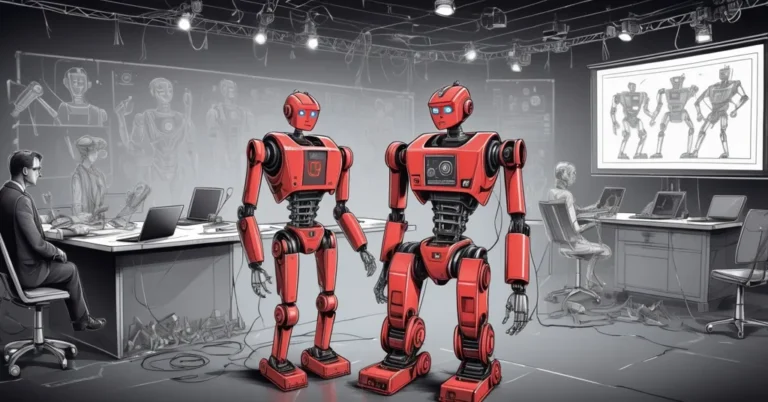
The Unitree G1 is roughly child-sized, a 40-kilogram machine with a hollowed-out face rimmed by a blue light and light-gray aluminum limbs. Unitree lists a base price of $13, 500 on its website (before tariffs, shipping, and taxes). U.S. distributors quoted the model at about $19, 000, and Unitree’s more modular U5 educational variant lists for about $66, 000 (all figures reported by Zeyi Yang). Unitree’s smaller R1 model is described as “almost one-third the base price of the G1” (Yang).
Price and availability matter. According to Yang’s reporting, Unitree shipped 5, 511 humanoids in 2025, became profitable for the first time that year, and saw 43 percent of its sales come from customers outside China. Those numbers, plus a ready-to-customize platform, made the G1 a practical canvas for creators. Wire in a conversational LLM, add costumes and scripted motions (the G1 typically ships with about 20 gestures and 15 dance moves), and teleoperate the rest to stay safe on stage or in public.
The attention metrics are stark: one Unitree-operated account, Edward Warchocki, drew more than 1 million followers and some 4 billion views across social platforms, according to Yang’s reporting. The spectacle-driven use case is simple: low unit cost, high viral potential.
“Not super intelligent, but very emotional, very easy to make friends with, ”, Bartosz Idzik
“When he started to talk, people loved him. Without talking, it’s just a 40-kilogram machine, ”, Bartosz Idzik
How operators monetize spectacle
Commercial uses tend to be entertainment and PR rather than industrial work. Operators charge appearance fees, run livestream collaborations, or rent robots for events. Zeyi Yang reports that Jake Cooperstein, a Miami-based owner/operator, charges $800, $1, 200 an hour for appearances with his “Brickell Clanker” and “Lil Clanker, ” and MERA Robotics in Poland operates a reported fleet of about 20 humanoids for events and PR work (Yang).
Quick back-of-envelope math helps explain the appeal. At $1, 000 an hour, 20 paid hours a month generates roughly $20, 000 in gross revenue. That can cover a $13, 500, $20, 000 unit in a handful of months before operating costs, depending on usage and local expenses. That makes a G1 an attractive marketing and entertainment asset for small operators, even if it’s not yet an automation platform that replaces paid labor.
Why they’re not enterprise automation (yet)
There’s a clear distinction between being viral-ready and being reliably useful for work. Operators commonly teleoperate the G1 most of the time because current off-the-shelf humanoids still struggle with safe, autonomous operation in crowded, unpredictable environments (reported by Yang). Integrating an LLM gives a robot conversational ability, but it doesn’t solve the hard physical problems.
Key technical gaps:
- Perception: Reliable, real-time sensing in crowds and variable lighting remains brittle compared with human perception.
- Manipulation: Base G1 units lack dextrous hands, and adding high-quality manipulators increases cost and integration complexity.
- Safety decision-making: Predictive collision avoidance and human-aware motion planning are still active research problems for general public settings.
- Durability and serviceability: Long-term field reliability, spare-parts logistics, and MTBF data are thin for new consumer-deployed humanoids.
Typical operator architectures reflect these limits. A cloud or local LLM provides conversational text and voice. A human teleoperator controls motion and critical actions. Onboard sensors and simple watchdogs enforce collision avoidance. That hybrid mode, avatar plus human-in-the-loop, is what’s powering today’s influencer stunts, not fully autonomous task execution.
Regulation and geopolitical headwinds
Regulatory shifts are an additional constraint. In July 2026 the U.S. Federal Communications Commission announced restrictions affecting new Chinese-made humanoid robots, creating uncertainty for future certifications and sales in the U.S. Models that previously cleared approvals, such as the G1 and R1, may remain usable under existing certifications, but the policy change complicates procurement and after‑market support for U.S.-based buyers (reported by Yang and the FCC announcement).
That regulatory layer amplifies supply-chain risk. Even if a platform is inexpensive and compelling for marketing, future parts, replacements, or next-generation models could be harder to source for operators and enterprises in affected jurisdictions.
What leaders should do, an actionable checklist
- Start with PR and customer engagement pilots, not labor replacement. Use humanoids where teleoperation is acceptable: appearances, experiential marketing, livestreams, and trade-show attractions.
- Define clear KPIs up front. Track gross revenue per event, paid-hours per month, engagement lift (views/mentions), and operational uptime. Use short pilot windows (60-90 days) with go/no-go milestones.
- Require vendor operational metrics. Insist on MTBF estimates, spare-parts lead times, documented warranty and repair SLAs, and field-failure case studies before committing budget.
- Design risk controls for public deployment. Maintain teleoperation as the default for public interactions, secure insurance and permits, and publish operator protocols for safety and liability management.
- Plan for geopolitical and supply risk. Assume parts or future models may be subject to export or certification limits, and keep contingency budgets and alternative suppliers in your procurement plan.
- Separate brand pilots from core automation decisions. If a humanoid pilot succeeds as marketing, don’t conflate that with readiness for logistics, assembly, or care. Those require separate tech and operational validations.
Next step for executives: run a 60-90 day PR pilot with defined revenue and engagement KPIs, a vendor SLA that includes MTBF and repair timelines, documented safety protocols, and a budget line for spare parts and support.
Near-term bets and open questions
Humanoid influencers are a genuine commercial niche today. They create attention, enable paid appearances, and let small operators monetize novelty. Unitree’s 2025 traction (5, 511 shipped, first-time profitability, 43 percent international sales) signals scale, not necessarily enterprise readiness (Yang).
Open questions remain. How reliable will these machines be in sustained, non-staged commercial roles? Can manufacturers integrate robust dexterous manipulation, perception, and certified safety systems at a reasonable price point? And how will regulations, particularly export, certification, and communications restrictions, shape the market over the next 12-24 months? Those are the items to watch before treating humanoids as anything more than marketing and experience tools.
Key takeaways, questions you might be asking
- Are Unitree G1s a viable tool for marketing and events?
Yes. Low unit price, easy customization, and viral potential make the G1 attractive for PR, livestream collaborations, and paid appearances; operators report charging $800, $1, 200 per hour for some gigs (Zeyi Yang).
- Can these robots replace human labor in industrial or service roles today?
No. Most owners teleoperate G1s for safety, and the base model lacks dextrous hands, durable field track records, and the autonomy stack required for consistent commercial labor performance (Yang).
- Is Unitree a financially credible supplier?
Unitree reported shipping 5, 511 humanoids in 2025, achieving profitability for the first time that year, and planning a Chinese stock-market listing shortly after the August 14, 2026 report, signs of commercial scale but not a substitute for detailed supplier due diligence (Yang).
- Will U.S. businesses be able to keep buying these robots?
The FCC announced restrictions in July 2026 that affect new Chinese-made humanoid robots; models with existing approvals may remain usable, but future certifications and sales are uncertain and carry regulatory risk (FCC, Yang).