
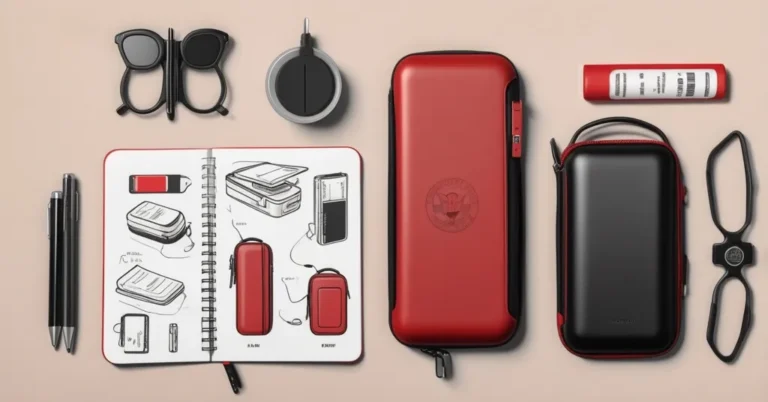
Twelve South Power Capsule review: A MagSafe power bank built for travel and pockets
TL;DR: Twelve South’s Power Capsule is a stylish, pocketable MagSafe power bank designed for short trips and daily top-ups — pick the 5,000mAh for the thinnest carry or the 10,000mAh for more real-world charges.
At-a-glance specs
- Models / price: 5,000mAh — $49; 10,000mAh — $59 (small $10 gap)
- Wireless: Qi2 wireless charging up to 15W (Qi2 = newer MagSafe-friendly charging spec)
- Attachment: MagSafe-compatible (iPhone 12 and later); Pixel 10 supported via PixelSnap magnetic alignment
- Ports: single USB-C (bottom) with pass-through charging — it can charge itself and your phone at the same time
- Dimensions & weight: ~98 mm × 70.5 mm × 15 mm (3.85″ × 2.78″ × 0.6″); ~123 g (0.27 lb)
- Finish: cactus-leather textile in Dune or Slate with a geometric pattern
- Air travel: ~18.5 Wh (5,000mAh) and ~37 Wh (10,000mAh) — under the typical 100 Wh carry-on limit
Quick verdict
“Twelve South makes low-key, sophisticated chargers that do one thing well: deliver premium, everyday power.”
Its chief promise is convenient top-up power in a package that actually looks like it belongs next to a flagship phone. It’s not a rugged outdoor battery or a multi-device workstation, but it excels at commuter pockets, client dinners, and short business trips where presentation and pocketability matter.
Design & build
The Power Capsule leans hard into materials and minimalism. The cactus-leather textile outer, subtle patterning, and slim profile feel deliberate — this is an accessory for a suit jacket or briefcase, not a backpack full of gear. The magnetic alignment is strong and keeps the charger visually discreet when attached.
That aesthetic focus creates trade-offs: only one USB-C port, no heavy-duty casing, and a connection that’s optimized for flat, stationary use rather than being tossed in a shoulder bag and forgotten.
Real-world performance & testing
Used with an iPhone 13 across a busy two-day stretch, the 5,000mAh model provided about one full charge and a few top-ups — enough to keep the phone usable through meetings and a late flight. Wireless charging is inherently less efficient than wired, so expect roughly 10–20% energy loss between the battery and device.
Estimated refill speed: a substantial top-up (e.g., 30% → ~90%) will typically take under two hours wirelessly depending on phone model and case. That’s an estimate — wired charging via the USB-C port will be faster if you need speed.
Magnet hold is solid for desk and light movement, but heavy motion (jostling in and out of pockets, active transit) can occasionally unseat the bank and interrupt charging. Thicker or reinforced cases — and any metal plates or pop-sockets — will increase the chance of misalignment.
Charging, ports & compatibility
- Qi2 explained: Qi2 is the updated wireless spec that aligns MagSafe-like magnets with higher-power charging (up to 15W on compatible phones).
- Pixel support: Pixel 10 compatibility comes via PixelSnap magnet alignment, widening usefulness beyond iPhone users.
- Pass-through: Plug one cable into the Power Capsule and it can charge itself while wirelessly topping your phone — handy at plug-scarce airports.
- USB-C limitations: There’s only one port, so simultaneous wired charging of multiple gadgets isn’t possible. If you rely on powering several devices at once, look elsewhere.
Pros & cons
- Pros: Premium materials and finish; very pocket-friendly; MagSafe and PixelSnap compatibility; Qi2 15W wireless; good value for a design-forward accessory.
- Cons: Not rugged; magnetic hold can lose contact during vigorous movement; single USB-C port limits multi-device use; wireless efficiency means fewer full cycles than nominal capacity suggests.
Who should buy — and who should skip
Who should buy:
Professionals and travelers who prioritize thinness, presentation, and convenient top-ups during a day away from outlets. Choose 5,000mAh for the slimmest carry; choose 10,000mAh if you occasionally need extra cycles and the $10 premium is worth it.
Who should skip:
Anyone needing a rugged, multi-device powerhouse for multi-day off-grid trips. For heavy users, wired high-capacity banks (20,000–30,000mAh+) or multi-port power stations remain better bets.
Alternatives to consider
- Apple MagSafe Battery Pack: Tight iPhone integration and smooth OS behavior, but typically pricier for similar capacity and less cross-platform support.
- Anker / Mophie MagSafe-compatible banks: Often offer higher capacity or additional ports at the expense of a chunkier profile and less premium finish.
- Low-cost clones: Cheaper options exist, but they frequently skimp on magnet strength, materials, alignment reliability, and long-term durability.
Price perspective
The $10 difference between the 5,000mAh and 10,000mAh models nudges many buyers toward the larger unit, since the added capacity buys real convenience without a major weight penalty. Still, the 5k model’s thinner profile is deliberately designed for pocketability and formal settings; choose based on which compromise matters more.
FAQ
Will it work with non-MagSafe phones?
It will wirelessly charge any Qi-compatible phone if the magnets can align the coil — but alignment and efficiency are best with MagSafe-compatible devices. Non-magnetic phones may not stay aligned reliably.
How thick can my case be before wireless charging fails?
Thicker cases, metal inserts, or glued accessories increase the chance of interruptions. Thin silicone, leather, and most fabric cases usually work fine; anything beyond ~3–4 mm or with metal is risky.
Is it allowed on planes?
Yes. Both models are under 100 Wh (5k ≈ 18.5 Wh; 10k ≈ 37 Wh), which meets standard airline carry-on limits. Check airline rules before travel.
What about warranty and support?
Warranty details vary by retailer and region; check Twelve South’s site or your vendor for return and warranty terms before purchase.
Final recommendation
For executives and product leaders who need dependable top-ups without sacrificing style, the Twelve South Power Capsule delivers. It’s a MagSafe power bank that favors presentation and everyday convenience over brute capacity. Buy the 5,000mAh for maximum pocketability; choose the 10,000mAh if you want a few extra charges and the $10 difference fits your budget. If your workflow requires rugged gear or simultaneous multi-device charging, look to larger, more utilitarian portable chargers instead.