
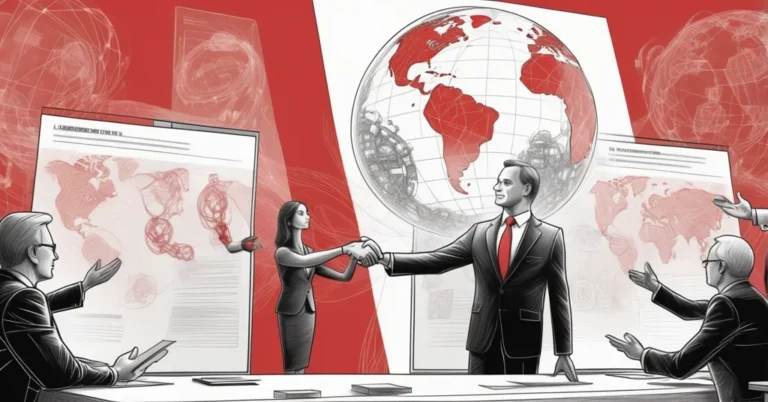
Tim Cook’s new diplomatic role and what the AI backlash means for corporate strategy
Tim Cook will step down as Apple’s CEO on 1 September and move into an executive chair role focused on global policy and government engagement, while John Ternus — the company’s long‑time head of hardware engineering — becomes CEO. Cook’s line, “I love Apple with all of my being,” hints at continuity. The change also formalizes something most observers already felt: Cook has acted as the industry’s chief diplomat for years, quietly negotiating trade rows, tariff exemptions and manufacturing pivots.
“the technology industry’s leading diplomat.” — The New York Times
What changed at Apple — and why the timing matters
Cook’s move formalizes a trend: corporate leadership is expanding beyond product and profit to include geopolitics, supply‑chain resilience and public policy. Apple is deep in global manufacturing shifts — securing exemptions for iPhone tariffs, moving some production to Vietnam and India, and juggling a fraught relationship with China. Naming an executive chair dedicated to diplomacy signals that product roadmaps now run on a mix of silicon, policy and geopolitics.
John Ternus brings hardware and operations experience at a time when compute needs are rising and the physical infrastructure for AI is a strategic asset. For other enterprises, the lesson is straightforward: leadership roles and board conversations must reflect not only technology strategy but also geopolitical and civic risk.
Why it matters now: a sharpening AI backlash
Public attitudes toward AI have cooled. Surveys from multiple polling organizations show growing worry about job disruption, creators’ rights, and the environmental costs of large compute projects. That worry has translated into visible flashpoints:
- On 10 April, a Molotov cocktail was thrown at the San Francisco home of OpenAI CEO Sam Altman; authorities arrested a suspect who reportedly carried an anti‑AI manifesto and allegedly attempted to access OpenAI’s offices. Altman publicly urged de‑escalation and shared a family photo after the incident.
- Local protests and direct actions have disrupted or delayed data‑centre projects in parts of the United States, where communities cite water, power and land use concerns.
- Reporting has linked strikes and attacks on cloud and data‑centre infrastructure to regional conflicts, underscoring that data centres have become strategic—even tactical—targets in geopolitical contests.
These incidents remain a small number compared with the scale of global AI deployment, but they matter because they change risk calculations. Physical infrastructure and executive safety are now part of the attack surface for technology companies, not just cybersecurity teams.
Policy turbulence adds to the mix. A short, emergency 10‑day extension of FISA Section 702 — a U.S. surveillance law that governs government access to foreigners’ communications and affects corporate compliance and data‑handling — passed after a chaotic round of votes in Congress. Representative Jim McGovern encapsulated lawmakers’ exasperation:
“Are you kidding me? Who the hell is running this place?” — Jim McGovern
Regulatory instability like this increases the need for legal scenario planning. Export controls, data‑localization laws, the EU AI Act and rapidly shifting domestic surveillance rules all affect where and how companies can operate AI systems.
Business implications for AI automation and AI for business
For executives, the strategic picture has three overlapping dimensions: operational resilience, reputational risk, and regulatory exposure. Each translates into concrete business decisions when deploying AI automation or launching AI for sales and customer experiences.
- Operational resilience: AI workloads are hardware‑heavy. Securing power, cooling, and multi‑region redundancy is as important as model accuracy. Vendor diversification and multi‑cloud strategies reduce single‑point failure risks.
- Reputational risk: Using artists’ work or private data for training can trigger public backlash and litigation. Transparent data‑licensing, revenue‑share pilots, and provenance tracking reduce the chance of reputational shocks.
- Regulatory exposure: Sudden legal changes (surveillance law renewals, export rules) can disrupt cross‑border services. Scenario planning and legal runbooks should be part of any AI rollout.
There’s a counterpoint worth stating plainly: the technology boom has delivered real business value. AI automation can cut operating costs, improve sales conversion, and speed decision‑making. But value capture requires layering governance and community strategy on top of technical capability. Without those layers, growth creates vulnerabilities rather than advantages.
Practical playbook for boards and C‑suite leaders
Prioritize actions across 30‑, 90‑ and 180‑day horizons. Each item includes a rough effort and time estimate to help allocate attention.
-
Security and executive protection — Medium effort, 30–90 days.
Update physical security runbooks for senior leaders and critical facilities. Include protocols for protests, targeted threats and evacuation. Combine physical security with digital incident response for coordinated drills.
-
Data‑centre siting and community agreements — Medium to high effort, 90–180 days.
Negotiate community benefit agreements, invest in visible local renewable power projects, and publish water‑use and emissions plans. Community buy‑in reduces delay risk and reputational drag.
-
Data licensing and creator partnerships — Medium effort, 90 days.
Pilot licensing or revenue‑share models with creative partners. Implement metadata and provenance layers so training sets can be audited. Public pilots signal good faith and lower litigation risk.
-
Legal scenario planning — Low to medium effort, 30–90 days.
Create legal runbooks for likely regulatory moves (export controls, surveillance law changes, AI‑specific rules). Map where data flows cross jurisdictions and prioritize remediation steps.
-
Multi‑cloud and vendor diversification — Medium effort, 90–180 days.
Design redundancy for critical models and data. Avoid vendor lock‑in that leaves you exposed to geopolitical or regional outages.
-
Communications and stakeholder engagement — Low effort, ongoing.
Build a public narrative around your AI use: what data you use, how you compensate creators, and how you steward environmental impacts. Train spokespeople for difficult conversations.
-
Governance for AI agents — Medium effort, 90 days.
As enterprises deploy AI agents (autonomous systems that execute tasks), define authorization boundaries, monitoring, and kill switches. Agents multiply the attack surface and decision velocity—govern them accordingly.
-
Board‑level scenario workshop — Low effort, 30 days.
Hold a facilitated session to walk through a data‑centre outage, a targeted protest, and a regulatory shock. Assign owners and timelines for mitigation actions.
AI for sales: a short checklist
- Verify data provenance for customer and prospect models.
- Publish clear customer‑facing explanations for AI‑driven recommendations.
- Establish an escalation path for model errors affecting customers.
- Get legal signoff on cross‑border data use and marketing compliance.
One short example (how this plays out)
A national retailer paused an AI‑driven dynamic pricing rollout after local suppliers raised concerns that their sales data was feeding models without clear consent. The pause gave the company time to pilot a licensing framework with key vendors, publish an overview of the data used, and add customer opt‑outs. The rollout resumed with new governance and a modest revenue‑share agreement for suppliers — a small upfront cost that reduced reputational and legal risk.
Executive checklist — one screen, immediate actions
- Update physical and digital incident runbooks (30 days).
- Schedule a board AI governance workshop (30 days).
- Audit data provenance for commercial AI systems (60 days).
- Begin community engagement for any planned data‑centre expansions (60–180 days).
- Draft legal scenarios for imminent regulatory changes (30–90 days).
- Implement multi‑region redundancy for mission‑critical models (90–180 days).
Cook’s new role at Apple is a reminder that technology leadership increasingly requires diplomatic competence. The sharper AI backlash — from protests to isolated violent incidents and heightened regulatory churn — does not negate the commercial upside of AI. It does, however, change the playbook. Boards and executives must treat AI automation and AI for business as cross‑functional transformations that require security, legal foresight, and community legitimacy alongside technical investment.
Takeaway:
build the diplomacy and the contingency plans before you scale. Schedule the workshop, update the runbooks, and make data licensing a first‑class business conversation — then let the AI deliver the productivity gains with fewer surprises.