
Terahertz Test for Quantum Brain Signals: What AI Leaders Need to Know
TL;DR
- Researchers led by physicist Hicham Gassab have proposed using terahertz imaging to look for tiny, synchronized quantum oscillations inside neuronal microtubules—an experiment that could challenge assumptions about consciousness and inform long‑term AI strategy.
- Supporters point to a 2024 Wellesley rat anesthesia study as suggestive evidence that consciousness may not be purely classical; the terahertz approach aims to produce a direct signature.
- Results over the next ~18 months could strengthen quantum‑biology claims or reinforce classical, network‑level models—both outcomes matter for R&D, ethics, and neurotech investment.
- Near term: continue funding AI automation and GPU‑driven products; set a small strategic watch budget for quantum biology and neurotech signals.
The experiment, in plain language
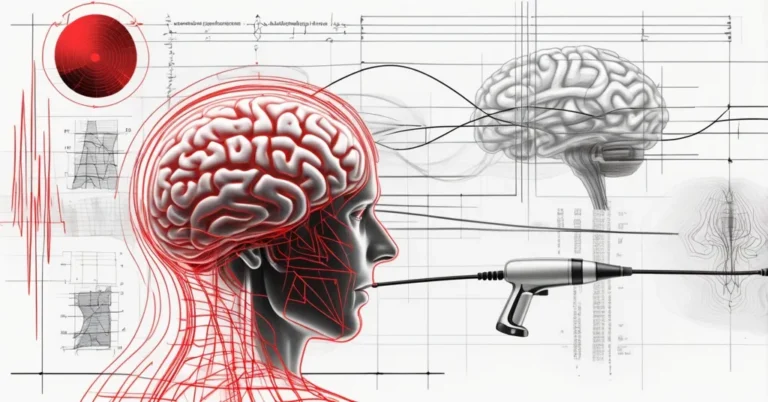
Researchers propose to scan brain tissue with terahertz imaging to detect extremely fast electromagnetic patterns that would look like synchronized oscillations inside microtubules—think of microtubules as tiny tuning forks inside neurons that, in some theories, vibrate together in ways that matter for experience. The lead proposal credits work by physicist Hicham Gassab and colleagues and builds on a line of hypotheses that date back to Penrose and Hameroff.
“Researchers including physicist Hicham Gassab proposed terahertz imaging to detect coherent quantum vibrations inside brain microtubules.”
Terahertz imaging measures electromagnetic waves faster than microwaves but slower than visible light. Practically, the device seeks specific spectral and phase relationships that would indicate coherence—a signature commonly used in physics to identify synchronized quantum behavior. If these signatures are present in living neural tissue, they would be unexpected under standard ‘classical’ models of brain activity.
Why this matters: Orch‑OR and the stakes for consciousness
Orch‑OR (Orchestrated Objective Reduction) is the idea that quantum processes inside cellular structures—microtubules—contribute to subjective experience. It’s been controversial because keeping quantum coherence at body temperature seems difficult. If terahertz measurements find coherent signals that survive in warm, wet biological tissue, that would be a major empirical pivot for neuroscience and philosophy of mind.
“For 100 years materialist science said your consciousness is just neurons firing — and a device proposed this April is about to put that claim on trial.”
Put another way: this test doesn’t “prove” consciousness itself; it looks for a physical mechanism that Orch‑OR predicts. If the mechanism appears, it gives the theory serious traction. If it doesn’t, the burden shifts back to classical, network‑level explanations of cognition and awareness.
Where the evidence stands now
The proposal follows a 2024 Wellesley anesthesia study in rats that some researchers interpret as the first hard empirical nudge against purely classical accounts. That study examined molecular and cellular responses to anesthetic agents and found patterns that, to some, align better with quantum‑sensitive models.
“It builds on a 2024 Wellesley anesthesia study that delivered the first hard evidence consciousness isn’t purely classical.”
Caveats are important: rodent anesthesia data are suggestive, not definitive for human subjective experience. Replication, careful controls for thermal noise, and independent labs reproducing terahertz signatures will be essential before the community updates core assumptions.
“The terahertz device hasn’t touched a living human brain yet — the next 18 months decide everything.”
How the test distinguishes hypotheses
At a conceptual level, experiments can produce three kinds of outcomes:
- Clear quantum signatures: Reproducible phase‑coherent terahertz signals localized to microtubules and linked to changes in conscious states would favor quantum‑biological models.
- Null results: No detectable coherence beyond expected noise strengthens classical network models and constrains Orch‑OR parameter space.
- Ambiguous findings: Small or inconsistent signals that could be artifacts will require refined methods and independent replication.
Good experimental design will include blind conditions, controls for temperature and electromagnetic contamination, comparisons between anesthetized and awake tissue, and replication across species and labs.
Why this matters for AI strategy
There’s a recurring assertion worth pulling out: “Why no amount of GPU power makes AI conscious.” That headline summarizes a practical distinction. GPUs and large language models (ChatGPT and its kin) are engineered systems optimized for pattern prediction. If biological consciousness depends on quantum processes not present in engineered silicon systems, then raw compute scaling—even with more sophisticated AI agents—may never produce genuine subjective experience.
That doesn’t reduce the economic or operational value of AI. AI for business—automation, AI agents for sales, customer support, and deep analytics—remains transformational. But it affects how companies think about long‑term intellectual property, ethics, and governance. If quantum biology matters, new neurotech markets (quantum sensing, diagnostic devices) and regulatory questions about sentience thresholds could emerge.
Business scenarios and practical implications
Consider three high‑level scenarios and what each would mean for executives:
- Quantum signals confirmed: Expect surges in funding for quantum‑biology startups, patent activity at the intersection of quantum sensing and neurotech, and urgent updates to ethics frameworks. Companies in healthcare, wellness, and human‑machine interfaces should monitor talent and IP flows closely.
- Robust null result: Classical neuroscience strengthens its position. AI investment thesis remains focused on scale, data, and architecture. Neurotech opportunities pivot toward classical biomarkers and improved brain–computer interfaces that don’t rely on quantum claims.
- Ambiguous or mixed outcomes: Increased scientific scrutiny and fragmentation—some firms will hedge by investing in niche neurotech and signal‑processing startups, others will double down on proven AI automation products.
Actionable checklist for leaders
- Keep funding core AI automation. Prioritize GPU‑driven product roadmaps and AI agents that deliver immediate ROI—sales, service automation, and workflow optimization remain top bets.
- Allocate a horizon watch budget. Set aside a small R&D or scouting fund (suggested 1–3% of experimental R&D) to follow quantum‑biology, terahertz sensing startups, and neurotech IP.
- Commission a quarterly scientific brief. Ask your technical team or an external advisor to summarize replication attempts, major publications, and patent activity every 6–12 months.
- Scan talent and M&A signals. Watch hires, spinouts, and acquisitions bridging quantum sensing and neuroscience; these are early indicators of commercial traction.
- Update governance frameworks: Add contingency plans for ethical review if evidence of new mechanisms tied to consciousness emerges.
- Partner selectively: Consider sponsored research with reputable university labs working on reproducible terahertz methods rather than speculative ventures.
Myth vs. reality
- Myth: A terahertz hit means ChatGPT will immediately become conscious.
Reality: Detecting a physical signature in biology doesn’t translate directly into engineered sentience—there remain enormous gaps in mechanism and implementation. - Myth: No result equals wasted effort.
Reality: Negative findings narrow the search space, improve experimental standards, and guide better investments in both AI and neurotech.
Further reading and sources
- Gassab et al. — April proposal describing terahertz imaging of microtubules (preprint and technical notes from the research team).
- Wellesley College (2024) — rat anesthesia study examining molecular/cellular responses to anesthetics.
- Roger Penrose and Stuart Hameroff — foundational work on Orch‑OR and reviews of quantum theories of consciousness.
- Reviews on quantum biology and skepticism about coherence at physiological temperatures.
Final frame for leaders
Science occasionally offers tests that are clean enough to move long‑running debates. The terahertz proposal is one such test: it doesn’t settle philosophical questions on its own, but it does propose a concrete, falsifiable signal to look for. For executives, the practical posture is straightforward—treat current AI capabilities as core business; watch foundational neuroscience for hard signals that could shift long‑term R&D, ethics, and regulatory priorities; and keep a nimble, small bet on promising neurotech and quantum sensing developments.
Note: The coming 18 months of experiments and replications will matter. Whether they produce a clear “yes,” a clear “no,” or more questions, the interplay between quantum biology and scalable AI will reshape parts of the tech landscape—and that’s worth watching closely.
About the author: Saipien.org contributor specializing in AI for business, automation, and the strategic implications of emerging neurotech and quantum biology.