
It’s a Modern-Day Draft: Why Stanford Students Walked Out on Sundar Pichai’s Commencement Speech
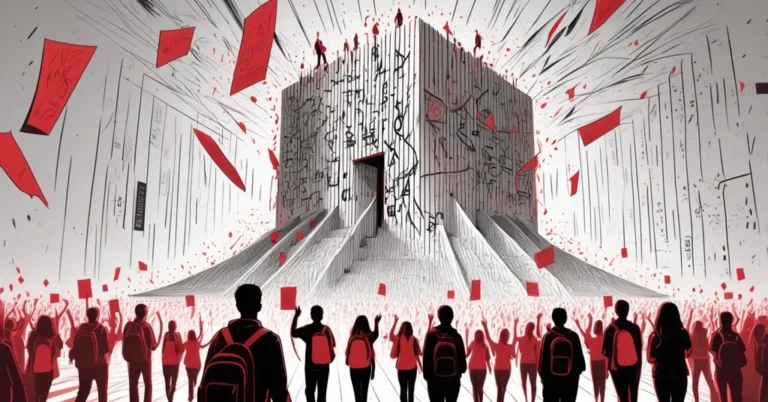
Wired reported that “more than a hundred” students walked out of Sundar Pichai’s July 21, 2026, Stanford commencement. The action was more than a protest against a guest speaker. Organizers framed it as a rejection of the talent pipeline, an elite conveyor belt they say funnels graduates into corporate projects tied to surveillance, immigration enforcement, and geopolitics.
Who organized it, and what they said
Wired’s Katie Drummond spoke with two lead organizers, Amanda Campos and Eva Jones, who helped turn the event into a People’s Commencement, an alternative ceremony staged by students, families, and allies.
Campos, a Stanford SJP organizer now working in environmental-justice advocacy in Richmond, California, told Drummond: “we knew that Google was one of the companies providing the technological backbone for what the UN commission has found to be a genocide, for the continued surveillance and apartheid that Israel imposes on the Palestinian people.” She added a broader moral framing: “AI is not only causing job losses… it’s quite literally killing people.”
Jones, who now works in water-quality monitoring and communications in East Palo Alto, described the outsourcing of enforcement and military functions to private firms as a coercive force on graduates: “I really believe that the expropriation of warfare to these contracted companies, whether they’re explicitly defense tech, like someone like Palantir, or whether they shroud themselves in other services like Google, it’s a modern-day draft.” As she put it about the action: “The walkout was not just a walkout, it was the walkout to the People’s Commencement.”
What we know (and where attribution matters)
- Wired’s story (Katie Drummond, Jul 21, 2026) reports that “more than a hundred” students left Pichai’s speech and that videos of the walkout “have amassed millions of views online.”
- Organizers called on Google to “Drop Project Nimbus and terminate the contracts with ICE and the CBP, ” and asked Stanford to divest from companies they say “fuel violence” and to protect student-led justice spaces. Those are the organizers’ stated demands as reported by Wired.
- Project Nimbus is described by organizers in the coverage as “this $1.2 billion contract” and as work “since 2021 and even before.” That dollar figure and timeline are attributed to organizers and prior reporting; contract texts and procurement schedules are not published in the Wired piece and require independent verification.
- Wired’s reporting quotes organizers saying Google Cloud and Google Gemini are in use by ICE/CBP and in Project Nimbus deployments; those are operational claims made by organizers and reported as such. Independent confirmation of contract language and specific product deployments is still needed.
- Wired notes the interview with Campos and Jones was conducted in person, “earlier this month, ” and edited for length and clarity.
- On generational sentiment about AI, Gallup’s Feb. 24, Mar. 4, 2026, survey of 1, 572 Gen Z respondents found 22% expressing excitement about AI and 42% reporting anxiety. Those figures come from Gallup’s published survey and offer a broader snapshot of Gen Z attitudes cited in the coverage.
Why this matters for business and universities
Commencements are a public audit of talent pipelines. When graduates walk out of a ceremony, they signal a reputational, hiring, and governance problem that matters to companies recruiting on campus and to the universities that educate those students.
Three immediate pressures emerge for leaders in tech and higher education:
- Reputational amplification: Campus actions draw media coverage and social amplification. Outlets like Wired, CNN, and the BBC, plus viral clips, can turn a local protest into a sustained narrative about corporate responsibility.
- Talent acquisition risk: A cohort worried about the ethics of their work will ask sharper questions at career fairs and choose jobs based on how companies use their technology. Gallup’s numbers suggest ambivalence and anxiety among Gen Z.
- Procurement and product scrutiny: Allegations that commercial cloud and AI products are repurposed for surveillance or enforcement force procurement teams and vendors to clarify contract scope, data protections, and permitted use cases.
Precedent: Project Maven and the limits of internal dissent
Organizers point to Project Maven (2018) as a precedent. Reporting at the time documented large internal protests at Google, and the backlash helped push Google to announce limits on certain DoD-related work and to publish AI principles. The lesson for executives is clear: public and internal pressure can change corporate calculations, especially when talent, customers, and reputational risk align.
Concrete actions for executives and university leaders
Vague commitments no longer cut it. Below are practical steps that reduce risk and build credibility, specific, implementable, and time-boxed.
- Procurement transparency (for vendors and public agencies): Publish non-sensitive contract summaries within 30 days of signing that state permitted use cases, data-residency provisions, and whether model fine-tuning is allowed for government customers. Where national security limits disclosure, publish a redacted summary and an independent oversight contact.
- Campus recruiting playbook (for companies): Require campus teams to prepare a two-minute “ethics pitch” for career fairs that explains what projects the company will not do (for example, lethal autonomous weapons or certain immigration-enforcement applications) and what oversight exists. Train recruiters to answer questions about government-facing products honestly and consistently.
- Hiring and project guardrails (for employers): Publish a public policy that states whether the company allows employees to work on immigration-enforcement or certain defense projects, and create a 90-day review process for any new government contract that raises human-rights risk flags.
- University disclosures and career-audit (for universities): Require major on-campus recruiters to disclose, annually, the top three categories of government work they pursue and offer students an opt-in briefing on the ethical implications of those categories. Audit your top five corporate partners’ contracts (or obtain summaries) within 90 days.
Where reporting still needs verification
The walkout is consequential, but some operational claims in the coverage need follow-up before legal or procurement actions proceed:
- Obtain Project Nimbus contract texts or procurement filings. Public announcements and major reporting have cited a ~$1.2 billion figure; verify the exact award, scope, and payment schedule.
- Ask Google and ICE/CBP for on-the-record clarification about which Google products (Cloud, Gemini, etc.) are contracted, and the permitted uses documented in those contracts.
- Confirm the exact headcount and composition of the walkout via Stanford event staff, campus security logs, or timestamped video evidence if precise participation numbers matter to reporting or institutional response.
- Corroborate sensitive claims, such as attributing specific deaths to ICE custody, with authoritative reporting and public records before using them in policy or legal contexts.
- Seek public statements from Stanford leadership (President Jonathan Levin, Provost Jenny Martinez) and from Google about any response or planned engagement with the organizers’ demands; note non-response where applicable.
“I want to see Stanford become the place of learning that I thought it would be, “
, Eva Jones, as reported by Wired.
Key takeaways, questions you might be asking
-
Why did students walk out of Pichai’s commencement?
Organizers told Wired they walked out to protest Google’s government and immigration-enforcement contracts (notably Project Nimbus and ties to ICE/CBP) and to hold a People’s Commencement that highlighted demands for Stanford and Google.
-
What are the organizers’ concrete demands?
They asked Google to drop Project Nimbus and to terminate contracts with ICE and CBP; they also urged Stanford to divest from companies they say “fuel violence” and to strengthen protections for student-led justice spaces.
-
Is student anxiety about AI a broader trend or a campus flare-up?
Gallup’s Feb. 24, Mar. 4, 2026 survey of 1, 572 Gen Z respondents found 22% expressing excitement about AI and 42% reporting anxiety, suggesting ambivalence among surveyed Gen Z respondents. Interpret the figures with awareness of sampling and question framing.
-
Will protests like this change corporate behavior?
There is precedent: Project Maven in 2018 prompted internal and public pressure that led Google to announce limits on certain DoD work. Whether this movement translates into policy change depends on sustained pressure, independent verification of contract practices, and whether companies and universities engage transparently.
Activists at Stanford framed the walkout as a refusal to be funneled into work they believe enables harm. For executives and university leaders, the practical mandate is simple: stop treating campus dissent as mere theatrics. Audit your contracts, make sensitive procurement information available with appropriate redactions, and show how your hiring and product policies match stated ethics. If you want the next generation to join your teams without a moral headache, give them clear, verifiable reasons to trust you.