
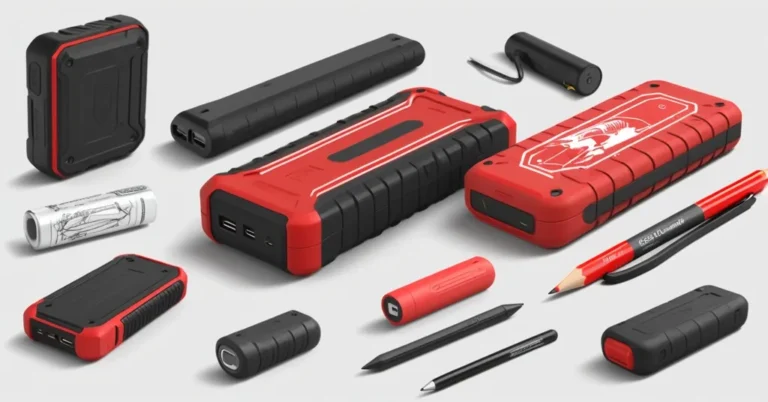
Solid‑state power banks: a safer portable battery for travel and field teams
If a field technician’s battery pack bursts into flames inside a van or a passenger’s checked bag, the damage goes far beyond a ruined device—equipment replacement, downtime, insurance claims, and liability add up fast. Solid‑state power banks such as the BMX SolidSafe 5K are designed to cut that risk by swapping the flammable liquid inside traditional lithium‑ion cells for a non‑flammable solid, which materially reduces the chance of a thermal event if a cell is damaged.
Why the chemistry matters — plain language
“Thermal runaway” is the technical term people worry about: a self‑heating cascade where a damaged or shorted battery generates heat faster than it can dissipate, sometimes causing smoke or fire. Conventional lithium‑ion cells use a liquid electrolyte that can fuel or accelerate that cascade. Solid‑state batteries replace that liquid with a solid medium, so there’s far less combustible material inside the cell. That doesn’t make batteries immortal, but it changes the failure mode from catastrophic to far more contained in many abuse scenarios.
Quick note on capacity metrics: mAh (milliamp hours) is familiar, but watt‑hours (Wh) are the clearest way to compare energy across different packs and chemistries. The BMX SolidSafe 5K is 5,000 mAh, roughly 19 Wh—enough for a full charge or close to it on most phones.
What the SolidSafe 5K delivers
- Compact, pocketable build: ~102.7 × 68 × 11 mm, 137 g (4.8 oz).
- Capacity: 5,000 mAh / ~19 Wh.
- Wireless: Magnetic Qi2 wireless charging up to 15 W; magnets sized/strong enough to hold an iPhone in place.
- Wired: Single USB‑C port; up to 20 W output, 15 W input. Supports wired + wireless simultaneously (combined up to 15 W).
- Usability: Pass‑through charging, clear color status display, activation button, and a lanyard that doubles as a USB‑C cable.
- Ecosystem: Larger 10K model available and multi‑bay docks for charging fleets of packs.
Those specs make the SolidSafe 5K a pragmatic choice for users who need safe, everyday power without lugging a heavy high‑capacity bank. For many travel and field use cases, the 19 Wh threshold is also convenient because it fits within common airline carry‑on restrictions (airlines still care about Wh limits, so always check before flying).
Hands‑on safety testing — what happened and what it means
In a hands‑on puncture test performed by a reviewer, a fully charged SolidSafe 5K was deliberately punctured with a screwdriver outdoors (safety gear on). The result: a few puffs of smoke and no cascading thermal event. That single test demonstrates improved abuse tolerance compared with many lithium‑ion power banks that can ignite under similar provocation.
“Typical power banks are cheap and energy‑dense but capable of catching fire if badly provoked; solid‑state cells remove the flammable electrolyte.”
A few important caveats for procurement and safety teams:
- The puncture test was an extreme, anecdotal demonstration, useful for illustrating difference in failure mode but not a substitute for formal certification. Look for independent lab reports (UL, IEC) and UN transport testing when evaluating suppliers.
- Real‑world failure rates depend on manufacturing quality, cell architecture, and device-level protections. Solid chemistry helps, but system design and QA matter just as much.
- Pass‑through charging can create heat. Verify device thermal behavior under sustained loads—especially if you expect simultaneous wired and wireless charging during long shifts.
Tradeoffs: safety vs. energy density and price
Solid‑state cells tend to be less energy‑dense and costlier at current manufacturing scales. The SolidSafe 5K carries a noticeable premium: roughly $79.99 for the 5K model and about $99.99 for a 10K variant—higher than many lithium‑ion competitors on a per‑Wh basis.
That premium buys a lower probability of catastrophic failure. For organizations running field teams, first responders, or equipment‑sensitive fleets, that reduced risk can translate into tangible savings: fewer device losses, lower insurance exposure, less operational disruption. For price‑sensitive consumers who prioritize maximum capacity per dollar, lithium‑ion still often makes more sense.
Business case for procurement: a short ROI example
Simple scenario to help evaluate the premium:
- Company A needs 100 power banks. Lithium‑ion option: $30 each → $3,000. SolidSafe 5K: $80 each → $8,000. Up‑front premium: $5,000.
- If a single thermal incident results in a vehicle fire or serious equipment damage costing $20,000 in repairs, replacement gear, and downtime, preventing one such event already justifies the premium.
- Formula to evaluate: avoided incident cost × probability reduction ≥ premium cost. If the solid‑state option lowers the probability of a costly incident by enough to exceed the premium over the fleet lifetime, it’s a net positive.
Also consider softer benefits: lower administrative headaches, reduced insurance claims, improved worker safety, and reputational protection after an incident avoided.
Procurement checklist: what to ask suppliers
- Independent testing: Do you have third‑party lab reports (UL 62133, IEC, or similar) and UN38.3 transport tests? Can you share them?
- Abuse reports: Are there documented abuse tests (puncture, crush, thermal, short‑circuit)? Who performed them?
- Certifications: Which safety and transport certifications does the product hold?
- Cycle life and warranty: What is the rated cycle life and guaranteed minimum capacity at end of warranty?
- Thermal data: Can you provide thermal performance charts for sustained loads and pass‑through charging?
- Returns & support: How do you handle failures, RMAs, and bulk warranty claims?
- Bulk terms: What discounts, lead times, and supply assurances exist for fleet purchases?
- Recycling/disposal: How should end‑of‑life units be handled—are there recycling programs?
Who should consider solid‑state power banks now
- Buy now: First responders, field technicians, motorcycle couriers, aviation crews, and organizations with high operational risk where device failure could cause cascading costs.
- Pilot now: Fleet managers and procurement leads—run a controlled pilot (10–25 units) for 3–6 months to gather TCO, incident reduction data, and worker feedback.
- Wait and watch: Consumers focused on raw cost-per‑Wh and high‑capacity pack buyers—solid‑state will likely become more compelling as volumes grow and prices fall.
“The product is not cheap at about $80, but worth considering if you prioritize a low chance of failure in risky situations such as travel, biking, or first response.”
Practical next steps for executives and safety officers
- Run a short pilot: deploy 10–25 units to high‑risk roles, track incidents, user satisfaction, and any thermal or charging anomalies.
- Request independent test evidence and thermal profiles before a bulk purchase.
- Model TCO including replacement costs, estimated avoided incidents, insurance impact, and administrative savings.
- Include durability and warranty clauses in contracts; demand clear RMAs and fail‑forward policies from suppliers.
Final takeaway
Solid‑state power banks like the BMX SolidSafe 5K shift the portable battery tradeoff toward safety at the expense of some energy density and a higher unit price. For many businesses—especially those with field teams, safety‑sensitive workflows, or costly downtime—the safety premium is a rational investment and a strong candidate for a pilot program. For consumers prioritizing maximum capacity per dollar, lithium‑ion remains the practical choice for now. Either way, verify certifications, request independent test reports, and run small pilots before scaling purchases across a fleet.
Recommended action: If you manage field teams or fleet equipment, order a small batch (10 units), run them in the field for 3–6 months, and measure incident frequency, thermal behavior, and user feedback. Use those results to make a procurement decision backed by data—not just product claims.