
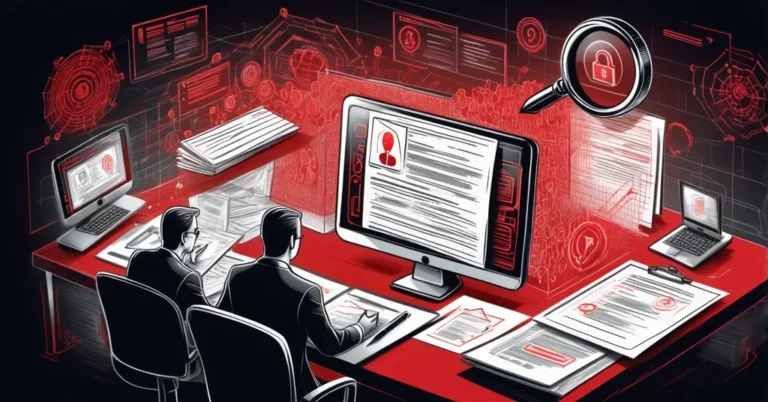
Executive summary, what the headline says and what we can actually verify
A headline circulated stating: “AI tools suspected in Shinhan Bank cyberattack that exposed 25, 000 customers.” That line bundles three claims, a cyberattack on Shinhan Bank, an exposure affecting 25, 000 customers, and a suspicion that “AI tools” were used, and none of those elements can be independently verified here. Treat it as an unconfirmed lead. Wait for an official Shinhan Bank statement, a regulator advisory (for example from Korea’s PIPC or KISA), a law‑enforcement comment, or technical reporting from a reputable security vendor before accepting the claim as fact.
Immediate actions for bank executives and incident responders
- Contain first, preserve evidence. Isolate affected systems but keep forensic images (disk and memory) so investigators can reconstruct timelines and find indicators of compromise (IOCs).
- Engage independent incident response (IR). A trusted IR firm adds technical credibility and helps avoid conflicts of interest in forensic findings.
- Prioritize regulator and customer notification. Comply with applicable breach‑notification rules promptly and clearly. In South Korea that typically involves PIPC/KISA. Confirm legal obligations with counsel.
- Mitigate immediate customer risk. Enforce multi‑factor authentication (MFA), force credential resets for compromised accounts, and offer monitoring or remediation where personal identifiers were exposed.
- Coordinate intelligence sharing. Share redacted IOCs with national CERTs and banking sector peers to help correlate activity and block related threats.
- Preserve communication control. Route all external statements through a small, coordinated team (legal, communications, CISO) and avoid speculative technical claims in public messaging.
Immediate actions for customers
- Enable MFA now. This is the single most effective immediate step to limit account takeover even if credentials leaked.
- Change passwords and use a manager. Replace reused passwords with unique, strong credentials stored in a password manager.
- Monitor transactions and alerts. Turn on bank and card alerts, and review statements daily for unexpected activity.
- Consider credit protection if ID data may be exposed. A credit freeze or fraud alert makes it harder for criminals to open new accounts in your name.
- Verify bank communications out‑of‑band. Don’t click links in unsolicited emails or texts, call the bank using a number from its official website.
Two ready-to-use public statements for executives
-
Holding statement (initial):
“We are aware of a reported incident involving Shinhan Bank customers and are investigating with external forensic specialists and relevant Korean authorities. At this stage there is no confirmed evidence that customer funds were impacted. We will notify impacted customers and regulators as soon as we can confirm the scope and share recommended next steps.”
-
Follow-up statement (once preliminary facts are known):
“Our investigation, assisted by an independent incident response firm and [relevant authority], has identified [scope]. We have isolated affected systems, reset credentials where appropriate, and are offering [credit monitoring / remediation]. We will publish technical indicators to help other organizations detect related activity.”
What investigators should publish to substantiate any claim that “AI tools” were used
If a party alleges AI-assisted techniques, name the investigating body (Shinhan Bank, KISA, PIPC, police, or an independent IR firm) and publish technical evidence such as:
- API logs showing calls to a named large language model provider or to internal model endpoints (LLM = large language model).
- Recovered attacker artifacts: prompt templates, model outputs, saved API responses, or exposed API keys tied to malicious activity.
- Malware hashes, YARA rules, or signed binaries linked to observed payloads so defenders can detect similar files.
- Command‑and‑control (C2) domains, IPs, and network traffic captures that show exfiltration patterns.
- Process execution chains illustrating unusual automation, for example legitimate processes spawning unfamiliar child processes in rapid, scripted sequences.
- Interceptions, admissions, or threat‑actor messaging that explicitly reference AI tooling or workflows.
Without specific artifacts of this kind, “AI” remains a vague label that can describe anything from a human using an LLM to draft phishing text to a fully automated ML‑driven exploit pipeline.
Technical context: realistic ways AI can appear in attacks (and why each matters)
Security teams use terms that executives should understand:
- LLM (large language model): A generative text model that can produce human‑like email or message content.
- IOC (indicator of compromise): A forensic artifact (file hash, domain, log entry) that shows malicious activity.
- C2 (command‑and‑control): Infrastructure an attacker uses to control malware or receive exfiltrated data.
AI- or automation-related attacker behaviors fall into distinct categories with different risk profiles:
- LLM-assisted phishing: Attackers use LLMs to craft highly personalized, scalable messages. This improves success rates but still requires access to target contact data.
- Automated reconnaissance and prioritization: Scripts or ML models sift OSINT and internal footprints to identify high‑value targets faster than manual methods.
- AI-assisted code generation or obfuscation: Attackers may prototype payloads or generate polymorphic code fragments, but human testing and refinement remain necessary.
- Synthetic media for impersonation: Deepfake audio/video can be used for vishing or authentication fraud, a documented criminal technique in past incidents.
Separating hype from hazardous capability matters. Commodity bots are easy to detect and block, while sophisticated combinations, personalized messages plus stolen credentials plus automated exploitation, require more advanced detection and faster response.
Regulatory and reputational considerations
Financial institutions face two broad risks after a breach: practical customer harm (fraud, identity theft) and regulatory or reputational fallout. South Korea’s Personal Information Protection Act (PIPA) and bodies such as the Personal Information Protection Commission (PIPC) and Korea Internet & Security Agency (KISA) commonly play roles in breach response and notification. Confirm legal obligations with counsel and notify regulators promptly where required.
What to expect next, a typical timeline
- First 24-72 hours: Containment, initial forensic imaging, and a holding statement.
- 1-3 weeks: Deeper forensic analysis, preliminary IOC publication, targeted customer notifications and remediation measures.
- 1-3 months: Regulator inquiries, possible civil follow‑ups, and reputational management. Technical lessons inform longer-term controls.
Key questions, clear, honest answers
-
Was Shinhan Bank definitively breached and 25, 000 customers exposed?
The headline asserts that, but we do not have independent confirmation here. Verification requires a Shinhan Bank statement, a regulator advisory (PIPC/KISA), or reporting from a reputable news outlet citing forensic evidence.
-
Who says “AI tools” were used, and what does that mean?
Any credible claim should come from a named investigator (Shinhan Bank, KISA, PIPC, national police, or an independent IR firm) and be paired with forensic indicators explaining whether “AI” means LLM‑generated content, ML‑driven automation, synthetic media, or something else.
-
If AI were used, how would that change the risk to customers?
It depends on what data was exposed. AI‑assisted phishing raises credential theft risk; exposure of identity numbers risks long‑term identity fraud. Practical mitigation advice (MFA, monitoring, freezes) is the same regardless of whether AI was involved.
-
What should other banks learn from this headline regardless of verification?
Assume adversaries will use automation and personalization at scale. Invest in detection of automated behaviors, prepare rapid IR playbooks, enforce MFA, and maintain clear customer communication templates that avoid amplifying unverified technical claims.
-
How confident will investigators be about AI involvement?
Confidence hinges on artifacts: API logs to model providers, recovered prompt files, unique malware signatures, or admissions. Absent such artifacts, the “AI” label is low confidence and should be reported as an allegation under investigation.
Takeaway for executives
Assume attackers will use automation and personalization; demand named sources and concrete forensic indicators before amplifying claims that “AI tools” were used. Operational priority: contain, preserve evidence, notify appropriately, and communicate clearly to customers without speculative technical language. Monitor official channels, Shinhan Bank, PIPC, KISA, and respected security vendors for confirmed details before updating public assertions.
Additional reading
- Verification Successful: Waiting for Response from Ace
- Understanding the Impact of Climate Change on Global