
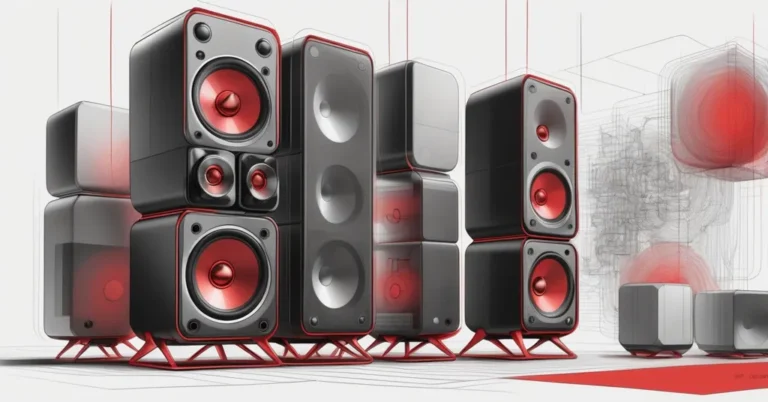
Samsung Music Studio at CES 2026: compact speakers, modular ambition, and on‑device AI
TL;DR — Executive summary
- Samsung introduced Music Studio 7 (LS70H) and Music Studio 5 (LS50H) at CES 2026 — modular Wi‑Fi speakers aimed at multi‑room and TV setups.
- Studio 7 is a 3.1.1 spatial audio design with Hi‑Res Audio up to 24‑bit/96kHz and Spotify Lossless support. Studio 5 is smaller, with a 4″ woofer and dual tweeters.
- Both use AI Dynamic Bass Control to extract more low end from small enclosures and support Wi‑Fi casting, streaming services, Bluetooth, and voice control. Dolby Atmos was not announced.
- For integrators and hospitality buyers: flexible placement and the ability to use up to five Studio 7s as TV speakers (or group up to ten units) are the headline features to evaluate alongside pricing and latency.
Why this matters to businesses and AV integrators
Modular wireless speakers are no longer just a consumer convenience — they change installation patterns, inventory decisions, and guest experience design for hospitality, retail, and corporate environments. Samsung’s Music Studio line pushes toward replacing room‑filling soundbars with small, networked speakers that deliver spatial audio through software and multiple units. That can simplify sightlines in lobbies, let meeting rooms avoid long cable runs, and enable branded audio zones in retail stores. Whether that becomes a headache or a win for integrators depends on pricing, latency behavior, and ecosystem compatibility.
Design & build: a look and a feeling
Both speakers share a concave dish silhouette and a central dot motif developed with designer Erwan Bouroullec. Samsung described it as a “timeless dot” concept inspired by universal musical and artistic symbols — an attempt to make speakers feel like furniture rather than gear. The Studio 5 leans into playful colors (orange, yellow, green) that will suit hospitality suites and retail displays where form matters as much as sound.
Samsung described the speakers as following a “timeless dot” design concept created with designer Erwan Bouroullec, inspired by universal musical and artistic symbols and consistent with Samsung’s aesthetic.
Hardware & specs — the essentials
Short, plain definitions:
- 3.1.1: left, center, right channels plus a low-frequency channel and an up‑firing height channel for spatial cues.
- Hi‑Res Audio: higher sampling/bit depth than standard streaming, here up to 24‑bit/96kHz, which preserves more detail when source content supports it.
- Waveguide: a shaped internal path that helps direct sound so a small speaker can fill a room more evenly.
Key specs:
- Music Studio 7 (LS70H): 3.1.1 spatial layout with left/center/right and up‑firing drivers, Hi‑Res Audio up to 24‑bit/96kHz, Spotify Lossless support, functions as rear speakers or part of multi‑speaker TV setups.
- Music Studio 5 (LS50H): compact design, 4″ woofer, dual tweeters, waveguide for controlled dispersion; no Hi‑Res Audio support announced.
- Shared features: Samsung’s AI Dynamic Bass Control, Wi‑Fi casting, streaming service compatibility, voice control, Bluetooth, and the ability to group multiple units (up to five per TV; up to ten in a group).
- Not announced: Dolby Atmos support, pricing, availability.
AI & Dynamic Bass Control — small speakers, smart processing
On‑device AI here means software inside the speaker that shapes sound in real time rather than relying solely on bigger drivers. Samsung calls this Dynamic Bass Control — a DSP‑style system designed to reduce distortion and extract deeper perceived bass from small enclosures.
Think of it as a sonic personal trainer: EQ, transient shaping, and distortion suppression coach the woofer so it sounds fuller without needing a larger box. The upside is obvious — better perceived low end without bulk. The tradeoffs to test for in demos are audible artifacts at high volumes, bass “pumping” on complex tracks, and how natural midrange and dialog remain once the system increases bass presence.
How the speakers sounded in hands‑on demos
During Samsung’s CES demo, four Studio 7 units connected to a TV produced smooth tracking of on‑screen action and convincing spatial placement despite the absence of Dolby Atmos processing. Low frequencies were deeper than expected from the cabinet size, though the demo impression still suggested a dedicated subwoofer would be the path to true home‑theater impact.
With four Studio 7 speakers connected to a TV the sound tracked on‑screen action smoothly and felt immersive despite the lack of Dolby Atmos.
Multi‑speaker use cases — where modular wins
Modular speakers shine when you need flexibility and aesthetics without long cables and bulky hardware. Practical deployments to consider:
- Hotel suites and lobbies: color options and small footprint make Studio 5 useful for guest rooms and boutique lobbies. Grouped Studio 7s can deliver room-filling TV audio without a visible soundbar.
- Meeting rooms: place speakers discretely around a room for even coverage and avoid long AV rack runs; multiple units can simplify retrofit installs.
- Retail and experiential spaces: modular zones for targeted music or AV cues, easier reconfiguration for seasonal layouts.
- Restaurants and bars: distribute smaller speakers for a cohesive soundscape with less visual impact than big boxes.
Integration considerations & checklist for AV teams
Before you spec dozens of networked speakers, test these items during demos and procurement:
- Latency and sync: test lip‑sync accuracy for TV and movie playback and measure synchronization when many units play the same source. Ask Samsung for maximum tolerated latency figures and how they maintain sync over Wi‑Fi.
- TV connectivity: confirm eARC/ARC support and whether multi‑speaker TV connections require a Samsung TV, special firmware, or a hub.
- Group management: check remote provisioning, fleet updates, and whether units appear as one logical device in control systems like Crestron or via SmartThings/Matter.
- Power and placement: verify mains requirements and whether battery/portable variants exist (currently none announced).
- Codec & streaming behavior: test Spotify Lossless streaming and confirm whether high‑resolution streams are direct or transcoded through the Samsung app.
- Maintenance & TCO: consider firmware lifecycle, warranty, and the operational cost of supporting many networked endpoints in hospitality or enterprise settings.
Studio 7 x4 vs soundbar + sub — a brief buyer’s guide
Quick tradeoffs to weigh when deciding between a four‑speaker Studio 7 setup and a traditional soundbar + sub configuration:
- Installation & aesthetics: Studio 7 x4 wins for flexible placement and cleaner sightlines. Soundbars concentrate hardware under the TV and usually look more conventional.
- Dialog and center imaging: a dedicated center channel in many soundbars can be tuned specifically for dialog; Studio 7’s 3.1.1 layout includes a center driver but its small cabinet limits ultimate headroom.
- Bass performance: soundbar + sub generally provides deeper, more physical bass. Studio 7s can get impressively deep for size thanks to Dynamic Bass Control but a subwoofer remains the path to cinema‑level impact.
- Scalability: modular Studio units scale naturally for multi‑room audio and mixed-use deployments; soundbars are less flexible for multi‑zone setups.
- Costs & ecosystem: total cost will depend on pricing and whether you need extras like a sub or wireless rear channels; unknown pricing for Studio units means budget planning should wait for official figures.
Pros, cons, and practical takeaways
- Pros: stylish design by Erwan Bouroullec, spatial audio layout in a compact form, Hi‑Res and Spotify Lossless on Studio 7, AI Dynamic Bass Control that boosts perceived low end, flexible multi‑speaker grouping.
- Cons / unknowns: no Dolby Atmos announced, pricing and availability undisclosed, unknown latency/sync details, unclear depth of non‑Samsung TV integration.
- Practical takeaway: these speakers will interest integrators who value modular aesthetics and flexible placement. For cinephile home theaters or installations requiring earth‑shaking bass, plan to pair with a subwoofer.
Questions most buyers will want answered
-
Will the Studio 7 replace a soundbar + sub for home theater?
It can deliver immersive spatial effects and respectable low end, but for the deepest, room‑shaking bass a dedicated subwoofer is still recommended.
-
Is Samsung positioning these as a Sonos competitor?
Yes. Modular multi‑speaker flexibility, multi‑room grouping, premium design, and streaming features put Samsung in direct competition with companies like Sonos. Missing Atmos support and unknown pricing will influence how direct that challenge is.
-
How significant is AI Dynamic Bass Control?
Meaningful in practice: it’s a practical use of on‑device processing to reduce distortion and enhance perceived bass without larger hardware, but real‑world performance will vary by genre and volume.
-
Will these work well with non‑Samsung TVs and mixed ecosystems?
Basic casting and streaming will work, but deeper feature parity, latency performance and control integration may initially favor Samsung TVs. Confirm eARC/ARC behavior and third‑party control compatibility during demos.
-
Does absence of Dolby Atmos matter?
For most viewers who want a spacious soundstage, not necessarily. But Atmos remains important for cinephiles and will weigh heavily in high‑end home‑theater spec comparisons.
Verdict — who should consider Music Studio
Buyers who prize design, flexible placement, multi‑room audio and a modern streaming feature set should put the Music Studio line on their short list. Hospitality and retail integrators will appreciate the aesthetic options and modular grouping. Those whose top priority is the deepest, most physical home‑theater bass should plan to pair Studio units with a subwoofer or stick with a traditional soundbar + sub combo until pricing, Atmos support, and latency metrics are fully clear.
What to watch for next
- Official pricing and availability to judge total cost of ownership when deploying multiple units.
- Confirmation of Dolby Atmos support (or roadmap for firmware updates) and detailed latency/sync specs.
- Documentation on TV integration: eARC/ARC support, whether a Samsung TV is required for multi‑speaker TV setups, and third‑party control/system support.
Demo checklist for AV teams
- Play high‑bass tracks and dialog scenes to evaluate Dynamic Bass Control across genres.
- Test a four‑unit TV layout for lip‑sync and spatial coherence.
- Measure group setup and reconfiguration time for maintenance planning.
- Confirm firmware update process and remote management capabilities for fleet devices.
Samsung’s Music Studio is a credible step toward making small speakers carry big spatial ambitions. The AI and modular approach give integrators more aesthetic and placement options — now it’s a matter of real‑world testing and waiting for pricing and integration details to see how disruptive this move will be to existing multi‑room and soundbar markets.