
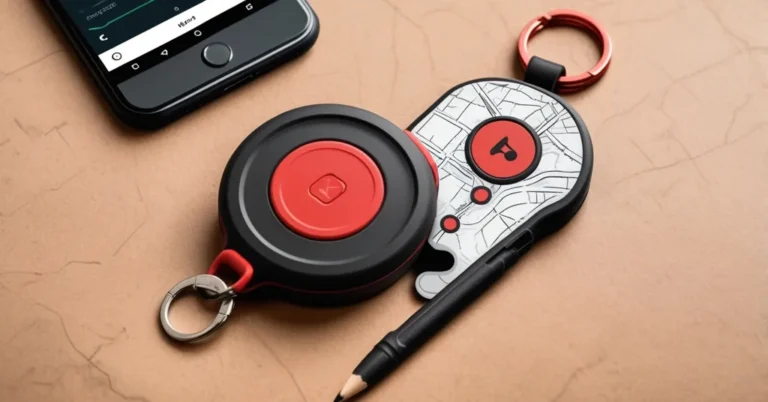
Rolling Square AirNotch Pro Dual Review: Best Bluetooth Tracker for Android?
TL;DR: The Rolling Square AirNotch Pro Dual is a rugged, cross-platform Bluetooth tracker built for Android-first people and mixed-ecosystem teams. It sacrifices ultra‑wideband (UWB) directional arrows for loud, omnidirectional sound, long battery life, and a durable build—making it a practical AirTag alternative for business and everyday use.
Why this matters
AirTags dominate iPhone users because of deep Find My integration and UWB precision. Android users have been left choosing between weaker Bluetooth tags or relying on ecosystem compromises. The AirNotch Pro Dual targets that gap: it focuses on the features you actually notice when you’re late for a meeting—loud alerts, reliable battery life, and hardware built to survive keys and pockets.
AirTags are the top choice for iOS users, but Android owners often lack an equally solid option.
Design and durability: built to be used
The AirNotch Pro Dual feels like a tool rather than a toy. It uses a CNC‑machined aluminum frame, ribbed ABS shells secured with Torx screws, and carries an IP68 rating for water and dust resistance. Rolling Square includes a built-in loop and a split ring in the box, so you can attach it to keys without hunting for accessories.
For teams and mobile professionals, that combination matters: durable casing reduces device failures in pockets, bags, and utility belts, and replaceable batteries keep ownership predictable over time.
Sound and findability: a loud, reliable whistle
Where the AirNotch stands out is audible findability. It uses two buzzers (20 mm and 15 mm) mounted on opposite sides to create near‑360° sound. Photoluminescent elements help locate the tag in low light. In testing, the tag was audible in an open, line‑of‑sight field at roughly 300 feet and reliably heard across typical home rooms and inside a stuffed conference bag.
Think of UWB like a laser pointer for locating — it points you exactly to the item. Bluetooth is more like a whistle you can hear from the next room. For most lost-key moments, the whistle is what ends the panic.
Test notes
- Range test: ~300 ft in an unobstructed, line‑of‑sight outdoor test (phone triggering the alert and human confirmation of audibility).
- Indoor test: audible across rooms and through cushions and bags in a typical apartment/office layout.
- Limitations: no UWB directional guidance; performance can vary in dense, metal‑rich environments or large parking garages.
Battery life and maintenance
The device runs on two CR2032 coin cells instead of one. Rolling Square estimates roughly 20 months of typical use before replacement—close to two years of “fit-and-forget” ownership. Using two cells increases runtime and reduces the frequency of battery swaps, which makes life simpler when you manage multiple issued tags.
For fleet managers: fewer battery replacements means less administrative overhead and fewer service interruptions. Batteries are user‑replaceable, so there’s no need to send a unit back for service when the cells are spent.
Networks, switching, and cross-platform value
The AirNotch Pro Dual can join Apple’s Find My network or Google’s Find Hub network. That flexibility is the product’s strategic advantage: if you switch phones or live in a mixed iPhone/Android household, you don’t have to throw away your trackers.
Switching networks requires a factory reset and re‑pairing via the manufacturer’s app or the platform’s onboarding flow; it isn’t an instant toggle but it’s straightforward. For organizations that issue devices to employees, this cross‑registration reduces procurement friction and avoids single‑ecosystem lock‑in.
Privacy and anti‑stalking considerations
Cross‑network trackers increase useful coverage but raise important safety and privacy questions. Apple and Google both implement anti‑stalking measures (background scans and alerts for unknown trackers), but their behaviors differ by platform and update cadence. When deploying trackers to staff or within customer‑facing services, treat them like any other connected asset:
- Assign tags to company accounts or inventories so ownership is clear.
- Document procedures for lost tags, resets, and audits.
- Communicate to staff how anti‑stalking protections work and what to do if they receive an alert about an unknown tracker.
For enterprise deployments, conduct a quick review of platform privacy updates and Rolling Square’s firmware notes before large‑scale purchase. Policies and firmware change, and it pays to stay current.
Business use cases and deployment tips
Where the AirNotch fits best:
- Key and badge tracking for hybrid teams — fewer meetings missed because someone misplaced keys.
- Asset tagging where durability and long battery life trump precision (laptop bags, toolboxes, camera gear).
- Mixed‑ecosystem households and small businesses where staff use both Android and iOS devices.
Deployment tips:
- Buy a small pilot first to verify range and sound in your typical environments (offices, parking lots, warehouses).
- Label devices with inventory tags and note battery replacement dates in your asset system.
- Order from authorized vendors to ensure warranty coverage and firmware updates.
Alternatives and competitive context
How it stacks up:
- Apple AirTag — Offers UWB precision and seamless Find My integration for iPhone users. Best when you need directional arrows and you run an Apple‑centric fleet.
- Tile / Chipolo — Established Bluetooth trackers with their own networks; good ecosystem options for Android but vary on sound, build, and battery choices.
- Rolling Square AirCard Pro Dual — Another product from the same maker that targets similar users; check specs if you need a slimmer form factor or different mounting options.
The AirNotch wins on build quality, audibility, and battery runtime. It doesn’t match AirTag’s UWB precision, but for many business workflows the trade‑off is acceptable — and preferable — because the day‑to‑day problems are more about hearing and durability than centimeter‑accurate pointing.
Final verdict
Buy if you need a durable, loud, cross‑platform Bluetooth tracker with excellent battery life and easy attachment for keys or gear. It’s especially compelling for Android‑first users, mixed‑ecosystem households, and small teams that value predictable, low‑maintenance trackers.
Skip if you require UWB precision locating (directional arrows), or if your environment consistently needs centimeter‑level accuracy (high‑end warehouses or retail loss prevention where UWB is required).
FAQ
Does the AirNotch Pro Dual work with Apple Find My and Google Find?
Yes. It can join either network, but switching between them requires a factory reset and re‑pairing using the app or onboarding flow.
How long do the batteries last?
With two CR2032 cells installed, the estimated life is about 20 months under typical usage.
Is it waterproof and durable enough for daily use?
Yes. The IP68 rating plus an aluminum frame and reinforced plastic make it resilient to drops, dust, and water exposure.
Does it offer AirTag‑style precision finding?
No. It does not include UWB directional guidance; it trades precision for loud, omnidirectional sound and rugged hardware.
Quick procurement note
Unit price sits around $40. For teams, factor in a simple lifecycle plan: initial purchase, a battery‑replacement schedule (every ~18–24 months), and an ownership registry. That keeps replacements predictable and minimizes downtime.
The AirNotch Pro Dual doesn’t reinvent how we find things; it refocuses the tracker on what actually reduces friction: being loud, lasting long, and surviving the real world. For Android users and mixed fleets who want reliability over razzle‑dazzle directional pointers, it’s a strong choice.