
NVIDIA PAIR: an open-source local inference router that spreads small LLM calls across nearby GPUs
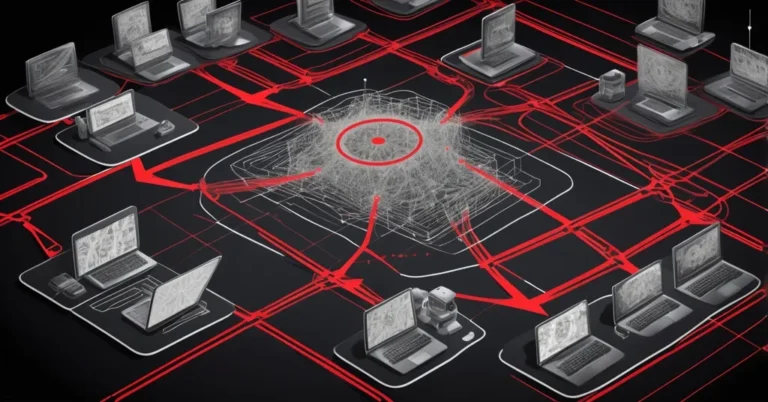
PAIR (Personal AI Router) is a lightweight local control plane that finds compatible machines on your LAN and forwards independent inference requests to whichever node can run them, it does not run models itself. The code is public on GitHub under Apache 2.0. NVIDIA calls the project a deployable public beta; check the repository and release notes for installers and signatures.
What PAIR is, and what it decisively is not
PAIR is a proxy and scheduler that sits in front of local inference engines (Ollama, LM Studio, or compatible services) and forwards requests to nodes that already host the requested model. Two points matter when you decide whether to use it:
- Control plane, not execution plane. PAIR routes and proxies; models run inside each node’s engine.
- Workload-level concurrency, not distributed execution. PAIR assigns each request to a single node for its lifetime, it does not pool VRAM, merge GPUs, or shard one inference across machines.
“Models belong to an engine on a specific node. Nothing is shared.”, NVIDIA architecture document
How PAIR picks where to run a request
PAIR makes routing decisions from a small set of eligibility signals and a simple scheduler. For a node to be eligible it must meet these conditions:
- Node online and ready (engine health/readiness)
- A supported engine is enabled on the node
- The exact requested model copy is present on that engine
- Current job load on the node/engine is acceptable
- Current GPU utilization is within acceptable bounds
Each request is assigned to one eligible node for its entire execution. NVIDIA’s docs note the early scheduler is intentionally simple and does not account for VRAM size, GPU class, or whether a model is already warm in GPU memory. The project favors predictability and compatibility with existing agent harnesses over complex micro-optimizations.
Discovery, pairing, and the security trade-offs
PAIR targets local networks and makes explicit trade-offs for ease of use. Key elements of its trust model:
- Discovery: PAIR finds peers on the local subnet (the implementation uses mDNS and also supports manual IP entry).
- Pairing: A six‑digit PIN shown on the inviting machine must be entered on the invited machine to complete enrollment; pairing is a plaintext exchange used to authenticate the join operation.
- Node transport: After pairing, PAIR pins self‑signed certificates and most peer traffic runs over mutual TLS (mTLS) between nodes.
- Local client access: The proxy presents two personalities on the same port, a loopback plaintext interface for local clients and an mTLS interface for peers. Plaintext requests from non-loopback addresses are rejected.
- Telemetry: Host and GPU telemetry (inventory and utilization) is intentionally exposed as plaintext on the local subnet; NVIDIA’s docs warn not to run PAIR on a network where that is unacceptable.
These choices make PAIR quick to get running in homes, labs, and small teams. They also mean you should treat PAIR as a trusted‑LAN tool until you harden the environment with network segmentation, monitoring, and extra access controls.
Where PAIR will help your business, and where it won’t
Good fit:
- Multi‑agent or decomposition workflows that spawn many independent, short-lived subagent calls. PAIR reduces queuing by widening the pool of nodes that can handle each call.
- Teams that want local inference for privacy or cost control but do not want to rewrite agent code: PAIR proxies Ollama and LM Studio interfaces and exposes API-compatible endpoints so existing agents need no changes, “The agent decides what work to request. PAIR decides where it runs.”
- Developer clusters and research labs where rapid deployment and simple operations matter more than enterprise-grade telemetry and centralized control.
Poor fit:
- Workloads that need a single model larger than any single node. PAIR does not shard or combine GPUs.
- Environments that cannot tolerate plaintext telemetry on the subnet or that require robust enterprise auditability and centralized identity management out of the box.
- Scenarios that require advanced scheduler heuristics today (VRAM-aware placement, GPU-class weighting, warm-model prioritization), the initial scheduler is simple and may not maximize throughput for all mixed workloads.
Demo and performance notes (interpret with caution)
NVIDIA demoed a desktop agent that split work into multiple subagents while PAIR routed those calls across several paired machines. According to public writeups, spreading subagent calls to multiple devices reduced end-to-end latency in that synthetic workload. Treat demo hardware labels and timing in third-party coverage as illustrative. Verify hardware names and benchmark figures against NVIDIA’s release materials or the repository examples before relying on them for production estimates.
Compatibility, minimums, and repo status
NVIDIA’s repository and docs describe Ollama- and LM Studio-compatible proxies and advertise OpenAI-compatible proxy endpoints so existing clients can point at PAIR with minimal change. The project source is on GitHub under Apache 2.0; check the repository Releases page for the current public beta tag, installers, and signatures.
NVIDIA lists a range of supported platforms in the docs and examples (cross‑OS pairing across Linux, Windows, and macOS; x64 and arm64 supported), but review the repo README and install guides for exact, up-to-date compatibility notes and validated system minima (RAM, disk, and installer availability can change between commits).
Operational checklist before you pilot PAIR
- Plan model placement: PAIR only routes to nodes with the exact model copy. Decide which models need multiple copies and preplace them, or test PAIR’s remote-engine control to trigger downloads on demand.
- Budget disk and network: Models are duplicated across nodes; estimate model size × expected concurrency to size node disks and network bandwidth for downloads.
- Isolate the test network: Run PAIR on a trusted VLAN or lab subnet to avoid exposing plaintext telemetry and to limit risk while you evaluate.
- Add external monitoring: v0.1.x provides minimal hang detection and no unified /health endpoint; use host-level monitoring and process supervision to detect stuck GPU jobs and automate restarts.
- Measure before you scale: Start with a small pilot (one client + two candidate GPU nodes) and measure queue length and end-to-end latency for your agent pattern, then add nodes based on empirical benefit rather than guesswork.
Who should pilot PAIR
- Developer teams running multi‑agent tests, agent harness experiments, or local inference sandboxes.
- Research labs and on‑prem groups that want to increase utilization across existing GPU machines without rewriting agent code.
- Not yet recommended as a drop‑in replacement for enterprise production inference where centralized auth/audit and hardened telemetry are required.
Key questions, short, honest answers
- Does PAIR run models itself?
- Can PAIR shard a single inference across multiple GPUs or pool VRAM?
- How does PAIR select a node?
- Is the pairing and transport secure for enterprise networks?
- Is PAIR production‑ready?
No. PAIR is a control plane and HTTP proxy that forwards requests to local inference engines (Ollama/LM Studio or compatible services); models execute on the nodes’ engines.
No. NVIDIA’s docs are explicit: “Models belong to an engine on a specific node. Nothing is shared.” A single request runs start‑to‑finish on one node.
PAIR evaluates five signals, node readiness, engine enabled, exact model presence, job load, and GPU utilization, then assigns the request to one eligible node. The initial scheduler is simple and does not account for VRAM size, GPU class, or model warmness.
PAIR uses a six‑digit PIN for pairing and then mTLS with pinned certificates for node traffic, but it intentionally exposes host/GPU telemetry as plaintext on the local subnet. NVIDIA’s docs warn against running PAIR on networks where that is unacceptable, treat it as a trusted‑LAN tool unless you add network segmentation and extra controls.
PAIR is published as an open‑source beta and is deployable for labs and developer clusters today. Enterprises should evaluate security, observability, and scheduler limitations and expect to add external monitoring and hardening before wide production rollout.
Next steps, three practical recommendations
- Run a focused pilot. Put PAIR on an isolated VLAN with one client and two GPU nodes that host the model you use most, measure queue lengths and end-to-end latency, and validate the ROI before broader rollout.
- Plan model distribution and storage. Create a placement plan (hot nodes with common models, cold nodes for rare models), budget disk per node based on model sizes, and test remote download flows so requests aren’t blocked by missing model copies.
- Harden the environment. Add host monitoring, process supervisors, and network segmentation to address PAIR’s current telemetry and health-detection trade-offs; for enterprise use, build an audit layer and integrate PAIR nodes with your existing identity and logging stack.
PAIR is a practical, backwards‑compatible way to stretch local GPU capacity across many independent inference calls. It will not replace sharded, distributed inference frameworks for very large models, but for teams with multi‑agent workloads and local privacy constraints it can reduce queuing and increase utilization, provided you pilot it in a segmented, monitored environment and plan model placement up front.
See NVIDIA’s Personal AI Router repository and architecture document on GitHub for implementation details, pairing semantics, and the latest release notes: https://github.com/NVIDIA/Personal-AI-Router.