
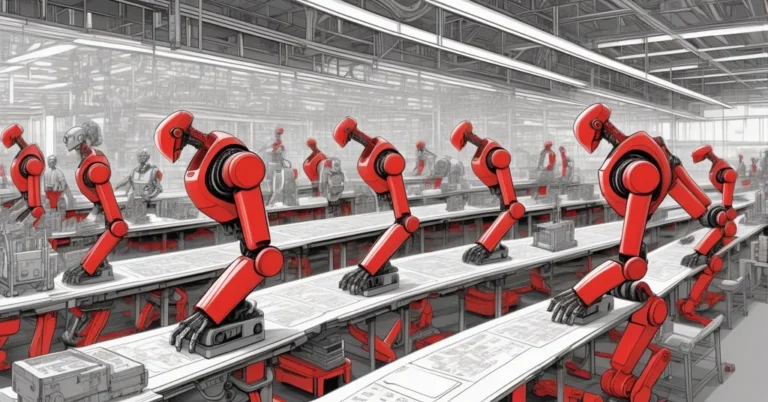
Mitsubishi Motors and a Tokyo startup: are humanoid robots heading for mass production?
A CryptoBriefing report says Mitsubishi Motors has signed a memorandum of understanding with Highlanders, Inc., described as a University of Tokyo spinout founded in 2023, to develop and mass-produce AI-driven humanoid robots at Mitsubishi’s Kyoto plant, targeting up to 1, 000 units per month by early 2027. Those are the claims on the table. They come from a single public report and should be confirmed with a Mitsubishi or Highlanders statement, the MOU text, or corporate filings. Good places to check: Mitsubishi’s press room and investor releases, Highlanders’ corporate pages or LinkedIn, Japan’s corporate registry, and follow-ups from established industry reporters.
Why an automaker shows up in a robotics deal
Automakers bring three things most startups do not have at scale: high-throughput factory floors, deep supplier networks, and proven quality-control processes. If a car plant can be retooled to assemble humanoids, the challenge of serial production moves from theoretical to practical. That explains moves by industrial groups like Hyundai Motor Group’s acquisition of Boston Dynamics and Tesla’s public Optimus project. These show automakers see robotics as a nearby market where manufacturing muscle gives an edge.
“At scale” is a big promise. Here’s what it actually demands
-
Mechanical actuation and parts.
Humanoids need compact, high-performance actuators, precision gear trains, and tactile end-effectors. These items drive cost and lead times. Producing thousands per month requires stable suppliers for parts that today are often low-volume and bespoke.
-
Sensing and perception.
Cameras, depth sensors, IMUs, and potentially LIDAR must be integrated and calibrated per unit. Scaling without ballooning test time means standardizing sensor stacks and automating calibration.
-
Compute and software lifecycle.
Robots are long-running software platforms: fleet orchestration, OTA updates, security patches, telemetry, and edge inference all add ongoing operational cost. Managing that at 1, 000 units per month is a systems problem, not a one-off build challenge.
-
Safety, standards and certification.
Humanoids working around people or on production lines will face safety standards such as ISO 10218 and ISO/TS 15066 for collaborative robots, and depending on use case ISO 13482 for personal care robots. Certification, validation testing, and regulatory approvals take time and documented evidence. You cannot shortcut those and still claim sustained mass deployments.
-
After-sales and service networks.
Robots need spare parts, diagnostics, and trained technicians. An automaker’s dealer and service experience helps, but it still requires new tooling, SKUs, and large-scale training.
How bold is the reported target?
The CryptoBriefing report assigns a target of up to 1, 000 humanoid robots per month by early 2027. If true, that equals roughly 12, 000 units a year, which is a meaningful volume for a factory-first strategy. But moving humanoids from lab prototypes to consistent, shippable products differs from ramping a car model: unit complexity is higher, supplier ecosystems are less mature, and software and validation cycles are longer. Treat the 1, 000 per month figure as an ambitious production target reported publicly, not yet verified by primary-source documents.
Immediate implications for business leaders
If an automaker truly commits factory capacity to serial-production humanoids, the impact will spread beyond robotics teams. Here’s how to act now.
- Operations and manufacturing: Map where your workflows could accept humanoid collaboration or replacement, and run a pilot for human-robot teaming to learn cycle times, safety barriers, and tooling needs.
- Procurement: Identify supplier overlap, actuators, sensors, and compute chips are shared commodities; open conversations with suppliers and plan risk hedges.
- HR and workforce planning: Forecast technician and maintenance skills needed; plan retraining and recruitment for higher-skilled roles rather than simple headcount cuts.
- Legal and security: Scope liability frameworks, data governance for robot telemetry, and cybersecurity requirements for OTA updates and fleet control.
Concrete 30/60/90-day actions for executives
- 30 days: Run a cross-functional fact-check and impact memo, confirm whether the report applies to your industry segment and list the top five suppliers that would be affected.
- 60 days: Launch a small human-robot collaboration pilot (safety-reviewed) in one facility to gather real productivity and maintenance metrics.
- 90 days: Present a board-level briefing with scenario modeling: CAPEX for adopting humanoids versus outsourcing, a retraining plan, and contractual and risk adjustments for suppliers and insurers.
What to watch next
- Official confirmation from Mitsubishi Motors and Highlanders: press releases, the full MOU text, or regulatory filings that clarify commitments and timelines.
- Details on the Kyoto plant claim: whether it’s a partial conversion, a dedicated line, or a pilot cell, and the required CAPEX and timeline.
- Supplier agreements and capacity statements for actuators, sensors, and compute hardware.
- Technical demos and performance data showing dexterity, autonomy, and safety validation under production conditions.
- Announced plans for after-sales support, software update platforms, and certification milestones aligned to ISO standards.
Comparative context
Other industrial groups show the strategic logic but also the long lead time. Hyundai’s move into Boston Dynamics and Tesla’s Optimus work signal automaker interest, but neither produced high-volume humanoid shipments overnight. Historically, robotics production tends to scale from tens to hundreds of units before reaching thousands, a pattern driven by specialized components and validation complexity.
Key takeaways and quick questions
-
Is this partnership confirmed and who is the startup?
The narrative rests on a CryptoBriefing report that names Highlanders, Inc. as a University of Tokyo spinout founded in 2023 and says Mitsubishi signed an MOU; those specifics should be verified with an official Mitsubishi or Highlanders announcement or public filing.
-
Is 1, 000 humanoid robots per month realistic by early 2027?
It’s an ambitious target. Achieving it requires mature supplier contracts, retooled production lines, safety certification, and substantial CAPEX; treat the figure as a reported production goal until primary documents confirm ramp plans.
-
What markets would these robots serve?
The report frames the robots as intended for manufacturing tasks, potentially to offset labor shortages in Japan, but broader commercial markets (logistics, eldercare, services) are possible and would depend on cost, capability and certification.
-
What should business leaders do right now?
Validate the reporting, run an operational impact assessment, pilot human-robot collaboration in one facility, and involve procurement, legal and HR to model supplier, regulatory and workforce scenarios.
Bottom line
An automaker using existing factory infrastructure to make humanoid robots at volume would change the production economics for the category if the operational claims hold up. For executives the practical stance is simple: verify the deal, demand technical and supplier evidence, and prepare operations, procurement, and workforce plans now. Humanoid robots arriving as fleets instead of one-off pilots would shift priorities from R&D to lifecycle management, and that shift favors organizations that act early to align people, parts, and platforms.