
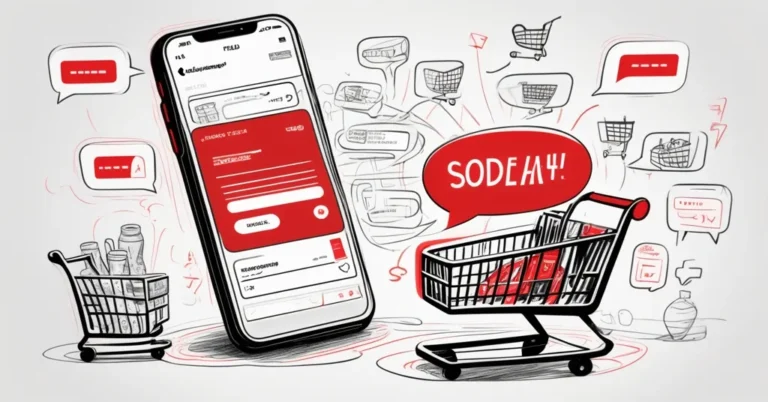
The checkout just moved into the chat window: Lotte Chilsung’s conversational commerce play
TL;DR for executives
- Lotte Chilsung launched Chilsung Mall as a ChatGPT app on May 13, embedding a direct-to-consumer (DTC) storefront inside ChatGPT using the platform’s “Apps” capability.
- The experience replaces keyword searches with intent-based dialogue: users ask natural-language prompts, get curated recommendations, and can add items to cart or follow purchase links without leaving the chat.
- Short-term upside: lower friction and stronger owned channels. Long-term: competition for “conversational shelf space,” new KPIs, and investments in AI merchandising, prompt engineering, and real-time integrations.
What Lotte built — the mechanics
Lotte Chilsung Beverage embedded Chilsung Mall inside OpenAI’s ChatGPT using ChatGPT’s “Apps” capability (third-party services running inside ChatGPT conversations). Shoppers open the app from the ChatGPT Apps menu, type the app handle (for example, @Chilsung Mall), or tap the plus button to load the shopping interface into the chat.
The interaction model is simple: customers ask natural-language questions like “Recommend drinks for a summer party” or “Which items are available on subscription?” The AI narrows options, surfaces tailored recommendations, and provides links that add items to cart or take users to purchase pages—all within the same conversational flow. Lotte Wellfood, another business unit, has released a similar ChatGPT app, showing this is a group-level push to convert generative AI from customer service into a revenue channel.
“Lotte positions the future retail battleground as the AI chat window rather than the search bar.”
Why it matters for retailers and leaders
Conversational commerce is the practice of buying and selling through chat interfaces and AI agents. The practical change here is timing and context: brands can capture buying intent the moment a customer asks for a recommendation, rather than waiting for them to type exact keywords into a search box or click an ad.
Key jargon, defined:
- DTC (Direct-to-consumer): Selling directly to customers without relying on marketplaces or third-party retailers.
- Apps capability: ChatGPT’s feature that lets third-party services run inside conversations, so users don’t leave the chat to use another service.
- Prompt engineering: The craft of writing and tuning the queries and instructions that guide AI responses and recommendations.
- Conversational shelf space: The placement and visibility a product gets inside an AI-driven recommendation flow—think of it as the digital equivalent of an endcap in a grocery aisle.
This shift mirrors past platform-level changes: WeChat Mini Programs brought commerce into chat in China, Instagram and TikTok added in-app checkout, and voice assistants experimented with shopping via skills. ChatGPT’s Apps make the chat window another owned touchpoint, and brands that master AI-driven merchandising and real-time integrations will gain an edge.
How the in-chat funnel works (example)
User: Recommend drinks for a summer party for 10 people, low sugar.
Chilsung Mall (ChatGPT): Here are three best-sellers that fit your criteria—tap to add to cart. (Buttons: Add 1 of A • Add 1 of B • View bundle)
The flow keeps discovery, selection, and cart actions in a single context. That reduces context switching and the friction points where shoppers typically abandon carts.
How to measure conversational commerce success
New channels require new KPIs. Classic site metrics matter, but focus on conversation-driven measures that show whether chat is actually producing sales.
- Conversation-to-cart rate = add-to-cart events / number of conversations. Target: benchmark during pilot; early success could be 5–10% adds-per-conversation depending on catalog and CTA design.
- Conversation-to-purchase rate = purchases / number of conversations. Suggested early threshold: 2–3% as a go/no-go signal for expansion.
- Average order value (AOV) lift = AOV from chat sessions / baseline AOV. Expect bundling and recommendation UX to push this up if done well.
- Time-to-purchase = median time from first message to checkout. Shorter times indicate low-friction flows.
- Drop-off points = percentage of sessions that stop after recommendation, after add-to-cart, etc. Use funnel analytics to find UX leaks.
90-day pilot playbook: milestones and sample tests
Allocate a small cross-functional team (product engineer, integrations lead, data analyst, AI merchandiser/prompt engineer) and run a focused pilot. Keep it tight and measurable.
Day 0–30: Integrate & launch limited beta
- Hook inventory, pricing, and promotions APIs into the ChatGPT app using secure endpoints.
- Create a small catalog slice (best-sellers, subscription SKUs, bundles) and author initial prompts and response templates.
- Soft-launch to a controlled user group (customer panel or loyalty members) and capture logs.
- Success signal: stable data sync, no critical accuracy errors, baseline conversation-to-cart > 3% in beta.
Day 30–60: Test merchandising & prompts
- A/B test prompt phrasing (e.g., “Top party drinks” vs “Best sellers for summer parties”).
- Experiment ordering logic: popularity vs margin vs personalization.
- Track KPIs and tune recommendation models. Fix any inventory/promo mismatches.
- Success signal: conversation-to-purchase trending toward the 2–3% threshold and AOV lift ≥ 5%.
Day 60–90: Optimize and scale
- Roll out broader catalog slices and targeted promotions inside chat.
- Personalize suggestions using past purchase data where possible (and with the right consents).
- Prepare go/no-go decisions based on revenue per conversation, cost-to-serve, and retention.
- Success signal: profitable CAC for chat-acquired purchases and stable operations.
Sample prompt templates to test
- Informational: “Recommend drinks for a summer rooftop party for 10 people, low sugar.”
- Transactional: “Add the low-sugar party bundle to my cart.”
- Subscription upsell: “Which drinks qualify for a monthly subscription and offer free delivery?”
Operational checklist & tech architecture
- Real-time feeds: Inventory and pricing via APIs with webhooks for stock changes. Sync cadence should match business volatility (seconds for fast-moving SKUs, minutes for stable catalogs).
- Promotion logic: Centralized promotion engine with rules accessible by the chat app to prevent misapplied discounts.
- Payment flows: Clear handoff or embedded checkout options; PCI compliance if storing payment data.
- Fallbacks & UX safety: Graceful messages when data is stale (e.g., “I don’t have the latest stock info; here’s a link to the product page”).
- Logging & analytics: Conversation logs (with consent) exported to your analytics platform for funnel analysis and model training.
- Monitoring & alerts: Real-time alerts for price mismatches, failed webhooks, or surge in failed purchases.
Risks, legal and governance
Embedding a storefront inside a third-party chat platform introduces contractual and operational risks. Address these upfront.
- Data ownership: Negotiate rights to export conversation logs, structured signals, and attribution data. Confirm retention policies and export capabilities.
- Privacy & consent: Obtain explicit user consent for using purchase history or personal data to personalize recommendations; follow local regulations (e.g., PDPA, GDPR equivalents).
- Accuracy & mis-selling: Implement pre-flight checks and safe fallbacks. Soft-launch before scaling to catch pricing or stock errors.
- Brand safety: Control tone and product descriptions; request templates or response guardrails from the platform when possible.
- Platform dependency: Build modular integrations and data exports so you can move or replicate the experience on other agents or channels.
What this means for executives — a short checklist
- Assign a pilot team: one product engineer, one integrations lead, one data analyst, one AI merchandiser/prompt engineer.
- Define go/no-go metrics: conversation-to-purchase ≥ 2–3% or target CAC/revenue per conversation thresholds after 90 days.
- Negotiate platform terms: data export, retention, and attribution access before scaling.
- Start with a curated catalog and measurable promotions to limit accuracy risk and maximize learnings.
Visual and SEO suggestions
- Suggested meta title: “Conversational Commerce in ChatGPT: Lotte Chilsung’s In-Chat Storefront and What It Means for Brands”.
- Suggested meta description: “Lotte Chilsung launched a ChatGPT app embedding DTC shopping in chat. Learn how conversational commerce works, which KPIs to track, and a 90-day pilot playbook for executives.”
- Visual ideas: chat UI mockup (alt text: “ChatGPT in-chat checkout flow showing recommendations and add-to-cart buttons”), KPI dashboard mockup (alt text: “KPI dashboard for conversational commerce showing conversation-to-cart and conversation-to-purchase rates”).
Brands that treat AI agents as sales channels instead of just support tools will test, learn, and either own a new channel or watch competitors do it. If you’re allocating budget this quarter, fund a 90-day pilot, secure the platform data rights, and hire or upskill a small team for AI merchandising and prompt engineering. Conversation-to-purchase is the north star—hit 2–3% and you’ve proved the model; hit it profitably and you’ve bought your conversational shelf space.
Related reading: saipien.org pieces on AI agents, AI for sales, and AI automation can help you staff and scale after your pilot.