
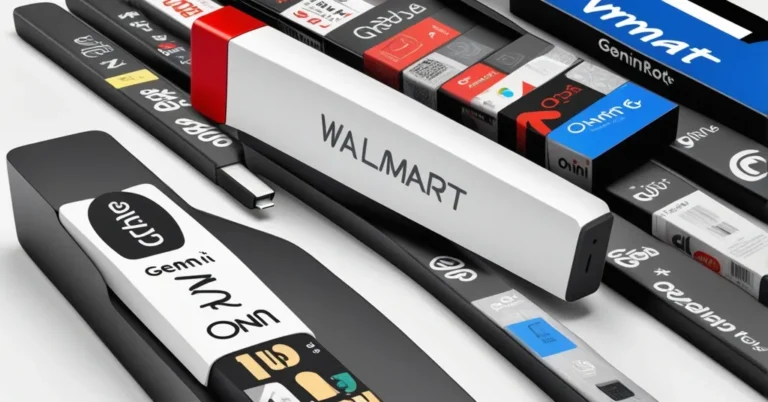
Could Walmart’s $30 Onn 4K stick become the budget Chromecast successor?
Bottom line: A leak from a Walmart store suggests Onn may be shipping an Onn 4K Streaming Device — a compact $30 Google TV stick with Dolby Atmos and Gemini voice control. If genuine and widely available, it could function as a practical, budget Chromecast alternative and accelerate voice‑first discovery in the living room. Marketers and product leaders should start preparing for more affordable devices that nudge users from remotes to conversation.
What the leak claims
Photos and a Reddit purchase post reported to Android Headlines show an Onn-branded stick labeled as running Google TV with Gemini. The box details that surfaced match an entry on androidtv‑guide.com, lending the leak additional credibility.
“Google TV with Gemini.”
the device “costs just $30” and supports “4K and Dolby Atmos, voice control with Gemini, and Google Cast.”
“A new 4K Onn streaming stick was reportedly spotted at Walmart. It could be an affordable replacement for Google Chromecast. You get 4K support, Dolby Atmos, and Google TV.”
Reported hardware and specs (from the box and spec database):
- Form factor: compact HDMI stick (Onn 4K Streaming Device)
- Price: ~ $30 (as claimed by the Reddit buyer)
- Video/audio: 4K support and Dolby Atmos
- Platform: Google TV with Gemini voice control, Google Cast
- Hardware: quad‑core Cortex‑A55 CPU (a low‑power quad‑core processor common in budget streamers), ARM Mali‑G57 GPU (an entry‑level graphics chip used for video playback)
- Memory/storage: 2GB RAM, 8GB storage
Hardware reality check: what 2GB RAM means
Two gigabytes of RAM is lean but not fatal for a streaming stick focused on single‑app playback. Video decoding is handled mostly by dedicated hardware, so 2GB will generally be fine for Netflix, Disney+ or YouTube 4K playback. The tradeoff is reduced headroom: running multiple background tasks, heavier apps, or large future updates may expose performance limits. That’s a reasonable compromise for a $30 retail price — but one that can affect perceived quality and device longevity.
How it stacks up to competitors
Price and platform are the differentiators here more than raw horsepower.
- Roku 4K streaming stick: typically retailing just over $40; known for a simple UI and broad channel support. Reported competing sticks often have lower RAM footprints (e.g., ~1GB) but larger storage on some SKUs.
- Amazon Fire TV Stick 4K: usually positioned above the $40 mark and integrates tightly with Amazon services and Alexa voice.
- Older Chromecast with Google TV: Google’s compact dongle used to fill this space; its discontinuation left a gap for buyers who wanted a tiny Google TV option.
Onn’s potential advantage: combine a sub‑$40 price with Google TV and Gemini voice, making it attractive for price‑sensitive buyers who prefer Google’s ecosystem and voice interactions. Onn’s existing 1080p sticks sell for around $20, so a $30 4K upgrade would be consistent with Walmart’s value segmentation.
Why marketers, content owners and CX teams should care
Affordable devices are distribution mechanisms for platforms and AI agents. If a $30 Onn stick ships with Google TV and Gemini, three practical shifts follow:
- Voice becomes a lower‑cost entry point. More households with Gemini‑capable hardware means more queries originating from the living room. Prioritize short, snappy responses your content can provide when queried by voice.
- Discovery changes. Voice queries favor conversational answers and direct actions (play, rent, subscribe). Optimize metadata so your content surfaces for these intents — short descriptions, clear tags, and trailer-first hooks matter more.
- Platform lock‑in intensifies. Cheap hardware that defaults to Google TV nudges users into Google’s content and ad surfaces. Winning attention requires playing by that ecosystem’s rules.
Concrete actions to start now:
- Audit metadata and schema: implement concise, SEO‑style snippet fields and ensure schema.org tags are complete for voice discovery.
- Design voice‑first CTAs: enable frictionless actions (one‑click subscriptions, “play trailer”, “add to watchlist”) when a user issues a voice command.
- Instrument voice analytics: capture whether a session started from voice, what phrase was used, and the subsequent conversion — build dashboards to measure voice CTR and voice‑initiated revenue.
- Test short answers: produce short, authoritative snippets that a voice assistant can read aloud as the primary response.
Risks, caveats and what could go wrong
Not every leak becomes a successful product. Key risks:
- Authenticity and availability: Walmart/Onn had not confirmed the device at the time of the leak. Community posts sometimes mislabel or redistribute early samples.
- Software support: Do Onn devices receive long‑term OS and security updates? Cheap hardware often suffers from limited update windows, which affects performance and privacy over time.
- User experience: Low memory can mean sluggish menus, delayed app updates, and a poor first impression that limits adoption.
- Platform constraints: Google certification and Gemini integration may come with limitations or gradual feature rollouts that differ from what’s printed on the box.
Privacy and data implications
Embedding Gemini on low‑cost sticks increases the number of devices that can capture voice queries. That raises practical concerns for data handling and compliance:
- Expect more voice‑originated telemetry routed through Google’s services; privacy policies and consent flows should be audited.
- Brands must consider how voice interactions feed into ad personalization and measurement, and ensure legal compliance (GDPR, CCPA) for voice data.
- Where voice triggers downstream actions (purchases, subscriptions), ensure strong authentication and user confirmation steps to prevent accidental conversions.
Verification checklist for spotting an authentic leak
Before you rework strategy around this device, use a quick checklist to judge authenticity:
- Multiple independent sightings or retail receipts (not just one Reddit post).
- Matching entries in device spec databases or certification registries (e.g., androidtv‑guide.com).
- UPC/sku listed in retailer inventory systems or database dumps.
- Firmware or SDK references that include build strings indicating Google TV/Gemini integration.
- Official confirmation from Walmart or Onn, or evidence of a planned launch window (Walmart often refreshes streaming hardware around seasonal windows).
Practical final steps
Assume a conservative posture: prepare, don’t pivot overnight. Start with these prioritized moves:
- Run a metadata triage for your top‑performing titles — make them voice‑ready within two sprints.
- Add voice provenance to analytics so you can measure the share of traffic coming from voice devices within 60 days.
- Prototype one voice‑first CTA (e.g., trailer → rent flow) and A/B test its conversion against remote‑driven flows.
- Monitor official channels (Walmart, Onn, Android Headlines, androidtv‑guide.com) for confirmation and timing, and be ready to scale content placement quickly when devices ship.
Shareable summary: Leak: Walmart’s Onn 4K stick may ship with Google TV + Gemini for ~$30 — a low‑cost path to voice‑first living rooms. Marketers: start optimizing for voice.
If the Onn 4K streaming stick ships as reported, it will be less about shaving hardware costs and more about widening the entry ramp for voice interactions. For businesses that rely on discovery in the living room, that ramp is worth preparing for now.