
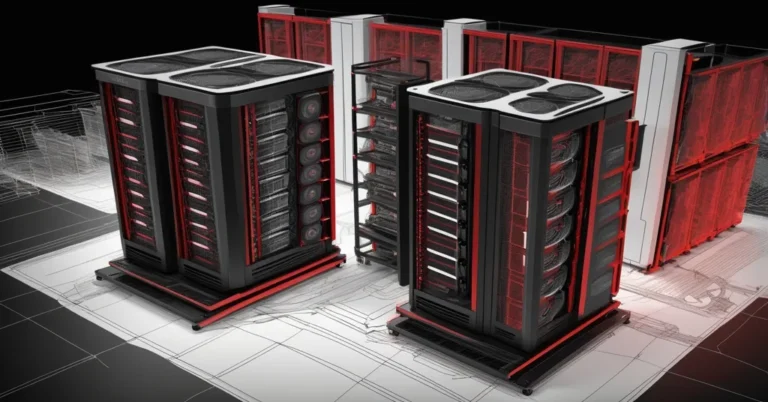
IREN’s Pivot to AI Cloud: GPU, Liquid Cooling and the Financial Tradeoffs
Facing steep losses from Bitcoin mining, IREN (formerly Iris Energy) is redeploying its power-hungry infrastructure into an AI cloud business built around liquid‑cooled GPUs. That shift promises steadier, contracted revenue and higher margins — but it’s a capital‑intensive, execution‑heavy gamble that hinges on power procurement, Nvidia hardware deliveries and the company’s ability to sign long‑dated compute contracts.
Executive snapshot
- All‑in Bitcoin cost: about $80,000 per BTC, implying an effective loss near $19,000 per coin over the referenced period.
- Current AI revenue: ~9% of IREN’s mix; target ~70% by 2026 if the buildout is delivered.
- Planned capacity: up to 200 MW of liquid‑cooled GPU capacity; roughly 150,000 GPUs targeted overall.
- GPU orders: purchase intent for 50,000+ Nvidia B300 GPUs (next‑generation accelerators central to the plan).
- Financing raised: approx. $9.3B total to support the transition — including ~$3.5B planned capex and ~$3.7B via convertible bonds.
- Revenue targets: aiming for multi‑billion dollar AI cloud revenue (roughly $3.7B by end‑2026 and ~$3.4B annual revenue by 2026 in management scenarios).
- Key risks: power pricing and availability, liquid‑cooling delivery timelines, Nvidia allocations, and customer concentration.
Why the pivot: the arithmetic that matters
Bitcoin’s economics changed after the recent halving — a scheduled cut in miner rewards that reduces miner revenue per block. When unit economics flip, asset owners with large power footprints face a clear choice: keep chasing a volatile, price‑sensitive commodity or convert capacity into something customers prepay for.
“All‑in production cost” means the total cost to produce a single BTC, including electricity, capital depreciation, site overhead and other costs. For IREN that figure sits near $80,000 per BTC. At market prices below that level, mining becomes a money‑losing operation — the company lost roughly $19,000 per coin over the referenced period. That gap is why miners and data‑center owners are repurposing racks and power contracts for the GPU cloud market.
Shifting from ASIC miners to GPU‑intensive workloads is logical on paper: GPUs run a broader set of AI tasks (training, inference, fine‑tuning AI agents) and can be sold as contracted compute to enterprises building AI for business features like AI Automation and AI for sales. But the switch changes the business from a commodity play to a service business that requires sales, SLAs and longer cash collection patterns.
The finance picture: capital intensity and financing tradeoffs
The numbers are large and deliberate. IREN has raised roughly $9.3 billion to fund the pivot, including about $3.5 billion earmarked for capital expenditure and approximately $3.7 billion raised via convertible bonds. Those convertibles speed deployment of cash but also introduce dilution risk and balance‑sheet sensitivity if revenue ramps slip.
Why convertible bonds matter: they are debt that can convert into equity. That provides quicker access to capital but can amplify downside for existing shareholders if the convertibles convert at depressed valuations, or if covenants trigger refinancings.
Management’s target is ambitious: up to 200 MW of liquid‑cooled GPU capacity and an eventual fleet of around 150,000 GPUs, anchored by a substantial purchase intent for Nvidia B300 accelerators. The company projects multi‑billion dollar AI cloud revenue (management scenarios suggest roughly $3.7B by end‑2026 and an annualized run rate in the mid‑$3B range). Those figures hinge on timely construction, smooth GPU deliveries and signed multi‑year contracts with acceptable utilization.
Context for the scale
$3.5 billion of capex is enough to build multiple high‑density, liquid‑cooled data centers and to outfit them with tens of thousands of GPUs. But that capex only converts to revenue if power and customer contracts are secured on favorable terms. In this market, power is the single largest line item: the difference between a profitable AI cloud and a levered failure often comes down to cents per kWh on long‑dated power deals.
Execution risks: where the plan can break
The pivot swaps one set of risks for another. Key execution challenges include:
- Power and grid access: Securing low‑cost, long‑dated power (PPAs) at scale is mission‑critical. Grid permitting delays, transmission constraints or unfavorable PPA pricing can blow out operating margins.
- Liquid‑cooling deployment: Liquid cooling increases compute density and energy efficiency but requires specialized engineering, longer construction cycles and stricter maintenance regimes.
- GPU supply and Nvidia allocation: The B300 is central to the plan. Global demand for next‑gen accelerators is fierce; shortages or delayed shipments would slow revenue ramps.
- Sales and customer concentration: Moving to contracted compute means selling long‑dated capacity. Overreliance on a few large customers creates counterparty risk — if a major buyer cancels or renegotiates, utilization and revenue visibility evaporate.
- Financing timeline risk: Heavy upfront capex and convertible bonds leave little margin for delayed revenue. Financing covenants or capital market conditions can become a constraint if milestones slip.
IREN plans a large bet on Nvidia’s next‑generation hardware and aims to buy 50,000+ B300 GPUs as part of a broader push to reach ~150,000 GPUs.
Operationally, delays in any of these areas compound. A late GPU shipment reduces early utilization; a delayed PPA forces short‑term expensive grid power purchases; slow sales increase the time to cash breakeven and heighten refinancing risk. In short: the model is powerful if executed, fragile if not.
What to watch — an executive checklist before you trust an AI cloud vendor
For C‑suite leaders evaluating IREN or any vendor repurposing mining capacity into an AI cloud, focus on verifiable milestones, not just headline revenue targets. The following checklist separates signal from noise.
- Signed multi‑year compute contracts.
Ask to see contract tenors, minimum utilization guarantees and if revenue is largely committed or spot. Signed, multi‑year contracts with minimum utilization materially de‑risk the buildout. - Power procurement details.
Verify PPAs: price per kWh, tenor, termination clauses and whether the contracts are tied to delivered capacity rather than hypothetical generation. Ask about transmission readiness and any interconnection milestones. - Liquid‑cooling milestones.
Inspect vendor agreements for cooling systems, installation dates, commissioning tests and maintenance SLAs. Confirm contractor experience with high‑density GPU racks. - Hardware delivery schedule and fallbacks.
Check confirmed delivery windows for Nvidia B300s and ask about alternative suppliers or temporary migration plans if shipments slip. - Customer concentration and sales pipeline.
Request a breakdown: percent revenue from largest customers, sales pipeline stages, and strategies to diversify across enterprises, cloud partners and model hosts.
Red flags: PPAs not fully signed, GPU delivery windows over 6 months away without confirmed reservations, >40% revenue tied to one counterparty, and convertible bond covenants that accelerate on modest delays.
Sample contract clause to seek when engaging an AI cloud vendor:
“Vendor guarantees minimum committed compute availability of X TFLOP‑hours per month for a minimum 24‑month term, with service credits for availability below 95% and a fixed power‑cost pass‑through capped at Y cents/kWh.”
Three plausible scenarios
It helps to think in scenario terms rather than precise forecasts:
- Best case: IREN secures long‑dated PPAs at competitive rates, receives timely Nvidia B300 allocations, and signs diversified multi‑year contracts. Result: predictable revenue, improved margins and a re‑rating toward infrastructure valuation multiples.
- Base case: IREN hits most construction milestones but faces modest GPU delivery delays and initial customer concentration. Revenue ramps slower than plan; convertible bond markets tolerate the delay but shareholders face dilution. The business stabilizes but at a lower valuation than management targets.
- Worst case: Power deals are late or costly, GPU allocations slip, and sales stall. Underutilized capacity forces expensive interim power purchases and covenant pressure on financing, risking asset sales or equity dilution that erodes returns.
Even a 15–25 percentage point shortfall in average GPU utilization can meaningfully extend payback timelines and increase refinancing risk. That’s why signed contracts and verified power deals are the levers that matter most.
What it means for buyers and partners
Enterprises looking for AI cloud, GPU cloud or GPU‑accelerated hosting should treat infrastructure providers like strategic partners. These are not disposable SaaS vendors; they own physical assets whose economics depend on power, cooling and hardware supply.
When evaluating a provider, ask for these KPIs:
- GPU utilization (by pool and by customer)
- Average contracted term (months/years)
- Power cost per kWh and PUE (power usage effectiveness)
- Capital intensity per usable TFLOP/s
- Customer concentration (revenue % from top 5 customers)
Buyers should also insist on performance SLAs tied to usable compute, not just uptime. For AI for sales, AI agents or mission‑critical model hosting, small drops in latency or availability can materially reduce model value — so contractual clarity on latency, throughput and error budgets matters.
Market implications and competitive landscape
IREN is not alone. Capital is rotating from Bitcoin ASIC farms into GPU‑centric compute as miners seek less cyclical revenue. Hyperscalers (AWS, Azure, GCP) remain dominant buyers and have the scale to negotiate favorable hardware allocations, but there is room for specialized GPU cloud vendors that offer differentiated pricing, geographic presence or verticalized services for AI for business and AI Automation.
Alternative strategies miners have pursued include: selling power contracts to hyperscalers, partnering with established cloud providers for colocation, or offering niche model‑hosting services for AI startups and research labs. Each path has tradeoffs: partnering reduces go‑to‑market and sales risk but also caps upside; standalone buildouts capture more margin but face distribution and sales hurdles.
Regulatory, ESG and grid considerations
Repurposing mining assets into AI cloud raises environmental and regulatory questions. Liquid‑cooled data centers can improve energy efficiency per compute unit, but building large‑scale facilities still stresses local grids and invites scrutiny on permitting and community impact. Executives should ask vendors about carbon accounting, planned use of renewable PPAs, and contingency plans for grid constraints.
Milestones to watch
- Signed PPAs covering a meaningful share of the planned 200 MW capacity
- Confirmed delivery schedules or reservations for 50,000+ Nvidia B300 GPUs
- First multi‑year compute contracts signed and disclosed (tenor and minimum utilization)
- Commissioning of the first liquid‑cooled sites and publicized PUE/efficiency metrics
- Convertible bond covenant status and any refinancing announcements
Verdict
IREN’s strategy makes strategic sense: repurpose energy assets into contracted AI compute to trade spot commodity exposure for predictable service revenue. The upside is meaningful — higher margins and revenue visibility — but the path is narrow. The company must execute on power, cooling, hardware and sales simultaneously.
For C‑suite leaders evaluating vendors or contemplating similar pivots, the prescription is clear: demand proof, not promises. Prioritize signed PPAs, delivered hardware, and multi‑year contracts with minimum utilization. Treat GPU cloud vendors as infrastructure partners — evaluate power economics, cooling reliability and SLA definitions before committing mission‑critical AI workloads.
Watch the milestones. The first completed liquid‑cooled sites and the initial slate of signed compute contracts will tell you whether IREN’s chess move is a checkmate or an overreach.