
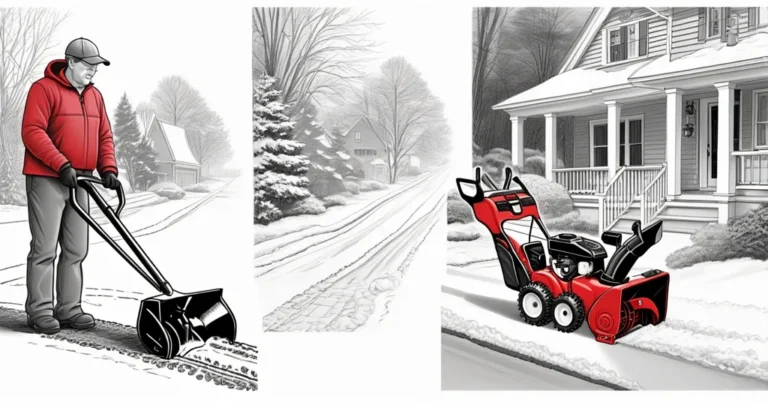
How to pick a snow blower that actually saves you time (and your back)
TL;DR — Single-stage or powered shovels for small stoops and light snow; a two-stage snow blower is the best all-round pick for most homeowners; three-stage if you regularly clear heavy, icy drifts. Choose tub width for driveway size (24–26″ for most homes). Pick gas for long runs and very cold climates; battery for lower maintenance and easier storage. Read one- and two-star reviews to spot recurring failures; call the manufacturer for small missing parts instead of returning the whole unit.
Pick the right machine and you reclaim your morning
Snow blowers are winter power tools: a great buy when matched to the job, expensive regret when not. After assembling dozens of machines at MTD Products and watching the same design choices show up across brands, the decision points simplify into a repeatable checklist: machine type, tub width, power source, and drive system. Add smart shopping and maintenance habits and your machine becomes reliable season after season.
Quick decision flow
- If your cleanup is a small stoop, sidewalk, or <6″ average storms → powered shovel or single-stage.
- If you clear a suburban driveway, 24–40 ft, or see regular 6–12″ storms → two-stage snow blower.
- If you face heavy, wet, or icy snow and deep drifts → three-stage (or commercial attachment).
- If you have hills, packed/icy surfaces, or heavy pack → consider track-drive.
Single vs two vs three-stage (and powered shovels): what each does
Understanding the moving parts helps reduce marketing noise. The auger (the rotating blade that scoops snow) is the primary clearing tool. Two-stage units add an impeller (a high-speed fan that throws the snow away from the chute). Three-stage machines add a third accelerator/auger for faster throughput and deeper clearing.
Powered shovel (handheld)
About 12″ wide, electric battery or corded models. Perfect for stoops, small steps, and tight sidewalks.
- Pros: Cheap, lightweight, low storage needs.
- Cons: Slow for anything larger than a few dozen square feet.
- Rule of thumb: If your path is under 10 ft long and storms are usually under 4–6″, a powered shovel will save your back and your wallet.
Single-stage snow blower
A single rotating auger both scoops and propels snow. Works best on light, dry snow and paved surfaces.
- Pros: Compact, inexpensive, easy to store.
- Cons: Struggles with heavy, wet, or packed snow; not ideal for gravel driveways unless used carefully.
- Rule of thumb: If your driveway is under 30 ft and you typically see less than 6″ per event, a single-stage will often do the job.
Two-stage snow blower
Combines an auger with an impeller fan to throw snow faster and farther. This is the most versatile class for homeowners.
- Pros: Handles deeper snow, clears faster, suitable for most suburban driveways (24–28″ tubs common).
- Cons: Heavier and more expensive than single-stage units; more maintenance points.
- Rule of thumb: If your driveway is 30–60 ft or storms regularly exceed 6″, a two-stage model is the best balance of cost and capability.
Three-stage snow blower
Adds an accelerator (third rotor) to feed snow to the impeller more aggressively—designed for deep, heavy, or icy conditions. Top-tier models advertise throw distances up to ~50 ft (real-world throw depends on snow density and chute angle).
- Pros: High throughput, best at cutting through icy drifts and very deep snow.
- Cons: Costly, heavier, higher maintenance. Often overkill for many suburban homeowners.
- Rule of thumb: If you get frequent blizzards, deep drifts, or need commercial-level clearing, choose three-stage.
Tub width, clearing rate, and practical sizing
Common tub widths are 24″, 26″, 28″, and 30″. Wider tubs cover more ground per pass but cost more and are harder to maneuver in tight spots.
- 24–26″: Ideal for most homeowners; balances clearing speed and maneuverability.
- 28–30″: Suited to larger driveways or commercial use.
- Attachment blowers for tractors/mowers: Fast for large properties but require deck removal and setup.
Gas vs battery: the tradeoffs
Gas models have long been the standard for heavy lifting: they run as long as you refuel, tolerate cold better, and can be started with electric starters on modern units. But gas engines require oil changes, fuel stabilizers, and winterization care.
Battery snow blowers (60V, 80V platforms) have made big gains: they’re cleaner, quieter, easier to store, and close the power gap for typical homeowner use. Where they still lag is long continuous runtime for large driveways or back-to-back storms—unless you carry spare battery packs.
- Choose gas if: your job requires continuous operation for long driveways, you live where temps are regularly below freezing for extended periods, or you prefer unlimited runtime without swapping batteries.
- Choose battery if: you want low maintenance, cleaner storage, quieter operation, and you can charge between uses or have spare packs.
Rule of thumb: For suburban homeowners clearing a typical driveway once or twice per storm, high-voltage battery models are now a viable alternative to gas. For long rural drives or commercial clearing, gas still wins on raw runtime and refuel convenience.
Track-drive vs wheeled models
Tracks provide superior traction on packed ice and steep terrain at the cost of complexity and price. Wheeled machines are cheaper, lighter, and more maneuverable on flat, cleared surfaces.
- Tracks: Worth it if you battle hills or icy pack regularly.
- Wheels: Better for flat suburban yards and lighter snow conditions.
Why brand matters less—and what matters more
“Most snow blowers are built from the same basic parts and operate the same way.”
Many brands use the same stamped steel tubs, engines from a handful of suppliers, and similar wiring harnesses. Brand premiums often buy convenience features, better warranties, dealer networks, or easier access to replacement parts—not a wholly different mechanical platform. That makes customer reviews and service reputation your most valuable shopping tools.
“Start by reading one- and two-star reviews to spot recurring defects, then read edited four- and five-star reviews to learn about durability and assembly issues.”
Low-rated reviews often highlight consistent mechanical failures, shipping damage patterns, or poor customer service. High-rated, long-term reviews reveal assembly quirks and what owners fixed themselves. Use both to form a realistic picture.
Shopping, delivery, and post-delivery strategy
Common delivery scenarios: small missing hardware or cosmetic dents are usually resolved faster by calling the manufacturer for parts than returning the whole unit. Reserve returns for unsafe defects—damaged augers, bent gearboxes, or engines that don’t run.
Buyer tips:
- Take photos of the crate and damage before you refuse or accept delivery—these speed claims.
- If bolts or small parts are missing, most manufacturers will ship replacements quickly; local big-box stores can often supply generic fasteners the same day.
- For bundled deals, confirm battery compatibility across the brand’s platform—an extra pack might be a better investment than a larger single battery on purchase day.
Snow blower maintenance & a simple 5-year TCO example
Maintenance keeps a snow blower reliable. For gas machines that means seasonal oil changes, fuel stabilization, spark plug checks, and winterizing the carburetor if you store with fuel in the tank. For battery units: store packs at recommended temperatures, don’t leave them at 0% charge, and inspect contacts and belts annually.
Typical maintenance checklist:
- Before season: inspect belts, shear pins, auger components, skid shoes, and chute operation.
- After heavy use: check shear pins and replace if worn; lubricate moving parts per the manual.
- End of season (gas): add fuel stabilizer, run the engine briefly, or drain fuel; remove battery packs and store in a cool, dry place.
- Battery care: keep at ~40–60% charge for long storage and avoid freezing temperatures for lithium packs when possible.
5-year example (illustrative):
- Gas two-stage purchase: $800. Annual fuel & oil maintenance: $100–$150. Occasional repairs/parts over 5 years: $300. Total ≈ $1,800–$2,000.
- Battery two-stage purchase: $1,200 (includes 1 battery). Extra battery pack: $250–$400. Minimal fuel/oil costs. Battery replacement after ~4–7 years (depending on use) or earlier if abused. Total ≈ $1,700–$2,000.
These ranges depend on frequency of use, local repair costs, and battery longevity. The point: up-front price alone doesn’t tell the whole story—factor in fuel, parts, battery replacements, and your time.
Practical operating tips
- Gravel driveways: raise the skid shoes so the auger doesn’t scoop stones; use caution on loose surfaces.
- Heavy wet snow: slow your forward speed and take shallower passes—this reduces strain on the engine and belts.
- Throw distance: manufacturer specs often quote optimal conditions; chute angle and snow density strongly affect real-world throw.
- Shear pins exist to fail to protect the gearbox—carry spares and learn how to change them.
Buyer’s checklist
- Match machine type (single/two/three-stage/powered shovel) to typical storm depth and driveway size.
- Choose tub width for your driveway: 24–26″ for most homes.
- Decide gas vs battery based on runtime needs, cold tolerance, and willingness to maintain.
- Consider tracks if you need traction on hills or icy pack.
- Read low-rated reviews for red flags and high-rated long-term reviews for durability tips.
- Document delivery condition with photos and call the manufacturer for missing small parts before returning.
FAQ
Can I use a snow blower on a gravel driveway?
Yes—if you raise the skid shoes so the auger doesn’t dig into the gravel. Take lighter passes and avoid burying the auger. Some homeowners use a rubber flap or guard for extra protection.
How wide should the tub be for a typical suburban driveway?
24–26 inches is the sweet spot for most homeowners: wide enough to move reasonable amounts of snow but narrow enough to maneuver around cars and landscaping.
Are battery snow blowers powerful enough?
For many homeowners, yes. High-voltage platforms (60V–80V) handle routine 6–12″ storms well. For extended runs or deep drifts, plan for extra packs or stick with gas.
When should I return a snow blower?
Return only for major defects that affect safety or operation (bent augers, non-starting engines, cracked gearboxes). For missing bolts, cosmetic dents, or small parts, call the manufacturer first.
A final, practical thought
Buying smart is about matching machine class and features to your conditions and being realistic about maintenance and runtime. Read the right reviews, plan for small-part fixes, and don’t overpay for brand names when many core components are shared. Do that, and you’ll trade early-morning shoveling for a quick, efficient run that actually gets you back to your day.
“Once you have a properly chosen and assembled blower, you can stop waking up early to shovel by hand.”
If you’d like a printable one-page buyer’s checklist or a simple decision flowchart to take to the store, download the checklist and bring it next time you comparison-shop—your back will thank you later.