
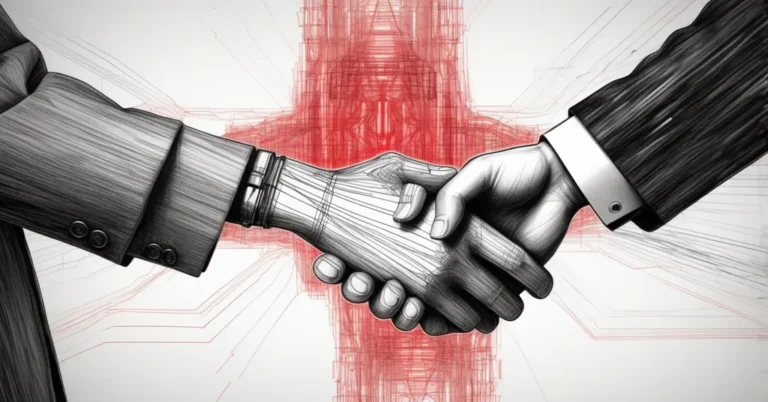
A named investor, a company with no public name
Hg has a name. The company it has agreed to fund does not.
On November 3, 2026, the firm announced an agreement to invest in a new “AI transformation company” aimed at European businesses. Anthropic and unnamed angel investors are participating. The release promises a formal launch later in 2026 and gives no day.
Hg reports over $110 billion in assets under management. It describes itself as an investor in European and transatlantic technology and services businesses, and as “an AI leader in private equity.” The stated purpose is to advance responsible AI adoption and product innovation. The release does not disclose the amount, the ownership split, the leader, the customers, or a revenue model.
Structure is thinner than a label makes it look. The EQS/PR Newswire listing calls the item a Private Equity/Joint Venture. The body of Hg’s release says the firm is investing in an independent company. Those are not the same arrangement. The wording does not settle whether Hg and Anthropic are forming the company or backing one a third party created.
What they said the work will be
The companies were more specific about the work than about the vehicle (the corporate shell that is supposed to do it).
The new company, which will formally launch later this year, will be an independent entity that works with organizations to advance AI adoption and AI-native product build, moving beyond pilots to measurable operational impact. The company will build on Claude, with forward deployed engineers, helping businesses move beyond simply adopting AI to building real, defensible advantage from it.
That paragraph makes four claims. The company is presented as independent, not a desk inside Hg and not Anthropic’s own services arm. It will build on Claude. It will use forward-deployed engineers: technical staff embedded with the customer, rather than advising from a distant office. And it draws a line between adopting AI and building products designed around it.
That last line is where most AI for business programs stall. A pilot shows that a model can draft, classify, or route. AI automation a customer would notice has to live in the system of record (the software that already holds the transactions, permissions, and history), with exceptions, audit trails, and the cases the demo skipped. “Measurable operational impact” and “defensible advantage” are the promised finish. Neither phrase arrives with a definition a finance team could audit.
The Europe language is specific in tone and empty in detail.
The company will shape the organizations that will define Europe’s AI era, supporting businesses with distinctive IP, deep domain expertise and long-standing customer relationships that operate across a uniquely complex landscape of languages and regulatory regimes.
That describes incumbent software and services firms, not a startup chasing one English-language market. Several languages. Several rulebooks. Intellectual property that already earns its keep. The release names no sectors, cites no statute, and lists no customers. “Responsible” is asserted. A safety standard, a governance model, and any particular European law are absent from the November text.
Hg’s co-CEOs, Steve Batchelor and JB Brian, put the check in a longer frame. Hg’s site links JB Brian to Jean-Baptiste Brian.
This builds on Hg’s early conviction in the transformational power of AI. We’re delighted to announce our investment in this new company and look forward to further advancing Europe’s position within the global AI ecosystem.
Steve Corfield, Head of Global Business Development and Partnerships at Anthropic, was plainer about the demand.
Businesses are looking for experienced teams to help them put Claude to work. We’re proud to invest in companies like this as they grow to meet that need.
The through-line in the release is distribution plus implementation: Claude, engineers placed with customers, and Hg’s European software-and-services footprint. That is a reading of what was published, not a stated business plan. Consulting fees, a company built to sell later, a wider path for Claude, a closer look at firms Hg might one day buy. None of those motives is in the text. Treating any one of them as the plan would be a guess.
What a buyer can know, and what to keep
What you can know is narrow. An agreement to invest. An independent company, on the text’s own description. Claude as the model it will build on. Engineers placed inside customer organizations. A European brief aimed at firms that already have intellectual property, domain depth, and customers. A formal launch still promised for 2026, with no date.
A services firm wired to one model can be the fastest route from a steering-committee demo to a live workflow. It can also concentrate operating knowledge in one vendor’s people. Contract for the exit before celebrating the entrance. Who keeps the evaluation sets, the tests that show whether the system still works? Who can swap the model? And what happens to the embedded engineers, and to the work they leave behind, when the statement of work ends?
If you own the workflow, the model is a component. If the prompts, evaluations, and process knowledge leave with someone else’s engineers, the component starts to own you.
Do not merge this with the September portfolio program
In September 2026, ahead of this investment, Hg described a different arrangement that is easy to mash together with it. Catalyst, Hg’s incubator, and Hg’s in-house AI team would work with Anthropic to deploy agentic AI and bring Claude’s agentic capabilities across the existing portfolio. That program points inward, at companies Hg already owns. The November company is pitched at organizations, and the release does not limit those organizations to the portfolio. Whether portfolio companies become customers is unstated.
Hg’s September 21 account is also the clearest window on the relationship, and it does not keep one clock. The same page celebrates three years of working together and dates the relationship to early 2024. Three years before September 21, 2026, is 2023, not early 2024. They cannot both be a precise start date. What the page does confirm is a joint hackathon series, staff enablement, and embedded deployment.
Hg describes the split above for its own portfolio: companies typically own the system of record and the workflows, while Anthropic supplies the intelligence layer.
The impact figures are Hg’s, and they should stay labeled that way. The firm says it was among the first private equity houses to work directly with a frontier AI lab. It claims over 1, 600 live AI projects and over $260 million of budgeted EBITDA impact (a planned profit effect, not cash already booked), described as a 5x increase “since then.” The starting point of that rise is ambiguous. The natural reading is early 2024. Hg also says it began investing in AI capabilities a decade before those 2026 posts, which would put the start around 2016 if counted from 2026.
Hg points to three outcomes as signs that product-embedded AI agents draw buyers. Quantios launched its first agentic solution in March 2026, with Catalyst support, ahead of Hg’s exit to Vista Equity Partners. GTreasury was acquired by Ripple. Intelerad was acquired by GE HealthCare. These are single-source company examples, not a controlled comparison, and they are not evidence that AI caused the exits.
The scale around that story is company-reported too. Hg cites more than 400 of its own employees, about 60 portfolio businesses, over $195 billion in aggregate enterprise value, more than 140, 000 people working inside those businesses, and portfolio revenues “consistently growing” at more than 16 percent a year. None of that is an audited claim that AI produced the growth.
Guillaume Princen, Anthropic’s Head of International, Digital Native Businesses, was the September spokesperson. He stressed frontier agentic AI and the highest safety standards for critical workflows. That comment belongs to the portfolio partnership. It is the nearest safety language either announcement offers, and it is not a spec for the new company.
A bid to help, not a handoff
European operators are not waiting on a keynote to decide whether AI agents belong in the product. Many of them already sit on the system of record. The open question is who helps them cross from a pilot that impresses a committee to an operating change a customer would notice if it stopped. A nameless company with a 2026 launch line is a bid to be that help. It is not yet a reason to outsource the judgment.
Questions worth asking
-
What did Hg and Anthropic actually agree to?
On November 3, 2026, Hg announced an agreement to invest, with participation from Anthropic and unnamed angel investors, in a new company aimed at European firms. The amount, ownership split, name, and leader were not disclosed, and an EQS/PR Newswire joint-venture label does not match the release’s “independent entity” wording.
-
Is this the same as the September Catalyst partnership?
No. September was a portfolio effort to deploy agentic AI across companies Hg already owns. November describes a separate company working with organizations, and it does not say whether portfolio companies will be customers.
-
How long have the two firms worked together?
Hg’s September 21, 2026 page both celebrates three years together and dates the relationship to early 2024. Three years before that date is 2023, not early 2024. The concrete record on the page is a hackathon series, staff enablement, and embedded deployment.
-
What is still unknown about the embedded engineers?
The release says the company will use forward-deployed engineers to implement Claude and help build on it. It does not say how they are priced, how long they stay, or who owns the work product when they leave.
-
Who should keep the evaluations, the model choice, and the work?
A buyer should. The release does not grant that, and if the evaluation sets, the right to swap the model, and the work product sit with the embedded team, the operating knowledge leaves when the statement of work ends.
-
Are Hg’s AI impact figures proven savings?
No. The over 1, 600 live projects and over $260 million of EBITDA impact are Hg’s own claims, and the EBITDA figure is budgeted (a planned profit effect, not cash already booked). The exits Hg cites are single-source examples, not evidence that AI caused those deals.
-
Does “responsible AI” come with a stated standard?
Not in the November release, which names no safety standard, governance model, or law. The closest safety language sits in September comments about the portfolio partnership, not this venture.