
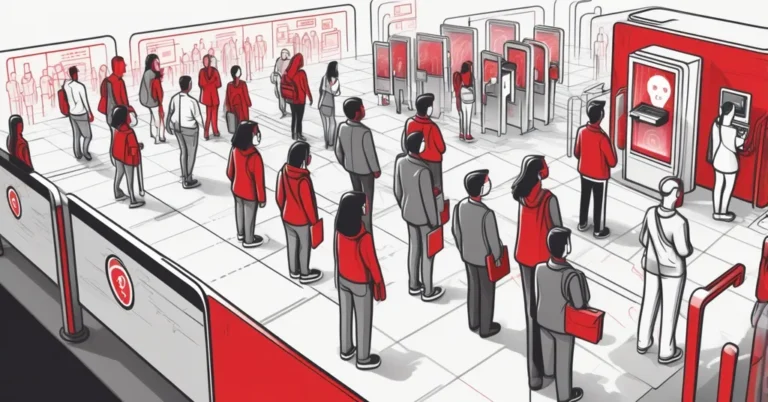
Disneyland’s Facial‑Recognition Lane Is a Test of Biometric Privacy and Enterprise Risk
Disneyland Resort has opened an optional facial‑recognition entry lane, and what looks like a convenience feature is actually a live experiment in consent, retention and corporate governance. For business leaders, the lesson is simple: biometric entry and AI tools are no longer theoretical—deploying them without clear controls hands attackers and regulators a roadmap to trouble.
What Disneyland did — and why the details matter
At Disneyland and Disney California Adventure, visitors can choose an entry lane that verifies identity using face recognition. Disney calls the option “entirely optional,” but also warns that “you may still have your image taken” in other queues. The company says the system turns face photos into encoded digital templates that are matched for entry, and that those templates “will be deleted after 30 days, except in cases where data must be maintained for legal or fraud‑prevention purposes.”
That last caveat is critical. Encoded face templates are not simple strings—they’re biometric identifiers that can be reused for matching, and depending on how they’re stored and designed they can sometimes be reverse‑engineered or linked to other datasets. Saying something is optional does not remove the need to manage the downstream operational work: secure storage, verifiable deletion, legal holds, and transparent consent flows that passengers actually understand.
“Entirely optional,” but “you may still have your image taken.”
From theme parks to government labs: a pattern of rapid adoption
Facial recognition is already common in airports, stadiums and some transit systems. The Disneyland rollout is one more example of biometric entry moving into consumer spaces where throughput and convenience are selling points. At the same time, government and enterprise organizations are experimenting with advanced AI models for entirely different tasks—like vulnerability discovery and automation—raising parallel governance questions.
The NSA has been testing Anthropic’s Mythos Preview to hunt for exploitable bugs in widely used Microsoft software. That testing happens against a backdrop where the Department of Defense has banned Anthropic tools, citing supply‑chain risk—a term that means third‑party software or vendors could introduce vulnerabilities or backdoors into systems that organizations rely on. Anthropic has sued to block the ban. Reporters note the model’s use “has so far been carefully restricted” and limited to roughly 40 organizations, but the core tension remains: operational utility versus systemic risk.
The model’s use “has so far been carefully restricted” and limited to roughly 40 organizations.
Standards, protections and the start of vendor governance
Industry groups and vendors are moving to close obvious gaps. The FIDO Alliance—an industry group that builds secure authentication standards—has launched working groups with Google and Mastercard to create technical rules for validating and protecting transactions initiated by AI agents. That effort matters because AI agents and automation flows will soon be able to initiate payments, contracts and account changes on behalf of humans; without auditable standards, those transactions become a new attack surface.
Platform providers are reacting too. OpenAI rolled out an “advanced” security mode for higher‑risk ChatGPT and Codex accounts, recognizing that not all users face the same threat profile and that tailored protections matter. These are early steps; effective governance requires more than product knobs—it needs contractual guarantees, independent audits and interoperable standards.
Recent incidents that connect the dots
Several events this season underscore how fast adoption and weak controls can hurt organizations and individuals:
- Medicare database exposure: A U.S. Medicare provider directory mistakenly exposed Social Security numbers and other personal data of health‑care providers linked to a national provider database effort overseen by CMS officials. Misconfigurations like this create high‑impact breaches with legal and reputational fallout.
- Commercial spyware leak: New research uncovered about 90,000 screenshots from a European celebrity’s phone—an example of how surveillance tools and poor device hygiene can cascade into broad data exposure.
- Ransomware and arrests: Law enforcement continues to target groups like Scattered Spider; a 19‑year‑old, Peter Stokes, was arrested in Finland related to attacks on major firms. These incidents show attackers exploit weak identity controls and social engineering at scale.
- Violent threats: The arrest of a suspect at the White House Correspondents’ Dinner highlights traditional security risks that remain acute for public events and the organizations that run them.
Each case links back to the same set of failure modes: inadequate access controls, unclear data lifecycles, poor vendor oversight, and slow or missing incident response.
7 practical steps executives should take now
Biometric entry lanes and AI agents deliver measurable benefits, but only with governance. Treat deployments as enterprise‑risk decisions and apply the same rigor you would to financial systems or cloud migrations.
- Map biometric data flows. Create a data‑flow diagram that shows where images and templates are captured, how they’re processed, where they’re stored, who can access them, and how deletion is enforced and verified.
- Require verifiable deletion and attestation. Contracts should include deletion guarantees, third‑party deletion attestation, and cryptographic proof where possible. Define how legal holds are handled and what constitutes a lawful exception.
- Run privacy impact and threat assessments. Don’t check a box—conduct independent Privacy Impact Assessments (PIAs) and adversarial threat modeling that consider re‑identification, lateral movement, and supply‑chain compromise.
- Harden storage and templates. Encrypt templates at rest and in transit, use salted hashing or irreversible encodings designed to resist reconstruction, and limit retention to the minimum necessary for the stated purpose.
- Audit vendors and require SOC 2/ISO attestations. Go beyond marketing claims: audit vendor code, request red-team results, require vulnerability disclosure timelines, and demand rapid breach notification SLAs.
- Pilot with strict opt‑in and rollback plans. Use small pilots with clear metrics, a strict opt‑in mechanism, and guaranteed rollback/deletion procedures before scaling to high‑traffic deployments.
- Integrate AI governance into procurement. For AI agents and models, include supply‑chain risk assessments, model provenance, data sets used for training, and a documented mitigation plan for model misuse.
Regulatory and standards landscape to watch
Legal frameworks are catching up. In the U.S., state laws like Illinois’ BIPA (Biometric Information Privacy Act) impose specific consent and retention rules for biometric data. California’s privacy law (CCPA/CPRA) and Europe’s GDPR demand transparency, data‑minimization and subject access rights. These laws can create statutory damages or heavy fines for missteps. Organizations should also track the FIDO Alliance’s work on AI‑initiated transaction protections and any federal guidance on biometric use in public spaces.
What boards should ask vendors
- How do you prove data deletion?
Ask for the technical method, attestation process and timelines. Deletion claims without verifiable proof are weak defenses in audits and lawsuits. - Can your biometric templates be reversed into photos?
Get a clear technical statement and independent testing that shows templates are not reversible or easily linkable to other identity stores. - What are your breach notification SLAs?
Demand contractual notification windows that allow your security and legal teams to respond, not just a vendor PR team. - Who in your supply chain has access to raw or derived biometric data?
Require a list of sub‑processors and evidence of their security posture, plus the right to audit them. - What happens under legal process or national security requests?
Understand how the vendor responds to government demands and make sure you can meet your own jurisdictional obligations.
Quick facts
Is Disneyland actually using face recognition?
Yes — optional facial‑recognition lanes are live; Disney turns face photos into encoded templates and says those templates will be deleted after 30 days, with exceptions for legal or fraud‑prevention reasons.Are governments using advanced AI tools despite bans?
Yes — the NSA has been testing Anthropic’s Mythos Preview to hunt for software vulnerabilities even as the Department of Defense has cited supply‑chain risk and banned Anthropic tools.Are standards emerging for AI‑driven transactions?
Yes — the FIDO Alliance, Google and Mastercard have launched working groups to develop technical rules to validate and protect transactions initiated by AI agents.
Suggested visuals
- Data‑flow diagram: “How a biometric lane works” (capture → template → matching → retention/ deletion).
- Risk matrix: likelihood vs. impact for biometric + AI adoption across legal, operational and reputational axes.
- Vendor audit checklist graphic with 6 mandatory checks (deletion proof, encryption, access logs, sub‑processor list, breach SLA, legal‑hold handling).
Think of a biometric lane like a theme‑park fast‑pass that comes with a data receipt. It speeds throughput, but it leaves a trace. The question for executives is not whether to use these tools—many will be necessary to stay competitive—but how to deploy them so risks are managed, auditable and aligned with legal obligations. Boards that treat biometrics and AI the same way they treat finance and security will protect customers and the company’s license to operate; those that don’t will pay—in trust, dollars, or both.