
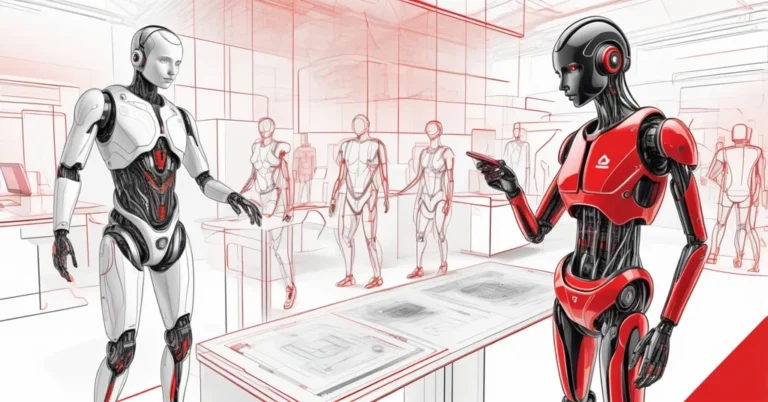
CES 2026 Day 1: When AI agents meet ultra‑thin screens and household robots
TL;DR: CES opened with a clear pivot: AI is moving out of cloud demos and into the physical devices people touch every day. From Nvidia’s Rubin compute roadmap to AI‑enabled vacuums, smart glasses with eSIMs and health wearables, the show signaled that agentic AI and edge/cloud hybrids are becoming practical for products — and business leaders need a short, practical playbook.
Silicon & infrastructure: why the Rubin reveal matters for AI agents
Nvidia set the tone with Rubin (the Vera Rubin Superchip), a platform built on a 3nm process with HBM4 memory and networking optimizations. Nvidia says Rubin delivers roughly a 5× performance improvement over Blackwell and could reduce inference costs by about 10×, with shipping targeted for late‑2026 and an annual cadence after that. Those are vendor claims, but the direction is important: cheaper, faster inference changes the economics of running real‑time AI agents (models that can take multi‑step actions, not just answer questions).
Nvidia positioned Rubin as the infrastructure leap to support agentic AI and trillion‑parameter models by combining advanced chips, CPUs, and networking to dramatically lower inference cost and boost throughput.
What that means for AI for business: lower inference costs make continuous, personalized assistants and AI automation for workflows (CRM updates, automated triage, real‑time recommendations) far cheaper to operate. Expect hyperscalers and cloud providers to offer Rubin‑class instances first, then enterprise services that wrap agentic AI for customer support, AI for sales, and logistics optimizations.
Displays & media: Micro RGB, Dolby Vision 2 and the 3D question
Display vendors doubled down on visual upgrades. Dolby Vision 2 emerged as the next playback standard, with Peacock rolling out live NBA and MLB streams and pledging to auto‑upgrade existing Dolby Vision libraries. At the same time, “Micro RGB” panels — promising better brightness and color control — were a recurring theme from Samsung, LG and Sony. Ultra‑thin “Wallpaper” TVs returned with higher refresh rates and wireless connectivity.
A ZDNET editor urged caution on 3D displays, noting past promises failed because of color, quality, and discomfort issues — so cautious optimism is advised.
For businesses in media, advertising and retail, better displays create new monetization surfaces (premium live sports, immersive retail screens). But 3D and novel formats will only scale if content ecosystems and comfort/quality problems are solved — otherwise the technology risks repeating prior false starts.
Wearables & health: continuous sensing and regulatory friction
Health tech and pet‑focused wearables were prominent. Satellai’s Petsense converts pet biometrics into behavioral and health insights, including semantic queries about your pet’s condition. Withings previewed a Body Scan 2 smart scale with hypertension‑risk metrics, pursuing FDA clearance. Sunbooster’s SunLED is a portable near‑infrared therapy device, and Earflo showed a medical “sippy cup” to relieve middle‑ear pressure backed by peer‑reviewed research and seeking FDA approval.
These devices illustrate both opportunity and risk. Continuous sensing expands data sources for preventive healthcare and personalized services, but products that touch medical claims will follow longer timelines for validation and approval. Companies should treat health devices as regulated products from day one — invest in clinical validation, privacy engineering, and a regulatory roadmap.
Household robotics: practical automation or ambitious demos?
Robotics at CES skewed toward practical helpers rather than humanoid showpieces. SwitchBot showed the Onero H1, a multifunction home robot that uses vision and tactile feedback to grasp, open and perform cleaning/cooking tasks. Narwal’s Flow 2 emphasized smarter cleaning behaviors (contextual quiet mode, automatic mop washing) rather than flashy autonomy.
A SwitchBot spokesperson described the Onero H1 as a robot that learns and responds to its environment using vision and touch to perform household tasks like grasping and opening objects.
Robots that truly manipulate household objects reliably are still a hard engineering problem. Expect incremental adoption in controlled settings (commercial cleaning, hospitality, eldercare pilot programs) before mainstream home deployment. For enterprises, the near‑term value is process automation in semi‑structured environments where robots can augment human labor safely and repeatedly.
Power, connectivity and peripherals: untethering devices
Jackery presented ambitious solar concepts (Solar Gazebo and a following Solar Mars Bot), while Belkin showed practical travel chargers and a wireless HDMI adapter. Qualcomm’s Snapdragon X2 Plus targets AI‑ready laptops with a 10‑core Oryon CPU and improved connectivity. United Airlines’ Starlink trial on at least one flight signals better in‑flight connectivity could finally become a standard offering.
Untethering devices matters for AI at the edge. Longer battery life, better wireless charging (Lockin’s AuraCharge demo), and persistent connectivity let AI agents run locally or hybridize with cloud resources. For product teams, power and comms are now as much part of the AI stack as models and datasets.
New form factors and privacy tradeoffs
Project Luci — a magnetic AI pin with a 12MP camera, dual mics and local processing using a proprietary Mavi model — highlights a trend toward always‑on memory augmentation devices. Priced at around $99, this kind of wearable raises immediate privacy and safety questions about continuous recording, data retention and consent.
Samsung framed its CES message around bringing AI into every home device, including health detection and appliance‑level intelligence.
Design patterns that mitigate these risks — local processing first, granular consent, visible recording indicators and short default retention windows — should be mandatory for vendors building such devices.
Business implications: what leaders should do now
- Start pilots for agentic AI in customer‑facing workflows. Run a 90‑day pilot that integrates an agent into a single channel (support chat, outbound sales outreach) with clear ROI metrics: handle rate, time saved, and conversion lift.
- Design for privacy and regulation up front. If a product collects health or continuous audio/video, budget 12–36 months for clinical validation or regulatory review and build a compliant data lifecycle.
- Assess edge readiness when buying hardware. Evaluate SDK maturity, on‑device model performance, update mechanisms, and data controls — not just headline specs.
- Use display and power improvements as engagement levers. Premium content, in‑store digital signage and untethered kiosks can be new revenue lines when paired with better screens and battery tech.
- Prepare SRE and cost models for cheaper inference. If Rubin‑class economics arrive, re‑model cost per million inferences and plan to migrate latency‑sensitive workloads to cheaper, lower‑latency options.
Vendor assessment checklist
- Shipping timeline and retail partners (is it real hardware or a concept?)
- Software SDK and update pipeline (OTA, security patches)
- Data practices, encryption, and local processing options
- Regulatory posture for health/recording features
- Interoperability with your stack (APIs, cloud support, model compatibility)
Questions business leaders are asking (and concise answers)
How quickly will Rubin‑class infrastructure translate into accessible services and products?
Rubin will appear in cloud offerings first (late‑2026 for hardware shipments; 2027 for broad cloud access). Enterprises and hyperscalers will adopt these instances, and consumer products that benefit from lower latency/cost will emerge 12–24 months after cloud availability once software and integrations mature.
Will Micro RGB and 3D displays overcome past adoption hurdles?
Micro RGB improves core display quality and will find traction. 3D requires better content, comfort and clear user value; expect niche uptake unless the ecosystem addresses those gaps.
How should companies handle privacy and safety for always‑on wearables and home robots?
Prioritize local processing, opt‑in data sharing, transparent retention policies and visible indicators. Engage regulators early and document clinical or safety testing when applicable.
Which CES demos are likely vaporware versus near‑term products?
Concrete devices with shipping dates and retail partners are the safest bets. Bold concepts (autonomous solar bots, grand ruggedness claims without certifications) should be treated as exploratory until validated.
How will regulation affect time‑to‑market for health and recording devices?
Plan 12–36 months for FDA clearance or equivalent certifications; privacy frameworks and local laws may add delays. Build compliance into product roadmaps from day one.
What to watch next
- Rubin shipping cadence and cloud availability — will providers expose Rubin instances and at what price?
- Real‑world demos of agentic AI in customer support and field automation — proofs that move beyond scripted presentations.
- FDA and regulatory movements on CES‑shown health devices (Withings, Earflo) and the timelines for clearance.
- Content rollouts for Dolby Vision 2 and Micro RGB — sports and premium streams will be the first test cases.
- Privacy controls and third‑party audits for always‑on wearables like Project Luci and smart home robots.
Final practical checklist for leaders
- Run a 90‑day pilot for an agentic AI use case (support, sales automation, or logistics) with measurable KPIs.
- Audit vendors for shipping proofs, SDKs, data controls and regulatory readiness.
- Budget for privacy engineering and compliance (data retention, consent UIs, security patching).
- Model cost sensitivities assuming a 5–10× shift in inference economics and identify workloads to migrate.
- Assign a cross‑functional team (product, legal, security) to evaluate any always‑on recording or health device pilot.
CES Day 1 didn’t just show more “AI features.” It showed a hardware and infrastructure stack that makes agentic AI and edge/cloud hybrids practical. That’s an opportunity to rethink product roadmaps and a reminder that successful AI for business mixes models, silicon, privacy design and operational discipline — all of which need plans and pilots that start now.
Eric Migicovsky emphasized the Round 2’s design goal: make it feel like a timepiece rather than a chunky slab of tech.