
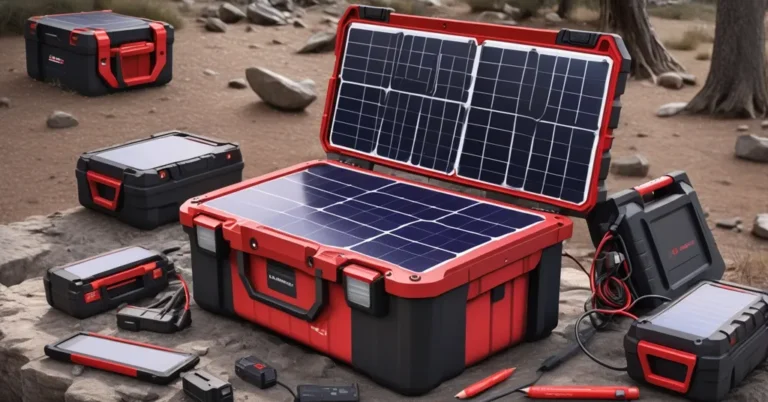
Bluetti AC240 review — rugged, weatherproof 1,536 Wh portable power station for off‑grid professionals
TL;DR: The Bluetti AC240 is a heavy, durable portable power station built more like a field generator than a camping battery. With a 1,536 Wh LiFePO4 pack, IP65 weather resistance, fast AC charging, and modular expansion via B210 packs, it’s ideal for RV fleets, job sites, event power, and emergency backup—provided you accept the weight and the cost of scaling.
Quick specs at a glance
- Battery: 1,536 Wh (LiFePO4)
- Inverter: Pure sine wave; 3,600 W power‑lifting mode
- AC charging: Up to ~2,200 W (0–80% in ~45 minutes); up to 2,400 W paired with B210
- Solar input: Up to 1,200 W (11–60V / 21A)
- Ports: 3 × 120V/20A AC, 1 × NEMA TT‑30, 2 × USB‑A (18W), 2 × USB‑C (100W), RV 12VDC/30A
- Durability: IP65 (dust‑tight, resistant to water jets)
- Cycle life: LiFePO4: 3,500+ cycles to 80% (Silent Mode)
- Warranty: 6 years
- Weight: ~33 kg / 72 lbs
“If you’re looking for a portable power station that doesn’t need to be coddled, the Bluetti AC240 is ready to take on the elements with superior power and a durable IP65 rating.”
Why this matters for business operations
Portable power stations are splitting into two camps: lightweight weekend gear and industrial‑grade, weatherproof systems you can leave to do work. The Bluetti AC240 sits firmly in the latter camp. For operations managers, event producers, contractors, and emergency planners, uptime matters more than a few extra pounds. The AC240 trades peak energy density for longevity, safety, and robustness—characteristics that reduce lifecycle headaches and replacement costs over multi‑year deployments.
Performance and charging — practical details
The AC240’s LiFePO4 chemistry is the headline: lithium iron phosphate batteries sacrifice some size and weight efficiency to deliver a far safer thermal profile and a much longer cycle life. Bluetti rates the pack for 3,500+ cycles to 80% in Silent Mode and backs the product with a six‑year warranty—arguments that resonate when you’re planning multi‑season deployments.
Fast AC charging is a real operational benefit. With grid or generator input you can charge to 0–80% in roughly 45 minutes at ~2,200 W. That lets crews top up between shifts or rapidly recover after a long day, and it beats many competitors in the large portable class. Solar input supports up to 1,200 W, while car charging is available for slower replenishment on the move.
Pass‑through charging and UPS functionality are business‑use friendly. The UPS switch time is around 15 milliseconds—snappy enough for most routers, NAS boxes, and media gear to ride through a power handoff without disruptive reboots. A pure sine wave inverter means sensitive electronics get clean AC power, not the rough waveform that can cause strange behavior in AV or telecom equipment.
Scalability: building a system that lasts
Scalability is where the AC240 shows its intent. Each unit supports up to four B210 expansion batteries, taking a single AC240 from 1,536 Wh to a combined 10,136 Wh. You can also parallel two AC240s with eight B210s for more than 20 kWh of on‑site storage. That modular approach lets you start small and scale as demand grows—useful for seasonal events or phased deployments.
“LiFePO4 batteries can endure over 3,500 recharge cycles before their charge capacity falls below 80%.”
Real runtime examples and how to estimate your needs
Use this simple formula to estimate runtimes:
Estimated hours = (Battery Wh × usable fraction × inverter efficiency) / device watts
- Assume a usable fraction of 95% (LiFePO4 can often be used deeper than consumer lithium) and inverter efficiency around 90% for a conservative estimate.
- Example: a 60 W router running 24/7 uses 1,440 Wh/day. With 1,536 Wh available, the AC240 can run the router ~ (1,536 × 0.95 × 0.9) / 60 ≈ 21.8 hours—roughly one day without recharge.
- Example: a 1,000 W table saw (intermittent use) pulls far more. Continuous 1,000 W draw would last roughly (1,536 × 0.95 × 0.9) / 1,000 ≈ 1.3 hours—useful for short tasks, but not continuous heavy power without expansions.
These numbers show why operations often pair an AC240 with at least one B210 or a modest solar array for multi‑day uptime.
Cost and total cost of ownership (ballpark)
Retail shown at the time of testing was about $999 for the base AC240 on Amazon. Expect total system cost to increase quickly once you add expansion packs, solar panels, cabling, mounts, and transport solutions.
Ballpark example (verify current prices):
- AC240 base unit: ~$1,000
- One B210 expansion: several hundred to around $1,000 (varies by retailer)
- 1 kW of solar panels + charge controller + mounts: $800–$1,800
- Transport, cabling, installation: $200–$800
So a modest deployed system might run roughly $2,500–$5,000 all in. The big cost variable is how many B210s you add. The point is not to avoid buying—it’s to budget for the full system, not just the base unit. The LiFePO4 cycle life and six‑year warranty help amortize the investment over many seasons, which changes the ROI calculation vs cheaper, shorter‑lived batteries.
How it stacks up (brief alternatives)
- EcoFlow Delta Pro: Competes on home backup features, generator integration, and sometimes faster ecosystem charging. Often heavier and pricier when scaled similarly, but strong for full‑home backup workflows.
- Jackery and small consumer units: Better for lightweight camping and single‑person portability. They won’t match the AC240 on cycle life, IP rating, or modular scalability.
- Other Bluetti models: Bluetti’s lineup offers different tradeoffs; the AC240 is the weatherproof, professional‑oriented pick in its class.
Pros and cons
- Pros: LiFePO4 for long life and safety; IP65 weather resistance; fast AC charging (0–80% ≈ 45 minutes); pure sine inverter and UPS/pass‑through functionality; modular expansion up to >10 kWh per unit.
- Cons: Heavy (~72 lbs), which complicates single‑person deployments; expansion increases cost and logistical complexity; IP65 is not submersion‑rated—avoid salt‑spray exposure where possible; serviceability and spare parts beyond warranty may require planning.
Deployment checklist — practical tips
- Plan transport: use a two‑wheeled cart or vehicle rack rather than repeated hand carries.
- Budget holistically: base unit + B210 packs + solar array + cabling + mounts + transport.
- Test UPS behavior with critical gear before you rely on it—some sensitive equipment may need dedicated surge/conditioning hardware.
- Place the unit under partial cover for long deployments in coastal or corrosive environments; IP65 resists water jets, but it’s not built for submersion or untreated salt spray exposure.
- Enable app/Wi‑Fi monitoring for fleet telemetry and firmware updates; plan recharges to ~80% every 3–6 months for storage.
FAQs
- Is the AC240 safe for sensitive electronics?
Yes. The pure sine wave inverter supplies clean AC power, and the UPS switching time (~15 ms) keeps most networking and media gear running across outages.
- Can one person realistically move this unit?
Not comfortably for long distances. At ~72 lbs it’s near single‑person safe lift limits—use handles for short moves and a cart for repeated transport.
- How long will the battery last before replacement?
LiFePO4 chemistry is rated for 3,500+ cycles to 80% in Silent Mode, which translates to many years of regular use—depending on cycle frequency, likely 5–10+ years in many business applications.
- Where can I read lab tests and specs?
ZDNET’s lab testing awarded the AC240 a Labs honor for “Most Efficient — Large Size.” For manufacturer specs, consult Bluetti’s product page.
ZDNET lab tests and real‑world lab results found the AC240 to be one of the most efficient large portable stations in its class; those efficiency gains matter when you’re calculating run times and solar needs (see the ZDNET lab coverage for details). For manufacturer specs and the latest firmware or accessory details, check Bluetti’s product page.
If your operational brief emphasizes durability, modular growth, and long battery life, the Bluetti AC240 belongs on the short list. If your priority is single‑person portability or the lowest initial spend for occasional use, consider lighter consumer options. For deployments, plan transport logistics, budget for at least one expansion or a solar array, and run a UPS test with your critical equipment before trusting it on the job.