
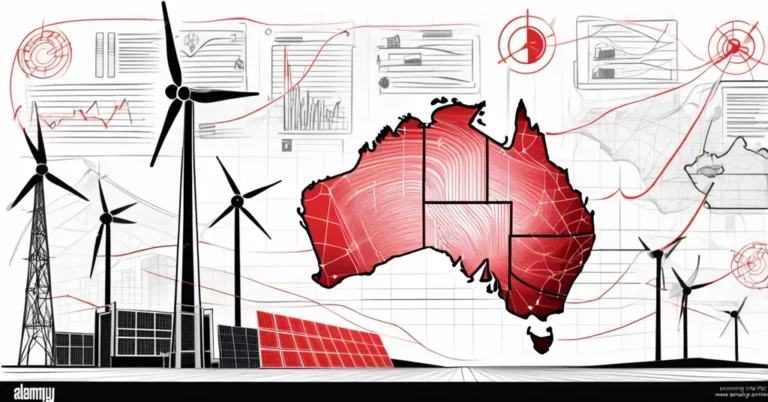
Make datacentres part of the solution: ministers push mandatory renewables for AI datacentres
If your business runs AI workloads, hosts cloud services or invests in datacentre capacity in Australia, a new policy expectation could change your energy bill, build timelines and location choices. Energy ministers across Australia — all except Queensland — want datacentres to “fully offset” their electricity use by funding new wind, solar and storage, and to offer demand‑flexibility services so facilities act as grid assets rather than unmanaged loads. The Australian Energy Market Commission (AEMC) has been asked to provide implementation advice by July.
Executive summary
- The ask: Datacentres should fully offset energy use with new-build renewables and storage, and provide demand‑flexibility (demand response) to support the grid.
- Scale: Australia has 162 datacentres today (~1.4 GW); capacity is forecast to reach ~3.2 GW by 2030 and AEMO projects datacentre electricity demand could triple this decade.
- Decision point: AEMC’s July recommendations will determine whether offsets mean co‑located generation, contracted new‑build power purchase agreements (PPAs), or accounting with large-scale generation certificates (LGCs).
The ask — spelled out simply
Ministers are asking for two things:
- Full renewable offsets: Datacentres should fund new wind, solar and battery projects so their power consumption is matched by incremental renewable capacity.
- Demand‑flexibility: Datacentres must be capable of shifting or reducing load on command so they can provide grid services rather than acting as inflexible consumers.
Definitions up front: a PPA (power purchase agreement) is a long‑term contract to buy electricity from a generator; LGCs (large‑scale generation certificates) are tradable certificates representing renewable MWh; additionality means the renewables are genuinely new and wouldn’t have been built without the datacentre’s investment; demand‑flexibility (a.k.a. demand response) is the ability to vary consumption in response to grid needs, often automated.
Fast facts
- 162 datacentres in Australia today, roughly 1.4 GW operational capacity (Data Centres Australia).
- Forecast capacity: ~3.2 GW by 2030 (industry projections).
- AEMO projects datacentre electricity demand could triple by 2030; datacentres now use ~2% of the east‑coast market.
- Industry reports ~70% of consumption is currently offset via long‑term PPAs and LGCs; AUD 3.1bn invested in energy infrastructure (2020–2025) with ~AUD 7.2bn expected by 2030.
“to make them an asset to the energy grid, not a strain.” — Chris Bowen, Federal Energy Minister
“Queensland’s continued commitment is to affordability and reliability … we expect to see details on costs, benefits, and risks before agreeing to any national proposal that impacts Queensland’s energy system and Queenslanders’ electricity bills.” — David Janetzki, Queensland Energy Minister
Why ministers moved now
AI workloads and cloud growth are not abstract demand drivers — they materially increase baseload and peak electricity usage. AEMO’s forecasts and the rapid pipeline of datacentre projects mean planning and market rules need to catch up. Ministers want to avoid a future where datacentres are large, local strains on the grid (and water supplies for cooling) rather than partners that help stabilise the system.
What operators say
Data Centres Australia and operators argue many already mitigate impact via PPAs and LGCs, and have poured billions into energy infrastructure. The industry warns unclear or rushed rules create investment risk. Belinda Dennett, CEO of Data Centres Australia, summed it up: there’s ambition to reach 100% offsets but availability of viable renewable projects and clear policy settings matter.
Key practical questions
- What counts as a valid “full offset”?
Will regulators accept LGC accounting, require contracted new‑build PPAs, or demand dedicated co‑located generation? - Who pays?
Costs could be borne by datacentre owners, their customers (cloud clients), or passed into the wider market — with implications for competitiveness and bills. - How to measure demand‑flexibility?
The AEMC must define metrics and compensation so datacentres can monetise grid services rather than simply being penalised for inflexibility. - Timing and additionality:
Renewable project pipelines, network connection slots and planning approvals can create bottlenecks. If “new build” is required but cannot be delivered, rollout and siting decisions will shift. - Water and siting impacts:
Energy is only part of the footprint — cooling water demand and community opposition continue to shape approvals.
What counts as an offset? — practical tradeoffs
- Dedicated co‑located generation
Pros: high additionality and local grid benefits. Cons: long lead times, local planning and connection constraints, potentially expensive. - Contracted new‑build PPAs
Pros: can guarantee additionality if structured correctly, scaleable, tradable. Cons: dependent on project pipeline and transmission constraints; requires rigorous contract terms. - LGCs or market certificates
Pros: immediate, lower transaction overhead. Cons: weaker additionality signal — certificates may not deliver new capacity and can allow accounting offsets without grid benefits.
Counterpoint — how well‑intentioned rules can backfire
Mandating new‑build additionality sounds sensible: you want renewable capacity that wouldn’t exist without the customer. But if rules are too rigid or timelines unrealistic, operators may delay projects, relocate to other regions, or rely on aggressive accounting workarounds. In constrained parts of the grid, a requirement for co‑located build without transmission investment can simply shift emissions elsewhere or slow AI datacentre deployment — hardly a net win. Policy design must avoid perverse incentives while still driving genuine renewable build‑out.
International parallels
Other markets are wrestling with similar tradeoffs. Large cloud providers in Europe and North America pair PPAs, direct investment in grid infrastructure and automated demand‑response to create both green credentials and grid stability. Those examples show the pathway: marry funding for new generation with market mechanisms that reward flexibility and speed delivery through clear procurement and connection frameworks.
What C‑suite leaders should do now — an actionable checklist
- Map exposure: Quantify current and forecast electricity and water use across your datacentres and AI workloads.
- Stress‑test contracts: Review PPAs, service agreements and customer SLAs for pass‑through risk and force majeure clauses tied to energy obligations.
- Assess offset options: Compare costs and timelines for LGCs, PPAs and dedicated generation; build scenarios for each.
- Embed flexibility: Invest in automation and orchestration so workloads can be shifted in real time for demand‑response revenue.
- Engage regulators: Participate in AEMC consultations and coordinate with state planning authorities to reduce approval friction.
- Model cost pass‑through: Run pricing scenarios to understand how energy compliance could affect customer contracts and margins.
- Plan water risk: Evaluate cooling technology (air vs water) and local water availability as part of siting decisions.
- Communicate with communities: Proactive engagement reduces public opposition and shortens approvals timelines.
What to watch in the AEMC advice
- Whether “full offset” requires demonstrable additionality and how that’s proven.
- Specific demand‑flexibility metrics and compensation mechanisms tied into existing wholesale and ancillary services markets.
- Transition arrangements and grandfathering for projects already under contract.
- Interaction with state planning rules and network connection planning to avoid bottlenecks.
Likely near‑term outcome and recommended next step
AEMC advice will likely push for frameworks that emphasise additionality while offering flexibility in delivery (e.g., certified new‑build PPAs plus verified demand‑response). Expect a period of regulatory granularity that increases certainty for some participants but raises costs and complexity for others. The single best immediate action for leaders: commission an energy‑risk review this quarter that pairs financial modelling with operational flexibility plans. That creates optionality — and positions your operation to turn a potential compliance cost into a new revenue stream from grid services.
Datacentres can be transformed from stubborn refrigerators into flexible thermostats for the grid — with the right policy, investment and automation. The design choices made this year will determine whether that promise is realised or whether uncertainty drives investment elsewhere.