
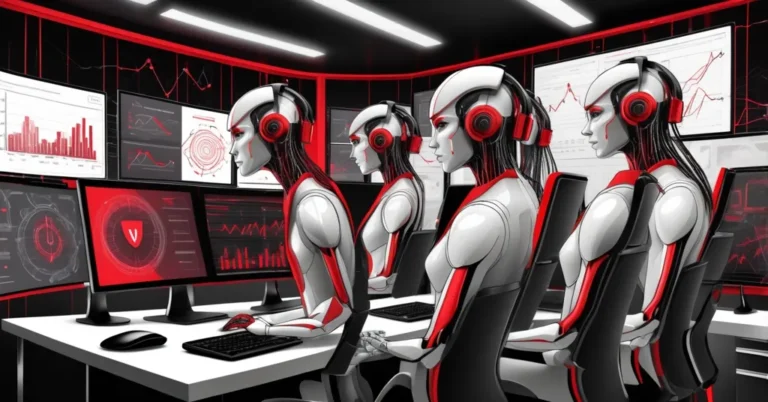
8 Billion Digital Clones: How AI Twins Will Reshape Sales, Support and Compliance
Subhead: Practical guide for executives on what “digital clones” are, who’s building them (OpenAI, Google, Anthropic, NVIDIA, and open‑source AI), the business upside and risks, and a 90‑day pilot checklist to get started.
Executive summary
AI “digital clones” or AI twins are personalized agents that mimic a person’s knowledge, tone, and behavior to scale interactions. The building blocks exist today—LLMs, generative AI, retrieval-augmented generation (RAG), vector stores, and large‑scale GPU computing—but delivering safe, consented clones at global scale requires governance, authentication, and efficiency breakthroughs. Treat digital clones as strategic platforms: pilot fast, design governance early, and measure vendor concentration risk.
What is a “digital clone” (plain language)
A digital clone—also called an AI twin or AI agent—is a persistent, personalized chatbot or assistant that reflects a specific person’s knowledge, tone, and decision patterns. It combines:
- LLMs (large language models): large neural networks (ChatGPT‑style) that generate text.
- Generative AI: tools that produce language, images, audio or video from prompts.
- Prompt chaining / RAG: techniques that combine model responses with retrieved documents to keep answers grounded in specific knowledge.
- Personalization: data, preferences and policies that shape the clone’s voice and facts.
Why executives should care now
Digital clones change three business levers at once:
- Revenue: Personalized AI agents can improve conversion in sales and retention in customer success by offering 1:1 scale.
- Cost: Persistent agents reduce repetitive labor and onboarding time for product experts and support staff.
- Risk & compliance: Badly governed clones create legal exposure (impersonation, privacy fines) but properly governed clones can improve auditability and compliance testing.
Who’s building the stack — and why each player matters
The ecosystem has three interlocking layers: models, compute & infrastructure, and open‑source/community tooling.
Model labs and cloud stacks
OpenAI, Google, and Anthropic deliver commercially supported LLMs, fine‑tuning and safety tooling. They offer reliable APIs, legal contracts, and ongoing model safety updates—good for enterprise reliability and SLAs.
Compute & hardware
NVIDIA matters because running many personalized agents requires massive GPU capacity, specialized networking, and orchestration. Large‑scale deployments depend on the hardware and ecosystem NVIDIA enables.
Open‑source AI
Projects like Llama‑family models, Mistral and other community efforts provide alternative licensing, auditability and experimentation speed. Open‑source reduces cost and vendor lock‑in but shifts responsibility for safety and compliance to implementers.
Feasibility & a realistic timeline
Key components exist today: model customization (fine‑tuning and parameter‑efficient tuning), RAG with vector databases, and off‑the‑shelf chat interfaces. Remaining gaps:
- Data governance and consent frameworks for cloning personal behavior.
- Authentication and provenance mechanisms to prove a clone’s origin and permission to speak for someone.
- Cost efficiency for running millions of personalized endpoint agents.
Practical timeline (high level):
- 0–6 months: Use cases at single‑product or team scale—support bots and internal knowledge agents.
- 6–18 months: Multi‑product pilots, tighter identity and consent flows, hybrid corporate/open‑source stacks emerge.
- 18–36 months: Broader consumer‑facing digital clones with regulatory guardrails and vendor portability if governance and authentication progress.
High‑value use cases with mini examples
- AI for sales: An AI twin of a top rep drafts personalized outreach and hands off to humans on complex negotiations—reduces prospecting time and lifts conversion.
- Customer support: Persistent product experts answer technical questions instantly using a company’s knowledge base and reduce average handle time.
- Employee onboarding & training: New hires interact with a company‑specific clone that simulates tough customer scenarios and shortens ramp time.
- Compliance testing: A clone simulates regulated decision‑making to stress test workflows before rollout.
Primary risks and mitigation
Privacy & consent: Clones depend on personal data. Always require explicit, auditable consent. Log provenance and retention decisions.
Impersonation & reputation: Use digital signatures, watermarks and verifiable provenance to flag synthetic output. Include human escalation paths.
Vendor lock‑in & concentration: Architect for portability—store persona data in neutral formats and demand portability clauses from vendors.
Regulatory exposure: GDPR, the EU AI Act, and FTC guidance focus on transparency, safety and data subject rights. Engage legal early and map regulatory controls to product features.
Signals to monitor (quarterly)
- Model capability releases: Fine‑tuning, safety and instruction‑following improvements from OpenAI, Anthropic, Google and major OSS projects.
- Developer tooling: New RAG frameworks, vector DB features, and persona management platforms.
- Hardware & pricing: NVIDIA GPU availability, spot pricing and cloud GPU economics that affect TCO for massive deployments.
- Regulatory moves: New guidance or enforcement actions on deepfakes, consent, or AI transparency.
90‑day pilot checklist for executives
- Define a single, measurable use case: e.g., reduce average support response time by 30% for one product line.
- Inventory data & consent: Catalog which data sources feed the clone and secure explicit consent where personal data is involved.
- Choose a hybrid stack: Use a commercial LLM for reliability plus open‑source components for auditability where needed.
- Set governance rules: Establish who approves persona creation, retention windows, and escalation procedures.
- Measure early KPIs: NPS change, average handle time, conversion lift, compliance incidents, and cost per agent.
- Plan portability: Contractually require data export and model‑independent persona artifacts.
Practical vendor trade‑offs (short)
- Commercial stacks — Pros: SLAs, safety updates, easier compliance; Cons: higher recurring costs, potential lock‑in.
- Open‑source — Pros: cost control, auditability, flexibility; Cons: requires more internal safety and ops investment.
- Hybrid — Often the best path: start with commercial APIs to de‑risk and move critical components to open frameworks over time.
Three prioritized actions for the next quarter
- Run the 90‑day pilot checklist on one use case and lock down consent and provenance flows before launch.
- Create a cross‑functional steering team (product, legal, security, customer success) and meet weekly.
- Negotiate vendor portability and audit clauses in procurement to limit lock‑in up front.
“Roundup of recent developments in LLMs, generative AI, and AGI preparation across major AI players and open‑source projects.” — Wes Roth, curator and host of an AI news roundup and podcast
Follow Wes Roth for ongoing coverage: quick updates on X (Twitter), deeper essays via his Beehiiv newsletter, and long‑form interviews on YouTube (co‑hosted with Dylan). For brand, sponsorship, or partnership inquiries contact SmoothMedia (smoothmedia.co).
FAQ
What is an AI digital clone?
A persistent AI agent that mimics a person’s knowledge and communication style using LLMs, personalization data and retrieval systems.
How soon can businesses deploy personalized AI agents?
Small‑scale deployments are possible today (0–6 months). Wide consumer deployments with strong governance likely take 18–36 months.
Will AI clones replace people?
Not wholesale. Clones augment and scale expertise for routine tasks; human oversight remains critical for trust, negotiation and complex judgment.
How expensive is running many clones?
Costs vary by model size and usage patterns. Large‑scale clones require significant GPU resources; hybrid architectures and model distillation can lower TCO.