
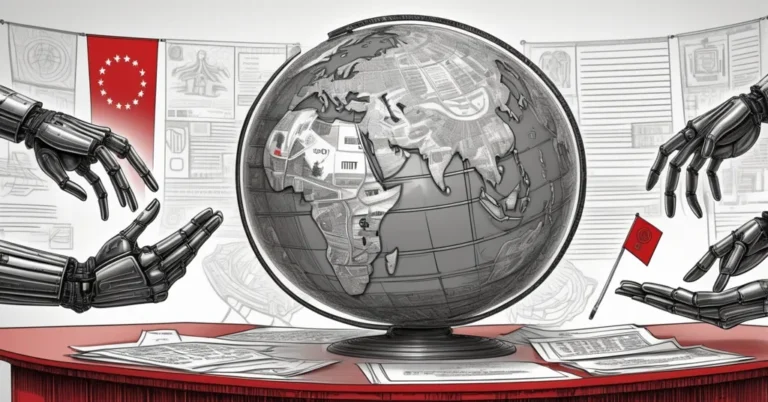
Xi’s state visit pulled the tech world into diplomacy, and AI policy left the seminar room
Xi Jinping’s state visit to Washington has made one thing clear: AI is now as much a diplomatic issue as a technological one. World leaders, lawmakers and, reportedly, leading tech CEOs are asking the same question: who sets the rules for powerful AI systems, and how fast?
“Governments with the greatest AI capabilities have the greatest responsibilities to humanity, to establish channels for dialogue, transparency, trust and cooperation.”, António Guterres
(UN secretary‑general António Guterres, as reported by Agence France‑Presse.)
At the same time on Capitol Hill, Senator Bernie Sanders and Representative Greg Casar introduced a high‑profile legislative proposal titled the “Ban on Artificial Superintelligence Act, ” which, according to the sponsors’ materials, would ban so‑called artificial superintelligence (ASI), impose a pause on advanced AI development until safety guidelines are in place, and create a Department of Artificial Intelligence. Associated Press reporting said it received the bill text before it was released.
“It doesn’t take a genius to say, ‘slow it down, ’” Sanders said. “Do we really want to develop a super intelligence that when it becomes smarter than human beings could act independently of human control? I don’t think we do.”, Sen. Bernie Sanders
Reuters reported that several top tech executives were expected at the White House state dinner during the visit, names circulated in press coverage include Sundar Pichai, Sam Altman, Jeff Bezos, Tim Cook, Elon Musk, Mark Zuckerberg and Jensen Huang, underscoring how policy, industry and diplomacy are overlapping at the highest levels.
Why this matters for businesses using or building AI
Three practical effects are already taking shape.
- Diplomatic signalling can become operational constraints. A U.S., China channel or multilateral norms could create shared expectations about risky uses, for example military applications, bio design assistance or election manipulation. Those expectations often turn into export controls and cross‑border data rules.
- Domestic law is moving from principles to structure. The Sanders/Casar bill offers one path: statutory bans, formal pauses and a dedicated agency. Even if this bill does not pass as written, it pushes the debate toward stronger, more prescriptive regulation.
- Industry influence will be visible. CEOs at state events signal active private‑sector engagement. Expect intense lobbying and efforts to translate technical complexity into legal exceptions and compliance paths.
Three hard questions legislators must answer
Policymakers face technical and legal puzzles that go beyond political rhetoric.
- How do you define “artificial superintelligence” so a law is enforceable? Politicians mean systems “smarter than human beings.” That sounds powerful but is legally vague. Practical choices include benchmark‑based thresholds, such as performance versus human baselines on defined task suites; capability thresholds, like cross‑domain generalization or autonomous goal pursuit; or risk‑triggered definitions for systems used in safety‑critical domains. Any workable law must specify measurable tests and scope.
- Can a unilateral pause work? A U.S. pause could slow domestic actors but be undercut by offshore research and private funding outside U.S. jurisdiction. Meaningful pauses need international coordination, verification mechanisms and aligned export controls.
- Who enforces the rules? Creating a Department of Artificial Intelligence centralizes capacity but could overlap with Defense, Commerce, Homeland Security, and regulators that handle privacy, consumer protection and exports. Clear jurisdiction, staffing and statutory authority are essential to avoid gaps or duplicative oversight.
Concrete steps companies should take now (prioritized)
Short checklists with time horizons make legal uncertainty manageable. Below are high‑priority moves you can complete in 30, 90 and 180 days.
- 30 days, Triage and contractual protection
- Inventory models and uses: classify systems as routine or frontier. Examples of frontier systems include production‑grade large language models powering customer‑facing assistants, autonomous decision systems in safety‑critical workflows, and multimodal agents that act across platforms.
- Update vendor contracts with baseline clauses: require audit rights, data provenance representations, export‑control compliance, and incident notification windows, for example 72 hours for suspected misuse.
- 90 days, Documentation, governance and resilience
- Document provenance: retain training data sources and licenses, model version IDs and checksums, prompt logs, red‑team reports and deployment configurations. These records create the audit trail regulators will want.
- Segregate sensitive workloads: host models handling regulated or PII data in isolated VPCs and expose only sanitized inference endpoints. Maintain strict access controls and monitoring.
- Formalize incident response: run tabletop exercises, publish runbooks, and set clear escalation paths tied to legal review.
- 180 days, Policy engagement and technical hardening
- Invest in monitoring, explainability and continuous red‑teaming. Detection and response will often matter more than raw performance.
- Join industry coalitions and engage in public consultations. Shaping definitions and feasible compliance approaches now helps avoid prescriptive rules set without industry input.
Example contractual language to request (summary, not legal text): audit and inspection rights over model provenance; representations about training data licensing and absence of stolen data; vendor commitments on export‑control compliance and rapid incident notification; obligations to support regulatory audits.
Diplomacy vs. domestic law, complementary, not identical
António Guterres pushed for formal channels of communication between major AI powers, a diplomatic, risk‑reduction approach reported by AFP as analogous to Cold War crisis channels. That multilateral spirit aims to reduce misperception and create joint response options.
The Sanders/Casar bill is a domestic, precautionary instrument that seeks to use U.S. law to limit certain developments and to build institutional capacity. The two paths do not conflict: diplomacy can reduce cross‑border escalation, while domestic law shapes market behavior and protects citizens. For businesses, the result is double pressure: new international expectations plus new national compliance obligations.
30‑day executive checklist
- Confirm which systems you operate would meet any plausible “advanced AI” definition and prioritize their risk review.
- Insert or negotiate audit, provenance and export‑control clauses into vendor contracts.
- Set a board‑level briefing on AI regulatory scenarios and the organization’s resilience plan.
Key takeaways, ask these questions, then act
-
Will the U.S. and China establish a formal AI dialogue?
Reports and appeals, including remarks by UN secretary‑general António Guterres reported by AFP, have put the idea on the table; no binding bilateral mechanism has been announced yet. Action: monitor diplomatic communiqués and prepare for cross‑border reporting requirements. -
Does the Sanders/Casar bill immediately ban AI?
The bill’s sponsors propose a ban on “artificial superintelligence, ” a pause on advanced development, and creation of a Department of Artificial Intelligence (per sponsors’ materials). The precise legal definitions, timelines and enforcement mechanisms are in the bill text and will determine the outcome. Action: review the bill text as soon as available and model scenarios for compliance and continuity. -
Are top tech CEOs attending the White House state dinner?
Reuters reported a guest list of major tech leaders; those reports described attendance as planned but final RSVPs and the dinner agenda can change. Action: assume heightened engagement between government and industry and track any joint statements or commitments emerging from the event. -
How should my company prepare for shifting AI rules?
Prioritize model inventory, provenance documentation, compliance‑ready vendor contracts, and cross‑border contingency planning. Implement monitoring, red‑teaming and incident response capabilities within 90 days. -
Is “artificial superintelligence” a settled technical term?
No. It is politically charged and technically slippery. A legally enforceable definition will need measurable thresholds, such as benchmark performance, capability criteria or risk triggers, and careful drafting to avoid unintended scope or loopholes. Action: engage technical and legal teams to translate likely definitions into operational compliance checks.
Diplomacy, domestic politics and private‑sector power are all shaping the next wave of AI governance. For executives, that means treating policy risk as product‑level risk: classify your models, lock down provenance and vendor commitments, and build the monitoring and incident response capacity that regulators and partners will expect. The table where presidents dine may be symbolic, but the rules that come from those conversations will be very real.