
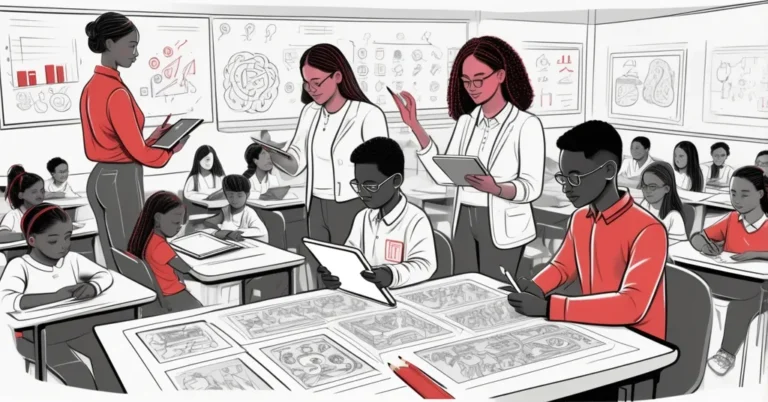
The question isn’t whether schools will meet AI, it’s whether they will teach students to use it well.
Daniel Susskind argues that parents, teachers and policymakers should stop asking for bans and start planning how children will learn to work with intelligent tools. In What Should My Children Do? How to Flourish in the Age of AI (Allen Lane, £20), the economist and former Downing Street adviser Daniel Susskind, who also researches at the Institute for Ethics in AI, Oxford, offers a compact, pragmatic case for bringing AI into classrooms while preserving core human skills.
The calculator moment, revisited
Susskind leans on a familiar historical analogue: the late‑1970s debate over calculators that culminated in the Cockcroft committee’s report, Mathematics Counts (published 1982). Cockcroft rejected outright bans. Its logic was simple and enduring: teach pupils how to use the new tool and how to do the work unaided, and assess both. Susskind applies the same approach to AI, but with modern caveats about scale and speed.
“Middle‑aged careerists should not ‘retreat to inherited practices’ or kid themselves that they occupy ‘safe’ professions.”, Daniel Susskind
What Susskind wants schools and families to do
- Teach with and without AI. Students must practise manual problem‑solving and the same problems with AI assistance; assessments should measure both competencies.
- Focus on foundational skills and meta‑skills. Literacy, numeracy and critical reasoning matter, as does the ability to learn new things, “learning‑to‑learn” is the most portable asset across technological shifts.
- Adopt personalised, AI‑assisted tutoring. Use adaptive systems to deliver targeted practice and free teacher time for judgement, mentorship and social learning.
- Enable earlier craft practice through simulation. Students can gain practical exposure, for example, simulated document review for law students, before stepping into professional roles.
- Change adult work culture. Mid‑career workers should avoid clinging to “safe” routines and instead lean into reskilling and collaboration with tools.
Why this prescription is practical, and robust
Two realities make Susskind’s prescription sensible. First, current narrow AIs, large language models such as ChatGPT and Claude, are already altering how routine tasks get done, from drafting text to customer‑service triage and assisted research. Second, many experts treat artificial general intelligence (AGI) as a contested but potentially high‑impact future possibility; Susskind frames AGI as a plausible scenario to prepare for, not a guaranteed timetable.
That matters because the recommended curriculum, fundamentals plus meta‑skills plus intelligent tutors, works across many possible futures. Whether AI improves step by step or moves toward broader capabilities, students who think critically, use tools responsibly and can learn new skills quickly will be better placed.
Concrete examples on the ground
- Khanmigo (Khan Academy), pilot tutoring and guided practice that models how conversational AI can supplement teachers.
- Carnegie Learning and DreamBox, adaptive math platforms that personalise practice sequences and pacing for individual learners.
- Duolingo, personalised language practice that illustrates how frequent, targeted feedback can scale learning.
- Automated formative feedback systems, tools that assist with draft feedback and practice, while raising questions about validity and fairness.
These examples show Susskind’s ideas are not hypothetical: schools and edtech providers are already running pilots that let students get more targeted practice while teachers concentrate on higher‑order instruction.
Where the book is deliberately short, and where schools must fill in details
The book is intentionally slim and policy‑facing, which makes it a brisk call to action. That economy of length leaves other pressing questions underexplored, not ignored, but not treated in depth:
- Training‑data and copyright disputes. Litigation by authors, publishers and image owners against model builders, and notable settlements (for example, disputes involving media and model developers in recent years), are reshaping what data commercial models can lawfully use.
- Environmental cost. Research such as Strubell et al. (2019) documents the substantial energy footprint of training large models; efficiency has improved, but carbon and resource questions remain salient for large deployments.
- Corporate governance and safety culture. Public controversies about leadership, incentives and governance in AI firms have increased scrutiny and fuel debate about accountability and procurement risk.
Susskind’s central aim is pedagogical: get children learning with tools. But schools and policymakers cannot treat legal, environmental and governance issues as academic footnotes, they directly affect which tools are available, who supplies them, and how they scale equitably.
Practical policy levers for leaders
If leaders take Susskind’s prescription seriously, they should pair curricular change with concrete governance and procurement measures:
- Invest in teacher training. Effective rollout depends on educator fluency: time for professional development, clear assessment practices for AI‑assisted work, and certification for AI pedagogy.
- Adopt procurement standards. Require vendor transparency about training data, model limitations (model cards), privacy protections, and measurable learning outcomes.
- Pool resources for equity. Shared regional services, subsidised licences and open alternatives can prevent wealthier districts from leaping ahead and widening gaps.
- Measure impact and iterate. Pilot programs with independent evaluation, disaggregated outcomes and feedback loops will reveal where tools help, and where they harm.
- Build public oversight. Local and national policy must cover data rights, emissions targets for large deployments, and avenues for redress when models misbehave.
Questions leaders and parents ask, and short, honest answers
- Should schools ban ChatGPT and similar tools?
No. Bans delay exposure and leave students unprepared. Prefer policies that teach responsible use, require disclosure when AI assists work, and assess unaided and AI‑assisted competencies. - Is Susskind saying AGI is imminent?
No. He treats AGI as a contested, high‑impact possibility and argues for education systems that work across many timelines rather than betting on a single forecast. - Does the book address copyright and environmental harms?
Only briefly. Those are active, unsettled policy arenas, litigation over training data and concerns about energy use are live issues that demand attention from educators and regulators. - Can personalised AI tutors replace teachers?
Not the human roles teachers play. Tutors can automate practice and provide immediate feedback, but teachers remain essential for judgement, diagnosis, motivation and social learning. - Will integrating AI widen inequality?
It can, if wealthier schools access superior tools first. Equity needs to be a design principle: subsidised access, pooled procurement and open‑source alternatives can mitigate gaps.
Bottom line for leaders and parents
Susskind’s slim volume is a practical nudge: embrace tools, teach fundamentals, and reorient adult working culture toward continuous learning. That prescription is useful, but incomplete on its own. Curriculum reform must be matched by procurement rules, teacher training, independent evaluation and public oversight so AI becomes a lever for better education rather than a force that amplifies inequality or offloads risks onto schools.
Teach children to work both with and without AI, insist on transparent vendors and equitable access, and treat governance as part of curriculum design. That combination gives students a real chance to flourish no matter what technological horizon arrives.