
When a deepfake feels true: why an AI‑generated presidential speech went viral — and what leaders should do about it
- Executive summary
- A fabricated speech attributed to Namibia’s deputy president circulated widely not because everyone was naive, but because it voiced the moral clarity many feel is missing from political leadership.
- Generative AI and deepfakes amplify unmet political demands while adding a new dimension of misinformation risk that matters for markets and reputations.
- Businesses need a combined response: technical detection, hardened communications, scenario planning for political risk, and engagement in policy that strengthens information integrity and institutional credibility.
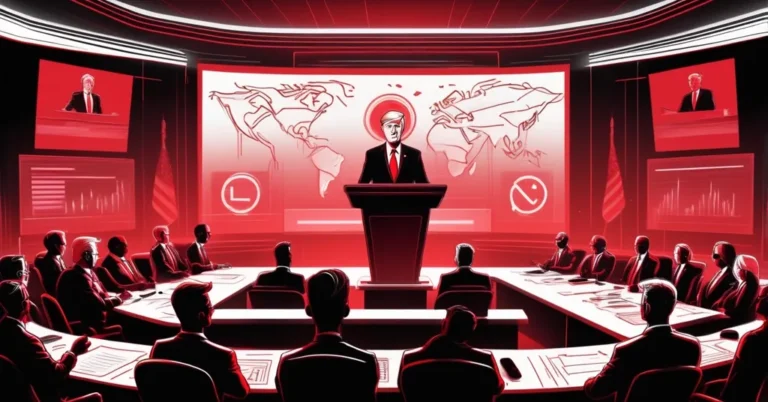
A convincing, AI‑generated speech falsely attributed to Namibia’s deputy president, Netumbo Nandi‑Ndaitwah, spread rapidly across social platforms and messaging apps. Journalists and fact‑checkers exposed it as synthetic and the politician rejected it. Still, the clip didn’t vanish because it fooled everyone — it spread because it said, in blunt terms, what many citizens wish their leaders would say: confront corruption, defend national wealth, and refuse exploitation.
“The fabricated speech travelled widely because it voiced the moral clarity people wish their leaders would show.”
Why a fake speech resonated
The resonance is political and psychological rather than purely technological. A core grievance underlies the virality: a shortage of credible, accountable leadership that offers both moral clarity and effective policy. The speech’s anti‑exploitation language tapped into long debates about decolonisation — not just ceremonial independence, but economic, political and intellectual autonomy.
Useful definitions up front:
- Coloniality: the persistence of colonial power relations in present structures — for example, economic systems that favor extractive exports and foreign capital over local value capture.
- Gerontocracy: governance dominated by a small number of very elderly leaders who limit political renewal and block younger talent.
- Performative leadership: spectacle‑driven politics where signaling and polarization substitute for institutional reform and policy delivery.
- AfCFTA (African Continental Free Trade Area): a regional trade pact designed to boost intra‑African trade and create more space for industrial strategy and economic sovereignty.
The clip reminded people of a lineage of anti‑colonial thought and rhetoric — thinkers such as Fanon, Rodney, and Nkrumah — and of contemporary leaders who push sovereignty themes, from Burkina Faso’s Ibrahim Traoré to Barbados’s Mia Mottley. That rhetorical thread matters because it connects moral language to concrete demands: control over resources, debt justice, and trade policies that grow domestic capacity.
Where geopolitics and local governance collide
Great‑power politics sharpens the stakes. Renewed transactional diplomacy and interventionist postures from external powers — including sanctions and pressure applied to states like Cuba and Venezuela — feed narratives of external interference. At the same time, domestic pathologies — entrenched elites, patronage networks, and aging leadership — keep reformers boxed in.
Two political currents run in tension across the region. One pushes for decolonial autonomy: regional integration (AfCFTA), debt relief advocacy, and industrial policy. The other stabilizes dependency: leaders and systems that accommodate foreign capital and prioritize regime survival over inclusive development. Where the latter dominates, rhetoric about sovereignty rings hollow and synthetics that sound brave can feel like the truth people want to hear.
How generative AI and deepfakes operate — a brief primer
Generative AI builds convincing text and audio by training large models on vast datasets. Given enough samples of a public figure’s voice and speaking style, tools can assemble plausible speeches and audio. These synthetic assets spread quickly on social platforms and encrypted messaging, and they complicate traditional verification: a short clip can go viral before a newsroom or fact‑checker responds.
Detection methods exist — metadata analysis, forensic audio tools, and watermarking/provenance standards — but they’re reactive. Platforms and organizations are racing to build proactive measures such as digital provenance (records showing where a piece of content originated) and cryptographic watermarks. At the same time, adversaries are improving their techniques, creating an arms race between synthesis and detection.
What this means for business and markets
Businesses operating in affected regions face practical, immediate consequences when political discourse is distorted by synthetic content:
- Reputational risk: A fake statement attributed to a CEO, minister or partner can trigger market reactions, stock moves, or consumer backlash before verification.
- Operational risk: Political instability, unrest, or sudden policy swings informed by manufactured narratives can disrupt supply chains and projects.
- Strategic risk: Long‑term investment choices hinge on credible governance and rule of law — a credibility gap raises political‑risk premia and deters capital.
- Talent and market risk: Youth disenfranchisement and weakened institutions affect labor markets, innovation pipelines, and domestic demand.
A practical playbook for executives
Prepare now with a mix of technical, communications, and policy moves. Prioritize quickly and keep actions manageable.
- Detection and tech defenses
- Use third‑party verification services and forensic tools to vet suspicious audio/video (look for metadata anomalies, compression artifacts, unnatural pauses).
- Adopt content provenance tools and insist on cryptographic watermarks for official releases where possible.
- Train in‑house communications and security teams to recognize deepfake signatures and escalate quickly.
- Communications protocols
- Predefine a rapid response playbook: verify, acknowledge, correct, and re‑amplify the truth through owned channels and trusted partners.
- Use short, frequent updates rather than long statements during misinformation events to maintain control of the narrative.
- Scenario planning and insurance
- Run tabletop exercises for misinformation shocks that include legal, operational and investor relations teams.
- Factor increased information risk into country and project risk assessments; review political‑risk insurance and contingency financing.
- Policy engagement and civic partnership
- Work with industry groups to push for platform accountability, provenance standards and investments in media literacy.
- Partner with local civil society to strengthen information ecosystems and support youth inclusion initiatives that reduce alienation.
Questions leaders are asking — and concise answers
- Why did the fake speech spread so quickly?
Because it articulated moral clarity and anti‑exploitation rhetoric that many citizens long to hear; viral dynamics amplified that resonance across social platforms and private messaging channels.
- Is the problem just technology?
No. Generative AI provided the tool, but structural deficits — weak institutions, gerontocratic governance, economic dependency — created the fertile ground where a synthetic message felt plausible.
- What immediate risks should businesses prioritize?
Reputation, operational continuity, and strategic capital allocation. Be ready to verify, communicate, and execute contingency plans within hours of a misinformation event.
- Can regional initiatives like AfCFTA reduce these risks?
Yes, by expanding integrated markets, enabling industrial policy and reducing reliance on extractive exports — but benefits require complementary governance reforms and credible political leadership to unlock.
Key takeaways for business leaders
- Deepfakes are not just a technical annoyance; they expose and exploit credibility gaps in governance that translate into political and market risk.
- Protecting a company’s reputation requires both technology (verification, provenance) and governance (clear communications protocols and scenario planning).
- Long‑term risk reduction comes from supporting institutional credibility: investing in local capacity, engaging on policy, and promoting inclusive governance that brings younger voices into decision‑making.
The viral AI‑generated speech is a diagnostic, not merely a novelty. That a synthetic voice could capture public imagination is a sign that rhetoric has been depleted of credibility. Firms that treat deepfakes as only a tech problem will be caught unprepared; those that combine detection tools with stronger communications, policy engagement, and investments in institutional resilience will be better positioned to navigate political disruption and seize emerging market opportunities as regional initiatives like AfCFTA reshape trade and industrial strategy.
When false words sound like the truth people crave, the remedy isn’t only better AI detection — it’s deeper political repair. Business leaders who factor that reality into strategy will protect assets, reputations and the markets they serve.