
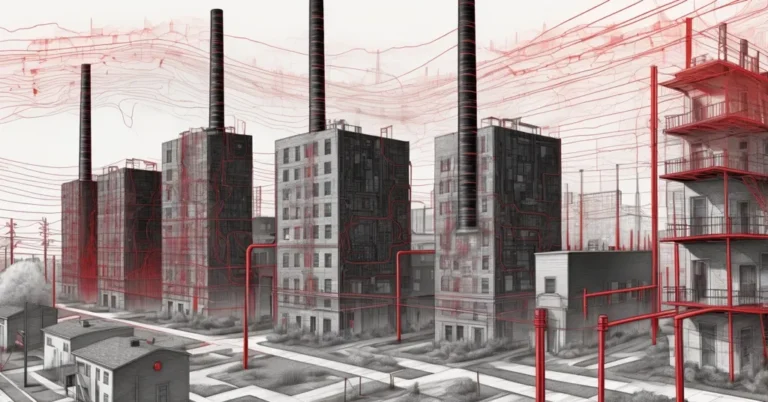
The AI data center boom is colliding with cities scarred by big industry
The crowd in Grays Ferry didn’t rally around slogans about faster downloads or cheaper cloud storage. They rallied around memory: the refinery that once loomed over the neighborhood, the illnesses that followed, and the fear that a new kind of industrial footprint, AI data centers, will layer another generation of harm on top of the last one.
For many residents, the debate isn’t about whether AI will reshape business or whether more compute is needed for large language models and other AI agents. It’s where that compute is built, who pays the costs, and whether promises of jobs and economic development will mask pollution, noise, and strains on scarce water and electricity.
Grays Ferry’s history of trauma meets modern demand for power
Philly Thrive, an environmental justice group active in Grays Ferry, has been organizing around industrial threats for years. Members tabled in the neighborhood in 2018 against an oil refinery expansion. The Philadelphia Energy Solutions refinery, one of the region’s industrial giants, processed up to 335, 000 barrels of crude oil per day before an explosion in 2019 and its subsequent shutdown.
“I read the information they had on the table about how living near the refinery affects you, and I’m looking at all the sicknesses on this paper, and I’m like, ‘My mother has this, my sister has that, my next-door neighbor suffers from this’, every house, someone has something on that list. From that point, I was all the way in.”
City officials have identified two potential sites for large data-center projects, one in Northeast Philadelphia and one in Grays Ferry, but, as of reporting, no formal construction proposals have been filed. More than 100 people attended the kick-off rally for the No Data Centers in Philly campaign, where concerns ranged from diesel exhaust to corporate surveillance.
“We don’t want data centers. We don’t want the pollution, we don’t want the noise, and we know they’re not going to bring us more jobs.”
“In my eyes, they killed him. The pollution killed him. I believe he would be here today if he wasn’t silently murdered, because it was the pursuit of profit that killed him.”
Why data centers trigger these fights
There are a few practical facts tying the grief and anger in neighborhoods like Grays Ferry to the technical realities of data centers:
- Data centers need continuous, high-capacity electricity for compute and cooling, so site-level power is a core design question.
- To ensure uptime, operators often use on-site backup generators, commonly diesel. When those run during prolonged grid stress they emit local air pollutants and greenhouse gases.
- Rapid growth in AI compute demand is raising overall energy use at data centers. Several industry forecasters have revised upward their projections for fuel and electricity demand tied to these facilities.
On the national stage, BloombergNEF projected substantial increases in natural-gas demand tied to U.S. data centers by 2035, saying that projected demand could surpass the natural-gas consumption of Germany and Japan combined and noting that this forecast was nearly double BNEF’s estimate from nine months earlier. Those upward revisions raise policy questions about how to accommodate large, inflexible loads while protecting communities and meeting climate goals.
“A typical data center planned in Pennsylvania has hundreds of diesel engines that spew air pollution, and even if they’re supposedly reserved for emergencies, the government has already said that the data center should use those rather than drawing from an overstressed electrical grid during some heat waves. We can expect that to get more frequent… Fossil fuel-hungry data centers will worsen climate change, making those heatwaves more frequent and severe.”
Note the phrasing: Annie Fox is describing what some permit filings and operational plans for large data centers in Pennsylvania have included. Backup-architecture details vary by project, and whether generators run only in brief outages or more frequently during heat waves depends on how grid stress, interconnection agreements, and permit conditions are written.
From local protests to state-level pauses
Municipalities and states have started to hit pause. In July 2026 New York’s governor signed an executive order halting approvals for large new data-center permits to buy time for planning and review. Several U.S. cities, including Denver, Indianapolis, Asheville, Charlotte, and Reno, have enacted moratoriums or temporary permitting pauses while officials study grid capacity, water availability, and community impacts.
These moves aren’t just NIMBY reflexes. They reflect growing attention to environmental justice: communities that already bore the brunt of refineries, power plants, and heavy industry worry they will again be asked to host infrastructure that compounds local harms without commensurate benefit.
Read the big emissions numbers with the math shown
Some headline figures have circulated that sound alarming and deserve careful parsing. One cited estimate suggests additional data-center demand could generate roughly 1, 000, 000 metric tons of greenhouse gases per day. Put plainly:
- 1, 000, 000 metric tons/day × 365 days = 365, 000, 000 metric tons per year.
- Recent U.S. greenhouse-gas inventories run in the multiple billions of metric tons per year (for example, U.S. inventories commonly reported in the range of roughly 5-7 billion metric tons CO2e, depending on year and accounting choices).
- Dividing 365 million by a multi-billion baseline yields an annual share on the order of roughly 5-7% of U.S. emissions, not 12%, so the percentage depends on the baseline year, the emissions categories counted, and whether the 1, 000, 000 figure represents CO2 vs CO2e or which scopes are included.
Two clarifications matter for readers and decision-makers:
- Scopes. Are projections counting only on-site combustion (scope 1), purchased electricity (scope 2), or the broader lifecycle including upstream fuel production (scope 3)? Different scopes produce very different totals.
- Operational assumptions. Are backup diesel engines modeled as rare emergency equipment or as fallback that will run regularly during heat waves or other grid stress events? That choice has large implications for local air quality and community exposure.
Health stakes and the limits of single-cause explanations
Public-health studies underline the seriousness of fossil-fuel air pollution. A high-profile 2021 analysis estimated that a large share of premature deaths worldwide are linked to fossil-fuel-related air pollution, a global context that helps explain community fears.
At the same time, attributing an individual cancer or a single death to a single prior industrial source requires epidemiological evidence. Residents’ memories and patterns of illness are critical evidence in environmental justice work; responsible policy couples listening with rigorous cumulative-impact assessment and enforceable mitigation.
What business leaders and city officials should demand
For developers and operators, community acceptance is now a material risk. For city and state officials, moratoria are a legitimate short-term tool but must be followed by durable policy. Treat the following items as non-negotiable elements of credible proposals and permits:
- Transparent disclosures about expected power and water use, interconnection plans, and timelines for grid upgrades.
- Clear backup-power architecture with strict limits on diesel-generator runtime, remote monitoring, and enforceable penalties, preferably coupled with battery energy storage to reduce reliance on combustion during grid events.
- Binding community benefit agreements that specify local hiring, training programs, and funding for health and environmental remediation, backed by independent audits.
- Rigorous environmental-impact and cumulative-impact assessments that account for historical pollution in the neighborhood.
- Permits that tie approvals to verifiable clean-energy procurement over time (not vague or aspirational pledges).
Practical mitigations that matter
Some technical and contractual measures can materially reduce local harms, if they are enforceable:
- On-site battery energy storage to bridge short outages and reduce generator runtime during heat waves.
- Long-term power-purchase agreements (PPAs) for zero-carbon electricity and firming solutions so additional load doesn’t default to fossil-fuel-fired marginal generation.
- Permit conditions requiring low-NOx generator technology when combustion is unavoidable, and real-time emissions monitoring with public reporting.
- Enforceable community benefit agreements with milestones, audits, and independent oversight.
Promises without enforcement frustrate communities and create commercial unpredictability for projects. Requiring clear, auditable commitments up front reduces protests and delays, and it’s a pragmatic way to protect project timelines and investor returns.
Top actions, concise checklists
For executives planning data centers:
- Publish a full power and water disclosure before site selection.
- Commit to non-diesel emergency strategies (battery + PPA) or explain, with evidence, why diesel is unavoidable and how runtime will be limited and monitored.
- Fund an independent economic-impact audit and negotiate an enforceable community benefit agreement.
- Design permits that include real-time emissions monitoring and meaningful penalties for violations.
- Engage communities early and transparently, don’t treat outreach as a last-minute PR exercise.
For civic leaders and regulators:
- Use moratoria only to buy time for evidence-based policy and technical studies.
- Require cumulative-impact assessments that include historical pollution burdens.
- Condition approvals on enforceable mitigation (battery storage, PPAs, emissions monitoring) and binding community benefits.
- Invest in grid capacity planning so reliability is achieved through systemic upgrades, not local pollution.
- Mandate third-party audits of developer claims about jobs, tax revenue, and emissions.
Key questions and short answers
-
Why are communities like Grays Ferry opposed to AI data centers?
Residents point to a legacy of industrial pollution, observed clusters of illness, noise and surveillance concerns, and skepticism that promised jobs and investments will benefit the neighborhood rather than outside investors.
-
Are data centers really large greenhouse-gas emitters?
They can be, depending on power sources and backup strategies. Forecasts from firms such as BloombergNEF project substantial increases in natural-gas demand tied to data centers by 2035, but actual emissions depend on how scope 1, 2 and 3 are counted and on operator choices like battery versus diesel backup.
-
How should the “1, 000, 000 metric tons per day” claim be read?
Annualized, 1, 000, 000 metric tons per day equals about 365 million metric tons per year. Against recent U.S. annual inventories measured in the multiple billions of metric tons CO2e, that annualized figure would be on the order of roughly 5-7% of national totals; the exact percent depends on which baseline and emissions categories are used.
-
Do data centers bring many long-term jobs?
Data centers typically create substantial construction employment but relatively few permanent operations roles compared with their land and power footprint. Independent economic-impact assessments are necessary to verify developer claims.
What comes next for companies and civic leaders
Companies building AI infrastructure must stop treating local communities as an afterthought. Transparency about power, water, emissions, and backup strategies is not optional. Binding commitments to minimize diesel use, secure long-term clean power, and fund verifiable local benefits will cut conflict and improve project predictability.
Civic leaders: moratoria are a reasonable first step, but follow those pauses with clear permit standards, environmental-justice screening, and investments in grid capacity so that reliability isn’t achieved by dumping pollution into vulnerable neighborhoods.
For executives and boards: these fights are a commercial risk. A proposed site that ignites community opposition can stall or be blocked. Thoughtful siting, credible mitigation, and honest accounting of trade-offs should be treated as core elements of any data-center strategy tied to AI for business.
AI’s compute needs are real and growing. So are the expectations of communities that have historically borne industry’s worst externalities. Anyone building the infrastructure for next-generation AI, developers, operators, investors, and civic officials, should treat that tension as a design requirement: meet rising compute demand without repeating the social and environmental failures of the past.
Respect the history of places like Grays Ferry, measure impacts transparently, and make pollution and promises enforceable. If that feels like extra cost, remember: predictable permits, fewer protests, and social license to operate are themselves valuable returns on investment.