
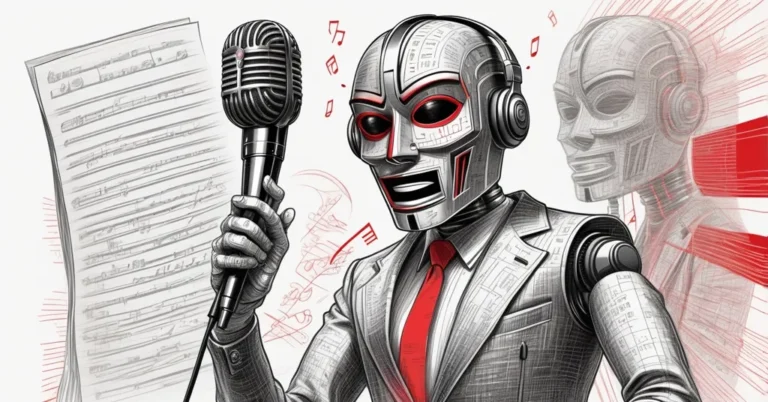
Julia Jasunas did not hear about the theft from a lawyer. Another comic sent her a message. An Instagram persona named Aylen Skye, blonde, polished, and sitting on about 250, 000 followers, was telling Jasunas’s joke about renting a room in a two-bedroom to a cute guy. Not a cousin of the bit. The bit, including the ums and the ahs.
The link under the video did not go to a ticket page. WIRED reported on October 16, 2026, that AylenTV.com, promoted in the clip, sent viewers to paid adult content on Fanvue. WIRED described Fanvue as a subscription competitor to OnlyFans that markets itself as the “No1 AI monetisation platform for creators.” The comedy was the opener. The subscription was the close.
That is not a comedy-club problem with better lighting. A viral demo, a founder story, or a sales script can be rebuilt by a persona your company does not employ, then used to sell something else. The rules that catch someone pretending to be you will not necessarily catch someone pretending your work is theirs.
Attention is the product. The joke is just inventory.
WIRED said it found eight comedians in the same spot: already-viral clips rebuilt by AI-presented women, often with cleaner light, cleaner sound, and a more sexualized frame. Many of those accounts follow one another. None of this reporting has named an operator. Skye did not answer WIRED. Neither did the other account at the center of the story. George Brett Olson has said other comics were hit, and that someone, possibly the same operator, was running the same jokes through different synthetic women. That is a lead, not an org chart.
The other account is Tiffany Sloane (Sloan, in Kotaku’s spelling), with an OnlyFans handle Kotaku identified as tiffanyybabe. The Instagram bio calls the persona an actress. By the time comics started shouting, reporting put the account past 375, 000 followers. Kotaku said it had posted about 75 videos in a short run, almost all of them jokes. New account, hundreds of thousands of followers, dozens of joke clips, in a matter of weeks. The speed is the part that matters.
On October 3, 2026, Olson posted a side-by-side captioned “AI stole my joke!!!” His bit was about Republicans shrugging at AI risk while whipping up panic over illegal immigration. WIRED’s description of the clips is specific: identical backdrops, similar salmon shirts, similar khaki shorts, the punch line swapped, Olson’s expletive removed. Kotaku, covering the same post, judged that the copy tracked both the joke and the outfit. Olson also says the account stole his likeness. Similar clothes and a matching backdrop are what the reporting documents. A copied face is his allegation, not a finding.
After the call-out, the account commented “sorry, won’t happen again, ” then deleted that Reel and many others.
The quality jump is part of why this stopped being a niche complaint. Comics, including Steph Clark, had been posting about clumsy AI stand-up since around June. Clark has called the early clips “weird pick-me AI slop, ” and they were easy to mock. WIRED’s later examples were good enough that a viewer could not reliably tell, from the video alone, whether the woman on screen was real. WIRED treated the accounts as AI-generated. Some posts carried an AI label. Some did not. Most of Skye’s posts were flagged as AI content. The account itself was not. A label, where it appeared, marked a video as synthetic. It did not name the comic whose material had been reused. It did not settle whether a given clip was fully synthetic, a face-swap, or a blend. The screen is a bad witness.
Jasunas had a blunter test than any label. She told WIRED, “You look at any female comic’s comments section and you’ll see all these men berating her, objectifying her body, saying she’s not funny or the joke is bad.” Skye’s comments, she said, were uniformly kind. “That’s how I knew she was fake.”
Impersonation is banned. Copying the work is a gray area.
Jasunas reported the video to Meta as impersonation. She says the company told her it did not break the rules, because Skye was not pretending to be Jasunas. She was presenting Jasunas’s joke as her own. Olson’s followers got the same answer on the Sloane clip. Asked for more, Meta spokesperson Francis Brennan told WIRED, “Our policies are pretty clear around this stuff, and Adam’s comment speaks for itself.”
Mosseri, tagged by Olson, drew a line worth keeping intact. He did not think it was “practical for us to try and ban AI content.” Meta was “very invested in trying to drive more traffic to original content creators, and if an AI creator is ripping off content wholesale, it would be good for us to work out what we can do about that.” No public remedy followed. The accounts WIRED had flagged were still on Instagram.
As WIRED characterized the rules, impersonation is prohibited, copying someone else’s material is a different question, and AI content is permitted when it is labeled. That is a policy built for a fake profile of a named person, not for a fake performer using a real person’s work. Identity gets a rule. Short spoken expression gets a shrug.
Stand-up has lived with that shrug for years. Setups travel. Punch lines mutate. A performance is gone once the set ends. Copyright can still cover a joke that is original and fixed. The practical barriers are similarity, registration, and whether the damages justify the bill. Olson said an intellectual-property lawyer told him a case probably was not worth filing unless Sloane was making millions on OnlyFans. Read that as a cost-benefit view, relayed by Olson, not as a rule of law and not as legal advice. It is also not a revenue figure. Kotaku’s coverage of the same account talked about millions of views, which is reach, and then speculated that this kind of creator can make a lot of money. Speculation is not a profit-and-loss statement. None of this reporting cited a filed case.
Julia Jasunas, to WIRED: “It’s one thing to have your jokes stolen. It’s another to funnel your work into something so sexualized, for someone else’s profit.”
She also called the experience “violating on so many different levels, ” and said of Meta, “They just didn’t seem to care.” Comic Mandy Martino, whose material Skye had lifted too, put the institutional failure in one line. Instagram saying this is not a problem, she told WIRED, was “the scariest part.”
The old deterrent assumed the thief wanted to stay in the room
Comics have always done a lot of their own policing, because the formal net is weak and a bad reputation still costs club dates. Shame is a tax on membership. An unnamed operator with a replaceable face has no room to be thrown out of. Delete one Reel, spin up another face, keep the link.
The business temptation is not subtle. WIRED reported that Andreessen Horowitz partner Justine Moore praised Sloane’s presence on X as “a genius marketing hack.” Skye’s comment on a comic’s complaint was the same idea, typos included: “if you focused on putting out content instead of making whinny [sic] posts like this, you’d be as successful as me.” Growth teams will recognize the logic. Find a format the algorithm already rewards, change the packaging, measure, repeat. Kotaku described that testing habit in this corner of the internet: the same joke reshot with different clothes and different performers, to see which variant gets the push. That is a description of how this kind of operation can work, not a lab notebook from a named company.
There is a brand-safety problem under the copyright fight. WIRED described these accounts posting flirty, clearly synthetic late-night interviews featuring hosts such as Conan O’Brien and Jimmy Kimmel, plus the occasional racist or transphobic joke. Kotaku separately noted Sloane clips paired with Kaley Cuoco and Danny DeVito. Nothing in that reporting says any of those people showed up and filmed. If likeness is a controlled asset, the exposure is adjacency to a synthetic celebrity and to material you would never ship. The follower count is the smaller number.
Questions worth asking before you file this under internet weirdness
- Is one company running all of these accounts?
Nobody in this reporting has shown that. WIRED identified eight affected comics and accounts that follow one another. Olson has suspected a shared operator. Skye and Sloane did not meaningfully respond, and no outlet has named who is behind them.
- Did Instagram’s rules stop the copying?
No. Reports were rejected because the personas were not pretending to be the comics. Mosseri called a blanket ban on AI content impractical, said wholesale ripping-off deserved a response, and did not spell one out. The accounts WIRED flagged stayed online.
- What should a business do on Monday?
Save dated originals of demos, founder videos, and sales scripts, and search for the script rather than the face. An AI label is neither credit nor a release. Meta rejected the identity complaints here, offered no public remedy for the wholesale reuse, and left the accounts up. Do not budget for litigation as the remedy.
Moore is not wrong that the funnel can be clever. Jasunas is not wrong that clever and clean are different words. Original work still matters. It just no longer matters automatically. If your moat is a voice, a script, or a face on camera, write that down before a persona with better lighting writes it for you.