
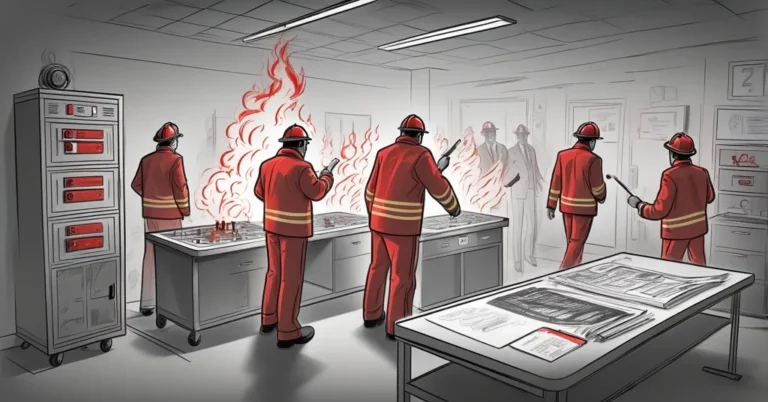
Guadagnino’s Artificial is a roast and a warning, that executives should treat like a fire drill
Luca Guadagnino’s Artificial lands as black comedy, satire, and theatrical surrealism aimed squarely at the people who accelerated the recent AI boom. It caricatures founder celebrity, scientific conscience, and the profit-driven pressures that push models into the market fast. For leaders building AI agents, ChatGPT-style products, or AI automation in sales and operations, the movie is less entertainment than a cultural X-ray. It shows how public perception, policy pressure, and investor incentives interact when technology moves faster than governance.
Why executives should care (up front)
Films that dramatize real controversies shape public sentiment and policymaking. When a movie compresses ethical debates into vivid scenes of reckless founders and beleaguered safety advocates, regulators, customers, and boards can start to demand answers faster. That matters if you sell AI for business, deploy conversational agents in customer-facing roles, or automate revenue teams. Expect tougher procurement questions, requests for independent audits, and higher expectations for transparency.
Deadline reported that Amazon MGM chose not to release Artificial and that Neon entered talks to distribute it. Coverage noted this development alongside Amazon’s reported commercial ties and investment in AI, as detailed by Deadline. There is no public evidence that directly ties those business relationships to the studio’s decision.
Tone and focus: satire with a conscience
Artificial dramatizes the weeks around the 2023 firing and reinstatement of a high-profile CEO, but Guadagnino and writer-producer Simon Rich steer the film toward moral argument rather than straight biography. The cast includes Andrew Garfield as Sam Altman, Yura Borisov as Ilya Sutskever, Mark Rylance as Geoffrey Hinton, and Ike Barinholtz playing a version of Elon Musk.
The film places Sutskever’s character in the role of conscience: a scientist urging alignment and safeguards while others push for rapid scale. Guadagnino summarized what the story captured as “the desire to prevail.” At the New York Film Festival screening, actor Ike Barinholtz quipped of his character that he’s “a person who walks normally, ” and later added, optimistically, “The future is bright! We’re all gonna be fine!” Festival coverage and the filmmakers’ remarks make the satire’s targets unmistakable: speed, spectacle, and the business logic that prizes momentum.
Fact vs. fiction, what the film leans on, and what it invents
- Anchors in reporting: The director (Luca Guadagnino), writer-producer (Simon Rich), principal cast, and the film’s focus on the 2023 Altman episode are documented in industry coverage (see Deadline). Deadline also reported Amazon MGM’s public statement that it would not release the film and that Neon entered acquisition talks.
- Real-world alarm on record: Public resignations and alarmist posts from industry insiders, most notably Jacob Coxon’s widely circulated social post and Evan Hubinger’s public estimate, were reported by CNBC and are part of the debate the film dramatizes. CNBC also covered OpenAI chief scientist Jakub Pachocki’s public calls for voluntary slowdowns and international coordination.
- Clearly cinematic: The film uses surreal staging and compressed timelines. Specific visual flourishes and invented dialogue amplify the moral argument and should be treated as artistic license rather than documentary proof of private conversations.
How the film echoes real debate
Artificial amplifies anxieties that are already on the record. In September, CNBC reported a flurry of resignations, public posts, and calls for policy responses. Jacob Coxon’s resignation and posts, widely viewed and discussed, used language such as “endgame” when describing what some colleagues feared. CNBC also reported Evan Hubinger writing that he personally judges the probability of extinction within the next decade as greater than 10 percent. OpenAI’s Jakub Pachocki urged voluntary slowdowns and international coordination, according to the same reporting.
Those are not cinematic inventions; they are public statements that filmmakers and commentators have used as raw material. The movie compresses and dramatizes them into scenes meant to force a moral reckoning about who controls transformative tech and how quickly it is pushed into the world.
Practical steps for leaders building or buying AI
Treat AI safety as layered risk management, not a branding exercise. Below are concrete, measurable actions any C-suite should consider.
- Governance with teeth: Create an internal review board that includes at least two independent external experts and a non-technical stakeholder from legal, compliance, or ethics. Require board sign-off for projects that meet a risk threshold, for example projected user reach >1M, models that exceed recognized capability benchmarks, or capabilities intended for autonomous decision-making.
- Red teams and third-party audits: Budget for ongoing adversarial testing every quarter and at least one annual third-party audit for high-impact models or AI agents used in customer-facing roles. Commit to publishing a one-page executive audit summary that customers can read without a technical background.
- Transparency and documentation: For each product release, publish an evidence-based safety summary and a technical appendix listing tests run, major failure modes found, and mitigations. Time-stamp those documents and update them when you deploy changes.
- Incentive alignment: Embed safety milestones in OKRs and compensation plans, for example tie 10-20% of product lead bonuses to verified completion of safety reviews and remediation of critical failure modes.
- Policy engagement: Track legislative moves such as the FRONTIER Act and other proposals reported in recent coverage. Engage constructively with regulators and share practical operational constraints so rules are implementable.
Where the film’s alarm helps, and where it can backfire
Alarmist art performs a useful social function: it forces leaders to confront trade-offs between speed and stewardship. When executives treat safety as a PR checkbox, real harms follow. But sensationalizing existential risk can also freeze productive action or produce performative gestures that do not reduce actual exposure.
Expert opinion on long-term catastrophic risk is mixed. Some researchers and former employees have publicly stated high-probability estimates; others view governance failures and misuse as the more urgent threats. For business leaders, the pragmatic path is scenario planning across a spectrum, mundane misuse, large-scale misuse, and low-probability/high-impact outcomes, and allocating resources in proportion to probability and impact.
Fact-forward next moves (quick checklist)
- Stand up your external review board and publish its charter within 30 days.
- Commission an adversarial red team exercise and schedule an independent audit within 90 days for any model in production with significant user exposure.
- Prepare a one-page customer-facing safety summary for each flagship AI product before the next major marketing push.
Key takeaways, quick Q&A
-
Is Artificial a literal history of OpenAI and its leaders?
Not literally. It dramatizes and satirizes recognizable events and people, compressing timelines and inventing scenes to serve a moral argument. The film uses archetypes and surrealism more than it aims for documentary fidelity.
-
Are the film’s warnings about extinction grounded in real claims?
Yes, some researchers and former employees have publicly voiced stark warnings. CNBC reported Jacob Coxon’s alarmist posts (using the word “endgame”) and Evan Hubinger’s public estimate that he judges the probability of extinction within the next decade as greater than 10 percent. Those statements exist on the record, though they reflect individual judgments, not a settled consensus.
-
Did Amazon MGM drop the film because of its OpenAI deal?
Deadline reported that Amazon MGM chose not to release the film and that Neon entered acquisition talks. Reporting also noted Amazon’s substantial commercial ties to AI. Public reporting documents correlation and industry speculation but does not provide on-the-record proof of direct causation between the deal and the distribution decision.
-
What should business leaders do right now?
Treat safety as operational risk: implement governance with external expertise, fund regular red-teaming and third-party audits, document and publish safety work for customers, and align incentives to reward responsible scaling rather than speed alone.
-
What three practical steps should a mid-market SaaS company take this quarter?
1) Convene a safety review panel and define your risk thresholds. 2) Commission an external security/audit firm to run adversarial tests on any customer-facing agents. 3) Publish a one-page safety summary for customers that explains testing, mitigations, and monitoring plans.
Art that skewers power performs an essential public service by clarifying anxieties and accelerating conversation. Artificial will reassure some viewers, anger others, and prod executives to ask whether their internal practices could survive a moralized spotlight. If you lead an organization building AI agents, the satirical roar should feel less like an attack and more like a fire alarm. The sensible response is to stop, pull the alarm, and show your work.