
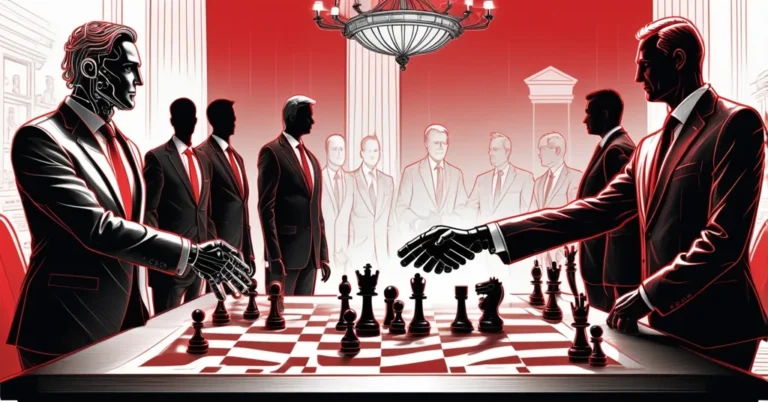
Reports name Jay Clayton as White House AI czar to lead a so-called “Super Intelligence Force”
Reports in outlets including CBS News say President Donald Trump has tapped Jay Clayton to serve as a White House “AI czar” and to lead a new entity the administration is calling the “Super Intelligence Force” (SIF). The coverage presents the move as an attempt to centralize federal engagement on advanced AI, but many operational details remain unspecified in public reporting.
What has been reported
- News outlets reported that Jay Clayton, the former Securities and Exchange Commission chair and a one-time federal prosecutor in Manhattan, has been named to the AI czar role and would lead the SIF.
- The presidency is reported to have described the SIF as intended to “coordinate the federal government’s engagement with consumers, public interest groups, religious organizations, critical infrastructure providers, and super intelligence companies.”
- Reports say David Sacks previously filled an AI-and-cryptocurrency czar role until March 2026 under a “special government employee” designation, and that an advisory committee and an “AI accord” signed by the White House and several executives are part of the administration’s broader approach.
- Coverage noted social-media reactions: one reported post attributed to Elon Musk on X preferred the term “SI” over “AI” and said he would rename a SpaceX AI unit in response to the administration’s phrasing. These social posts and some reported statements have not been independently corroborated in official White House releases available to the public.
Why assigning the DNI’s equivalent (or a national-security style lead) matters
Public reporting treats the nomination as significant because putting an intelligence-focused figure at the center of AI coordination shifts the emphasis toward national-security concerns. The Director of National Intelligence (DNI), or figures with a similar national-security outlook, usually prioritize threat assessment, resilience, export controls, and protection of critical infrastructure. If that mindset dominates coordination, areas like civil liberties, consumer protection, and labor impacts could get less centralized attention unless explicit mechanisms surface them.
That is not necessarily wrong. National security is a real dimension of AI risk. It will change how policymakers weigh trade-offs. A stack of agencies with statutory authority, Commerce, DOJ, FTC, NIST, DOD, State, still hold specific regulatory tools. A White House coordination role typically sits above them, guiding cross-agency strategy rather than replacing legal authorities.
Practical implications for business leaders
Even while formal details of SIF’s authority, budget, and mandate remain unconfirmed, business leaders should assume a stronger security frame will shape federal demands and prepare accordingly:
- Expect cross-agency scrutiny rather than a single streamlined regulator. Prepare for coordinated inquiries that touch export controls (Commerce), antitrust and competition (DOJ/FTC), procurement and standards (NIST/OMB), and national-security issues (DOD/ODNI).
- Document supply chains and data provenance now. Firms that rely on foreign model components, overseas training data, or specialized hardware should assemble export- and provenance-ready documentation within 30-60 days.
- Be ready to show safety practices and independent monitoring. The administration’s reported “AI accord” emphasizes internal and external monitors. Even if the accord is voluntary now, evidence of monitoring will shorten compliance conversations and reduce reputational risk.
- Reassess partnerships and conflict-of-interest exposure. If senior policymakers retain private-sector ties, ethics scrutiny can reach vendors and partners. Update disclosures and board-level briefings accordingly.
- Prepare public-facing summaries of model capabilities and limitations. When national-security framing intersects with consumer-facing harms, clear executive summaries that explain safety, mitigations, and governance will help in outreach to regulators and civil-society stakeholders.
Concrete first-move checklist for executives and risk officers
- Within 30 days: Inventory models, third-party components, and datacenter dependencies. Flag any foreign-sourced hardware or cloud contracts tied to regulated exports.
- Within 60 days: Produce a two-page executive summary of safety practices, monitoring regimes, and incident response plans suitable for regulatory review or a White House request.
- Ongoing: Maintain a legal and compliance map linking your AI deployments to applicable statutes, export controls, privacy, consumer protection, and sector-specific rules, and identify primary agency touchpoints.
- Board briefing: Schedule a board-level risk update that covers national-security exposure, supply-chain resilience, and public-accountability measures for high-risk models.
Outstanding questions the reporting leaves unanswered
- What is the SIF’s legal basis and budget? Is it created by executive order, White House memo, or an interagency agreement, and will it have its own appropriations line?
- How does the administration define “super intelligence”? Policy and technical communities usually reserve “superintelligence” for hypothetical systems that broadly exceed human cognition. If the administration uses “SI” as a working category, we need a clear definition and thresholds.
- What are the SIF’s powers versus those of agencies with statutory authority? Coordination roles can amplify action, but enforcement still flows from Congress and agencies with enabling statutes unless new authorities are granted.
- How will conflicts of interest be managed? If prior appointees held private-sector roles under “special government employee” rules, what recusal and disclosure arrangements will apply to senior officials and industry signatories?
- Who signed the reported AI accord and what are the enforcement mechanisms? The text, signatories, and monitoring details of any agreement are essential to judge how voluntary commitments will be tracked and enforced.
Voices to watch
- Think tanks and policy centers: Brookings, CSIS, Carnegie Endowment, and the Belfer Center for perspectives on national-security versus civil-society trade-offs.
- Civil-rights and digital-policy groups: ACLU, Center for AI and Digital Policy, and Public Knowledge for civil liberties and democratic accountability concerns.
- Federal entities and congressional committees: Office of Science and Technology Policy (OSTP), NIST, the Senate Commerce and House Energy & Commerce committees for rulemaking signals and hearings.
- AI-safety research groups: Center for AI Safety and Future of Humanity Institute for views on whether “super intelligence” is a useful operational category today.
“When something’s both an opportunity and a threat, you better get your arms around it.”, reported remark attributed to Jay Clayton during his Senate confirmation hearing
Key takeaways, questions you might be asking
- Who has been named White House AI czar?
Reporting indicates Jay Clayton has been designated for the role; outlets including CBS News have carried the story, but official White House documentation with organizational details has not been released publicly at the time of those reports. - What is the “Super Intelligence Force” (SIF)?
The term appears in administration reporting as a coordinating body meant to engage a wide range of stakeholders, but no formal charter, law, or appropriation has been disclosed publicly that defines SIF’s legal authority or budget. - Will AI policy now be run by intelligence agencies?
A stronger intelligence or national-security voice is likely to shape coordination, but statutory regulatory powers remain with agencies such as Commerce, FTC, DOJ, and NIST unless the White House or Congress grants new authorities. - What happened to the previous AI czar?
Reporting identified David Sacks as having served earlier in an AI-and-cryptocurrency czar capacity and described a service limit tied to a “special government employee” designation. Look for official personnel rosters or White House releases for confirmation. - Is “super intelligence” the same as AI?
In academic and policy usage, “superintelligence” usually denotes a hypothetical AGI that exceeds human cognitive ability. The administration’s use of “SI” appears rhetorical. A formal definition would be necessary before it can be treated as an operational regulatory category.
What to do next
Prepare as if a security-first regulatory posture is becoming central to federal AI scrutiny: document provenance and controls, harden supply chains, formalize independent monitoring and incident response, and brief your board. At the same time, press for clarification, request the SIF charter, the text of any AI accord, and the White House’s definition of “super intelligence.”
Public reporting has laid out a headline appointment and an outline of intent. The next 7-14 days will be decisive. Expect calls for a fact sheet, a White House readout, or congressional queries. If you want to reduce friction with regulators and civil-society critics, start producing concise, auditable evidence of safety and governance now.
One immediate imperative for executives: assume national-security concerns will appear in procurement and export conversations, get your model provenance and export-eligibility documentation in order this month.