
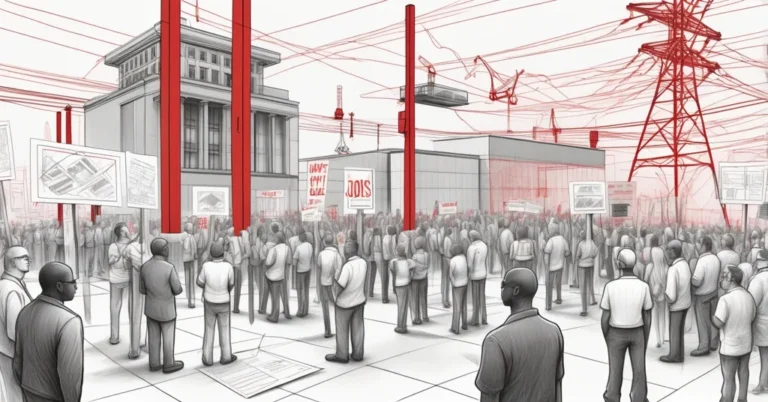
The hum of generators, the anger in the town hall: democracy meets the AI buildout
At community meetings from county courthouses to small‑town schools, residents ask blunt questions: why does a single datacenter need massive new transmission lines, millions of gallons of water, or backup fossil‑fuel generation? These are not theater. They are the front line of a growing clash between hyperscale AI infrastructure and local democracy. The friction reveals a wider split: a powerful tech sector racing to build and citizens pushing back over environmental, fiscal, and governance costs.
Public sentiment is shifting, and fast
Attitudes toward AI have changed sharply in recent years. Pew Research Center’s multi‑wave polling shows the share of U.S. adults who say they are more concerned than excited about AI rose from about 37% in 2021 to roughly half of adults in surveys conducted in 2025-2026. A Marquette University Law School poll noted widespread public worry about datacenter impacts and AI’s societal consequences. Different polls give different headline numbers, but the steady pattern is the same: concern has grown and that concern is turning into local political energy.
Media coverage and public debate have amplified those anxieties. Reporting has highlighted harms tied to automated systems and conversational AIs, raised questions about youth safety, and publicized expert views that treat catastrophic or long‑term risks as non‑negligible. Those conversations shape how a rural planning board or a suburban council reads a datacenter proposal that promises construction dollars but few permanent jobs.
What the buildout looks like on the ground
Datacenters that host AI training and inference clusters are not small server rooms. Hyperscale facilities draw huge amounts of electricity, often sit on large parcels of land, and can trigger new transmission lines or dedicated generation. Industry and energy trackers document a large pipeline of projects: CBRE’s H1 2026 market reporting and other sector updates show thousands of megawatts under construction and shifting regional patterns of development. Global Energy Monitor and related energy studies point to a large announced pipeline of generation tied, at least on paper, to data‑center growth. The practical upshot is this: where these projects land matters to local grids, water systems, taxes, and land use.
Local pushback has taken concrete forms. Cities and counties across the U.S. have adopted moratoria, paused permitting, or tightened zoning to slow datacenter proposals, examples reported in local and national coverage include Denver, Indianapolis, Asheville, Charlotte, Reno, and multiple North Carolina counties. Concerns driving those moves include strain on electricity transmission, higher local emissions from backup generation, heavy water use in arid places, and the feeling that residents weren’t heard when huge projects arrive with tax‑incentive deals negotiated behind closed doors.
Why this feels bigger than simple NIMBYism
Three forces combine to make the conflict feel existential to many communities.
- Scale and spillovers. Hyperscale datacenters raise national transmission questions while creating local environmental and fiscal impacts. Federal planning documents and energy analysts now treat these facilities as drivers of new grid needs.
- Economic mismatch. Construction brings temporary jobs and investment, but several local studies and sector analyses find that permanent, high‑paying positions at finished campuses are often small compared with the incentives granted.
- Perceived democratic bypass. A strand of elite tech thinking, captured in anecdotes and public commentary, treats democratic messiness as an obstacle to scientific progress. That attitude, combined with reputational hits from social media and past tech controversies, fuels distrust when megaprojects arrive.
Rob Reich recounts an exchange in his book System Error where Silicon Valley technologists said, “Democracy is too slow, and it holds science back, ” and argued for a “beneficent technocrat in charge.” That sentiment helps explain why backlash is not only about land use but about who decides the tradeoffs.
Power still favors the builders, but not without pushback
The tech sector’s economic weight buys political access. Companies and investors bring investment promises, lobbying muscle, and the ability to push national arguments about competitiveness. Policymakers at federal and state levels have stressed the strategic importance of AI in the context of great‑power competition, which puts pressure on officials to speed infrastructure projects.
Industry has a history of winning favorable legal and regulatory treatment (Section 230 is the classic early example for platforms), and observers point to two recurring tactics: seeking legal insulation and arguing that AI is so technically complex that heavy‑handed rules won’t work. Critics, including AI ethicists, say portraying the technology as inherently uncontrollable is a way to dodge accountability.
Still, momentum is not one‑way. Local governments keep zoning and permitting power; courts and state regulators can impose conditions; and voters can mobilize. As Quinn Slobodian put it: “If there is one sector in the US that is still globally dominant and profitable, it is tech, ” but he warns those barons now face a democracy that can and will push back.
Practical policy and business levers that matter
For city leaders and corporate planners, the conflict produces a clear checklist of what to do next and what to expect when negotiating datacenter projects.
- Demand independent impact studies. Require independent grid‑impact, water‑use, and economic‑impact analyses before permitting, studies that distinguish announced projects from those under construction or fully permitted.
- Insist on enforceable community benefits. Use community benefit agreements, conditional‑use permits with clawbacks, and PILOT (payments in lieu of taxes) terms that include wage floors, local hiring targets, and penalties if promises aren’t met.
- Allocate grid costs transparently. Require project proponents to fund necessary transmission upgrades or to negotiate transparent cost allocation with utilities and state regulators rather than socializing those costs across ratepayers.
- Protect procedural voice. Preserve public comment, environmental review, and meaningful local hearings; where federal priorities conflict with local prerogatives, seek conditional approvals tied to enforceable mitigation.
- Measure benefits with clear metrics. Define public benefit in advance: number of permanent jobs, minimum wage levels, percent of local procurement, guaranteed tax revenue thresholds, and a decommissioning/remediation timeline.
What leaders should ask, and how to answer
- Who pays for the grid upgrades?
Public utilities, regulators, and project developers must agree on cost allocation up front. Cities should require developers to cover incremental transmission and distribution upgrades tied directly to the project or to secure binding agreements with utilities that specify ratepayer protections and developer contributions. - What counts as public benefit?
Concrete, enforceable commitments: measurable permanent jobs (with wage floors), binding tax or PILOT revenue guarantees, local workforce and procurement targets, and community health‑impact mitigation where applicable. PR promises are not enough; demand contractual obligations. - Can local governments stop the buildout?
They can slow, reshape, or raise the cost of projects through moratoria, strict permitting, and litigation, but federal strategic priorities and industry resources mean local action more often forces negotiation than total prevention. Smart local policy turns bargaining power into enforceable concessions. - Are technologists openly anti‑democratic?
Some influential voices have expressed technocratic impatience with democratic processes; anecdotes and writings from figures in and adjacent to the Valley show a range of attitudes. That does not mean unanimity, but the presence of technocratic rhetoric matters politically and rhetorically.
“Democracy is too slow, and it holds science back, ”, Rob Reich, recounting remarks he heard among technologists, System Error.
“If there is one sector in the US that is still globally dominant and profitable, it is tech.”, Quinn Slobodian
Short checklist for business leaders and city planners
- Require independent, public impact assessments (grid, water, economic) before approvals.
- Negotiate community benefit agreements with measurable metrics and clawbacks for non‑performance.
- Structure PILOTs and tax incentives with sunset clauses and performance triggers.
- Make utility cost allocation and transmission plans a condition of any long‑term land use deal.
- Engage early with local stakeholders, transparent timelines, open hearings, and clear mitigation reduce the chance of later moratoria or litigation.
Key takeaways, questions leaders are actually asking
- Is public opposition to AI and datacenters just a media flare?
No. Multiple polls and a growing list of municipal moratoria and zoning changes show sustained, measurable concern about environmental impacts, local fiscal tradeoffs, and governance. The headlines reflect real political energy. - Can local governments really alter the trajectory?
Yes, they can slow, reshape, or raise the cost of projects. Zoning, permitting, conditional approvals, litigation, and political pressure force negotiation. But local action alone rarely removes nationwide strategic incentives or the deep pockets backing the buildout. - What are the concrete negotiation levers?
Independent impact studies, enforceable community benefit agreements, cost allocation for grid upgrades, PILOT structures with clawbacks, and explicit decommissioning plans are the most effective tools available to communities and planners. - What should corporate planners change now?
Expect longer timelines and tougher conditions. Build the community‑benefit case early, budget for transmission and mitigation costs, and adopt transparent commitments that can withstand political scrutiny.
The current collision between hyperscale AI infrastructure and local democracy is more than delay and noise. It’s a structural mismatch between a rapid industrial program and public expectations about who gets to decide tradeoffs. If tech companies and policymakers want AI investments to stick, they will need enforceable local benefits, transparent cost sharing, and processes that restore residents’ voice. Otherwise, the hum of generators in a town hall will keep reminding power where it comes from.