
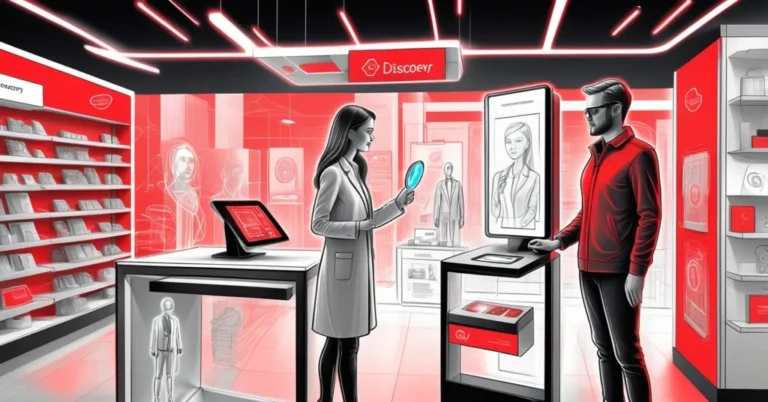
Ron Johnson: AI will improve discovery, not replace the in‑store experience
Think of the Apple demo table: devices laid out like instruments in a shop, staff nearby to answer questions, a Genius Bar for deeper help. That choreography was intentional, meant so customers could touch, test, and learn. Ron Johnson, the executive who built Apple’s retail engine, tells TechCrunch he expects AI to make online discovery smarter but not to eliminate the need for those in-person moments.
TechCrunch framed the broader industry bet as “billions to make AI agents shop for us.” Major tech players are backing that idea. Google has promoted a Universal Commerce Protocol to help agents move from discovery to checkout, and OpenAI has been adding shopping features to ChatGPT so users can research, compare, and sometimes buy inside the chatbot. Johnson applauds these advances for discovery, but he doesn’t think they remove the value of physical validation and human judgment.
Agentic commerce: what Silicon Valley is building
Agentic commerce refers to AI agents that act on users’ behalf to discover, compare, and purchase products. The industry is experimenting with technical standards, plugins, and conversational interfaces to automate more of the shopping funnel. These efforts are real and speeding up. They reduce friction for routine purchases and create new referral and attribution channels for retailers.
Why Johnson says AI will inform, not replace
Johnson’s argument is straightforward and grounded in product experience. Agents can narrow choices, show tradeoffs, and speed research, but they can’t reproduce the tactile judgments that matter for many items.
“AI is a new technology that will improve the online shopping experience, ”
, Ron Johnson, in a TechCrunch interview.
He points to higher‑touch purchases as the hard limit for full delegation. When it comes to a significant purchase, “a $1, 000 or $2, 000 laptop, ” his example, Johnson believes most people will still want to verify fit, feel, and workflow before handing over payment authority.
“Honestly, nobody’s going to do that.”
, Ron Johnson, on letting an agent pick and buy a high‑value device without human verification.
“AI will never be able to have you physically experience a product, ”
, Ron Johnson.
He frames AI as a preparatory tool. Agents make shoppers more informed before they arrive in store. That raises conversion potential and shifts the in‑store role toward validation, personalization, and support.
A track record that gives weight to his view
Johnson built Apple’s retail approach with demo-first layouts, in-store education, and a service focus that downplayed commission selling. Those choices are central to his skepticism about agentic commerce as a wholesale replacement for stores.
His career has also included high-profile reversals. He left Apple to lead J.C. Penney in 2011 and was ousted less than two years later after a controversial turnaround effort. He later founded Enjoy Technology, an e-commerce and home-setup startup. Enjoy filed for bankruptcy in 2022 and sold substantially all of its assets to Asurion. Those wins and setbacks inform his practical skepticism.
“I applied a startup mentality to what needed to be a turnaround transformation, ”
, Ron Johnson, reflecting on his J.C. Penney tenure.
“I’m a real believer in AI. I’m an AI optimist, ”
, Ron Johnson.
“There’s no substitute for human intuition, ”
, Ron Johnson, invoking the role of human judgment.
What retailers should do now (practical, prioritized)
- Align demo inventory and product metadata. If agents steer shoppers to specific SKUs, make sure those models are on the floor and that product data matches between your systems and agent-facing endpoints. KPI: in‑store demo conversion rate for agent‑referred traffic.
- Retrain staff for consultative validation. Move sales teams away from transactional scripts toward conversations about workflow, ergonomics, and long-term fit. KPI: average order value and NPS after demo interactions.
- Instrument agent referrals and attribution. Tag traffic coming from ChatGPT plugins, marketplaces, or agent APIs so you can measure agent‑led conversion and return rates. KPI: agent‑led conversion rate and return rate differential versus other channels.
- Use AI to reduce search friction, not to replace human touch. Deploy agents for comparison, personalization, and pre‑visit booking so customers arrive better prepared. KPI: lift in qualified store appointments and time‑to‑purchase.
- Pilot subscription or agent‑first flows for commoditized categories. Test agentic automation where repeat purchases dominate (consumables, refills, staples). KPI: channel shift share and lifetime value for agent‑managed subscriptions.
A quick counterpoint: why some bets could succeed
Johnson’s skepticism is credible. Technology can narrow the sensory gap. Better AR and VR demos, high‑fidelity haptics, convincing unboxing videos, faster two‑hour fulfillment, and stronger trust frameworks could make end‑to‑end agent purchases sensible for more categories. The sensible takeaway is this: agents will capture more volume where product fit is predictable, returns are cheap, and trust is high.
Two‑minute checklist for executives
- Audit product metadata and demo availability for your top 200 SKUs and fix mismatches within 30 days. KPI: percent of top SKUs with consistent metadata across channels.
- Launch a 90‑day pilot tracking agent referrals (ChatGPT/plugins, aggregator agents) to your online product pages. KPI: conversion rate and return rate for agent‑referred traffic.
- Create a demo plan for AOV bands, and guarantee a demo or tactile alternative for purchases above a threshold (e.g., $500). KPI: demo conversion rate and average order value uplift.
Key questions and quick answers
- Will AI fully replace in‑store shopping?
Not across the board. Johnson says AI will make shoppers more informed, but many higher‑touch purchases still benefit from physical validation and human guidance.
- Does Apple’s retail model still matter?
Yes. Apple designed stores for trial, education, and support, and Apple retail staff are not paid on commission, choices Johnson credits for durable customer loyalty and satisfaction.
- Are tech companies actively pushing agentic commerce?
Yes. Industry efforts such as Google’s Universal Commerce Protocol and OpenAI’s shopping features in ChatGPT are explicit moves toward agent‑assisted buying and smoother checkout flows.
- Should retailers ignore agentic commerce?
No. Retailers should adopt AI for discovery and personalization while protecting the in‑store experiences that AI cannot easily replicate. Start with pilots, measure rigorously, and use AI to bring better‑qualified customers to your people.
Johnson’s position is neither technophobic nor naïve. He welcomes AI where it improves discovery and preparation, but he cautions against treating agentic commerce as a universal substitute for human judgment and sensory validation. For most retailers the smartest strategy is integration, not abdication. Let AI narrow the field and let your people close the deal.