
When a robot gets the physics right but the people wrong
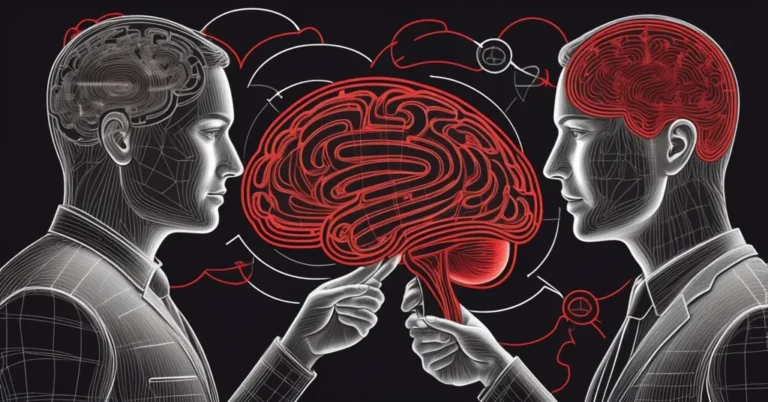
Picture a robot barista. A customer points at a cup peeking from behind a cabinet door. The robot, reasoning only about objects and motion, treats the cup as unseen and shuts the door. Physically that action is correct, but socially it is an error. That gap is the focus of a new line of work: world models that track objects but not minds will make the wrong choices in social situations.
What the researchers did and how they tested it
Reported by Jonathan Kemper in The Decoder (Aug 22, 2026), the team proposes Mental World Modeling (MWM), which adds explicit mental variables to the usual state representation (objects, locations, occlusion): beliefs, attention, goals, intentions, emotions, norms, and social relationships. They published a training‑free reference pipeline called MENTIS (code: github.com/mental-world/Mentis) that strings together off‑the‑shelf large models into a six‑step modular process. It produces explicit intermediate state descriptions for debugging and auditing before choosing an action.
To evaluate the idea they created Menti‑Bench, a 448‑scene decision dataset made up of 320 text vignettes, 100 picture stories, and 28 sound‑video clips. Each scene offers six response options and a human reference solution that records the correct action and annotated physical and mental states. The Decoder notes that 78% of scenes include at least two characters, precisely the social cases where mental inference matters.
The study ran eight language models, five from OpenAI including GPT‑5.6‑Sol and GPT‑4.1, and three from Anthropic, Claude Fable 5, Claude Opus 4.8, Claude Haiku 4.5. Chosen actions were scored using F1, averaged across the 448 scenes as reported by The Decoder. Self‑consistency was implemented by sampling six answers and taking the most common response.
Headline numbers (as reported)
- Direct answers (single pass): 63.3 F1.
- Self‑consistency (6 samples, modal vote): 77.9 F1.
- Full MWM pipeline (MENTIS): 87.9 F1.
- Human baseline (same protocol): 98.5 F1.
Key comparison: a weaker model inside the MWM pipeline (GPT‑4.1) reached 84.9 F1, while the strongest single‑pass model with self‑consistency (GPT‑5.6‑Sol) scored 83.6 F1. That suggests adding explicit mental channels lifted performance more than incremental model upgrades alone (results as reported by The Decoder, verify exact numbers and evaluation scripts in the paper/repo before citing them).
What the ablations reveal about what matters
Three short takeaways from the authors’ ablations (reported in their evaluation tables):
- Drop the mental channel, average loss of 12.1 F1 points.
- Drop the physical channel, average loss of 16.5 F1 points.
- Predict physical and mental transitions independently instead of jointly, loss of 6.4 F1 points.
Domain split: interpersonal scenes saw a 26.4‑point F1 improvement when mental channels were added, object‑focused scenes saw a 14.0‑point gain. In diagnostic “oracle” replacements where intermediate pipeline outputs were swapped for human annotations, fixing state transitions delivered the largest single gain, +3.5 F1. The authors estimate roughly 80% of the remaining gap to human performance stems from errors in intermediate predictions, primarily transition simulation (reported by the authors via The Decoder).
Why this matters for executives
If your AI must interact with people, in scheduling, triage, retail, care, or collaborative manufacturing, the difference between “knowing where the cup is” and “knowing what others believe about the cup” is operational. Three business implications to act on now:
- Risk reduction in social failures: On Menti‑Bench, modeling mental states produced a measurable reduction in socially inappropriate actions, with the largest gains in interpersonal scenes. For human‑facing systems that can mean fewer escalations, fewer safety incidents, and better customer outcomes.
- Interpretability and audit trails: MENTIS emits explicit, machine‑readable intermediate states, such as beliefs, goals, and attention. That helps debugging, regulatory audits, and forensic review, which matters in regulated verticals like healthcare or finance.
- Engineering tradeoffs you must budget for: The prototype is “training‑free” in the sense that it strings together existing models without training new weights. That speeds prototyping but raises latency, compute, and operational complexity for real‑time deployment. Plan for human‑in‑the‑loop fallbacks in early pilots.
Where the technical friction really is
The study reframes the problem. The core bottleneck is not recognizing beliefs at a single moment, but simulating coupled state transitions, how an action changes both the physical world and what people believe, intend, or feel. Small perceptual differences, who saw what, or underspecified intentions can flip a predicted outcome.
From an engineering perspective that suggests three priorities:
- Stronger multimodal observation models so the agent’s inputs match what people on the scene actually perceive.
- Richer initialization of mental state, using probabilistic priors on beliefs and intentions rather than point estimates.
- Robust joint transition models that simulate physical and mental state changes together, not separately.
Limits, caveats, and what the numbers don’t prove
Important constraints to keep in mind before you commit budget or product roadmaps:
- Small, curated benchmark: Menti‑Bench is 448 scenes. Strong results on curated vignettes do not guarantee robust behavior in noisy, long‑horizon, real‑time settings.
- Annotation subjectivity: mental states are inherently interpretive and culturally dependent. Check the dataset’s annotator demographics, inter‑annotator agreement, and whether uncertainty labels were captured.
- “Training‑free” is pragmatic, not magical: composing LLMs avoids retraining, but it does not eliminate compute costs, latency, or the need for engineered prompts and orchestration.
- Ethical and privacy risks: inferring beliefs, intentions, and emotions raises consent, misuse, and fairness concerns. The authors recommend representing uncertainty, and governance measures are still necessary.
- Replicability: the numeric claims reported by The Decoder should be validated against the authors’ paper and the MENTIS GitHub evaluation scripts before using the figures in procurement or compliance materials.
Practical next steps for decision makers
If your organization is adopting AI that operates around people, treat Mental World Modeling as a capability to test, not a turnkey product. A short checklist for executives:
- Run a small, domain‑specific Menti‑Bench style evaluation, 20-100 scenarios, that reflects your workflows and cultural context.
- Require interpretable intermediate outputs, such as beliefs, goals, and attention, from any candidate system in high‑risk pilots.
- Design pilots with human‑in‑the‑loop fallbacks for the first N interactions and instrument for metrics such as social error rate, false‑inference rate, and latency.
Governance controls you should add now
- Mandate explicit uncertainty reporting when the system emits inferred mental states.
- Obtain consent where feasible, and disclose when the system will infer intentions or emotions.
- Validate cultural generalization with local annotators and run adversarial misuse assessments.
- Maintain an auditable log of intermediate mental‑state inferences for post‑incident analysis.
Research and product paths forward
Three viable development strategies, with tradeoffs summarized:
- Explicit structured pipelines (MENTIS‑style): interpretable and debuggable, at the cost of higher engineering overhead and potential latency.
- End‑to‑end learned world models: train models to embed mental variables into latent states for speed and scale. These are harder to inspect and debug.
- Hybrid approaches: combine internal LLM mechanisms, the “scratchpad” behavior some teams observe, with external state trackers for accountability. Promising, but not yet proven as a full replacement for explicit annotations.
Where to read the underlying work
The Decoder’s coverage (Jonathan Kemper, Aug 22, 2026) reported the MWM/MENTIS results and figures; the authors published a MENTIS reference implementation on GitHub at github.com/mental-world/Mentis. For background on debates about what qualifies as a “world model” see the arXiv critique (arXiv:2507.05169) that surveys pixel‑level vs. abstract latent representations. Before operational decisions, verify numeric tables, human‑baseline protocols, and evaluation scripts in the authors’ paper and repo.
Business use cases worth watching
- Collaborative robotics on factory floors, inferring co‑worker intent to avoid task interference or unsafe motions.
- Caregiving or clinical assistants, weighing subtle belief or emotion cues to avoid harmful instructions.
- Customer support and escalation prediction, modeling frustration and intent to route sensitive cases to humans.
Key takeaways, questions you might be asking
-
Does modeling mental states actually improve decisions?
Yes. Reported results on Menti‑Bench show explicit mental channels via MENTIS raised average F1 from 63.3 (direct single answers) to 87.9. Self‑consistency helped (77.9) but did not match MWM’s gains (reported by Jonathan Kemper in The Decoder, Aug 22, 2026).
-
Is the improvement simply from better language models?
No. The study reports that a model with MWM (GPT‑4.1) outperformed a stronger model using only self‑consistency (GPT‑5.6‑Sol) under the reported protocols, indicating the structured mental channel added value beyond raw model size (as reported in The Decoder).
-
Where does the remaining gap to human performance come from?
Mostly from errors in predicting coupled state transitions, how both physical and mental states evolve after an action. The authors’ diagnostics replacing intermediate stages with human references attribute roughly 80% of the remaining gap to intermediate‑stage prediction errors, primarily transitions (reported by the authors via The Decoder).
-
Is MENTIS ready for production?
Not yet as a drop‑in: it’s a training‑free prototype that proves the concept. Scaling to continuous sensory streams, low‑latency control, and robust real‑world behavior will require engineering, likely some learned components, and careful governance.
-
What governance steps should we take now?
Require uncertainty reporting, consent or disclosure where feasible, cultural validation for annotations, auditable logs of inferred mental states, and human oversight during early deployment.