
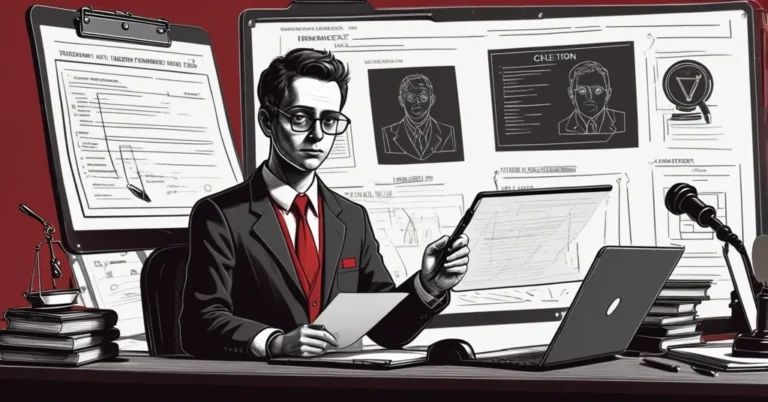
THE LAST EXAM | #FutureVisionXPRIZE Submission, what leaders should know
Kerala, 2039. A village teacher enters her twelve students in a national engineering challenge to save their closing school. On finals night, an early monsoon forces a choice: the demonstration that would win it, or two hundred drones lighting their fathers’ boats home.
“Kerala, 2039. A village teacher enters her twelve students in a national engineering challenge to save their closing school. On finals night, an early monsoon forces a choice: the demonstration that would win it, or two hundred drones lighting their fathers’ boats home.”
That logline anchors THE LAST EXAM, a short-film submission to the Future Vision XPRIZE (https://futurevisionxprize.com). The submission pairs a small, human story with a production claim that matters for any executive weighing AI-driven creative work:
“Every image, voice, and note of score in this film was created by one person at one desk, using accessible AI tools, which is also what the film is about.”
Two claims, up front
- The piece tells a human story about sacrifice and technology.
- The submitter asserts that a single person produced every visual, vocal, and musical element using off‑the‑shelf AI tools (tools credited: Suno, ElevenLabs, ChatGPT, Higgsfield, Kling, Seedance, and CapCut).
Both claims are plausible. The creative one you can judge by watching. The production claim is operational and legal. Ask for evidence before treating it as fact in procurement, marketing, or IP filings.
How a one‑person AI film typically gets made (quick sketch)
- Music: An AI music generator like Suno composes and renders tracks. A human writes prompts, edits outputs, and mixes the final score.
- Voices: A neural voice tool such as ElevenLabs synthesizes narration or dialogue from scripts. A human picks voice models, adjusts pacing, and may post-process the audio.
- Visuals & animation: A text model like ChatGPT helps craft scripts and prompts. Image and animation tools (Higgsfield, Kling, Seedance, as credited) generate frames or sequences that the creator curates.
- Assembly: An editor such as CapCut stitches visuals and audio, adjusts color and timing, and exports the final deliverables.
That pipeline is not exotic. Many small teams and solo creators use it to produce polished content fast and on a budget.
What to request to verify a one‑person claim (procurement‑ready language)
When a creator claims sole authorship of an AI‑heavy project, require a package of artifacts before you accept exclusive ownership or wide commercial use. Request the following:
- Identity & submission confirmation: a signed statement from the creator (e.g., Siraj Raval) and the Future Vision XPRIZE submission receipt with timestamps.
- Project files: CapCut project file and exported audio stems with timestamps; original image/animation assets with metadata.
- Prompt & model logs: prompt history, model names/versions, seeds, and parameter settings; API call records showing usage timestamps.
- Licensing records: receipts or contracts for Suno, ElevenLabs, Higgsfield, Kling, Seedance, and any paid services used.
- Input disclosures: statement whether any human recordings, third‑party samples, or external assets were used as inputs.
- Hashing/attestation: hash-signed files or time‑stamped archives to prove provenance; retain logs and project files for a defined period (consult counsel for retention policy).
Legal context you must factor in
Platform terms and copyright law already constrain blanket claims of exclusivity for AI outputs.
For example, ElevenLabs’ Music Terms (last updated 26 May 2026) state that musical outputs “may not be unique and may be similar or identical to Output returned to other users, ” and the provider’s terms limit warranties of exclusivity. That means music generated via such services may not be guaranteed unique to a single user.
The U.S. Copyright Office has likewise shown it will scrutinize authorship in AI‑heavy works. The Office has denied registration where human creative contribution was judged insufficient, examples include Zarya of the Dawn (Feb. 21, 2023), Théâtre D’opéra Spatial (Sept. 5, 2023), and SURYAST (Dec. 11, 2023). These decisions do not ban copyright for AI‑assisted works, but they do make clear that claims of sole human authorship are fact‑specific and can be rejected.
Put simply: the creator’s statement that “All music and dialogue original. © 2026 Siraj Raval.” is an assertion. It may be valid in practice, but it can run into platform‑level non‑exclusivity clauses and registration scrutiny. Buyers should verify before relying on exclusivity or using the work to assert proprietary rights.
Business implications, upside and risk
Upside: the workflow lowers cost and compresses time to market. Small teams can iterate on storyboards, produce explainer or sales videos, and test creative variants far faster than with traditional agencies. A practical estimate: a small B2B marketing team could produce multiple personalized 60-90 second demo videos per week using this pipeline, potentially at a fraction of agency costs (estimate, results vary by scope and quality standards).
Risk: legal uncertainty, licensing gaps, and reputational exposure. Non‑exclusive outputs, impersonation risks, or undisclosed human samples can create downstream liabilities, from takedown notices to failed copyright registrations to brand trust issues if audiences learn content was misrepresented.
Executive action checklist (three priorities)
- Require provenance before purchase or exclusivity transfer. Accept project artifacts (see verification list) and confirm tool licenses.
- Get legal signoff on IP & disclosure. Have counsel review platform terms (e.g., ElevenLabs Music Terms, 26 May 2026) for output‑uniqueness clauses and advise on registration and enforcement strategy.
- Define disclosure policy. Decide when to label content as AI‑generated and how much human creative control to advertise externally to preserve trust.
Key questions and honest answers
-
Did one person actually create every image, voice, and note?
The submitter asserts they alone authored prompts, selected and edited AI outputs, and assembled the project. Verification requires project files, prompt logs, and timestamps; without those artifacts the claim remains an unverified but plausible workflow description.
-
Is the music and dialogue truly exclusive to the creator?
The creator claims copyright. ElevenLabs’ Music Terms (26 May 2026) explicitly warn outputs “may not be unique, ” and the U.S. Copyright Office has denied registration in several AI‑heavy cases where human authorship was insufficient, so exclusivity is legally uncertain until proven by provenance and licensing records.
-
What should businesses use this workflow for?
Use it for prototypes, internal training, rapid campaign testing, and low‑to‑mid‑stakes external content. For high‑stakes distribution, require provenance proof, platform license checks, and legal review before commercial deployment.
-
Should you disclose that content was generated with AI?
Yes. Best practice: disclose the tools used and the degree of human creative control to reduce reputational and compliance risk.
Final note
THE LAST EXAM works as a story and as a demonstration of what a single creator can do with today’s AI toolchain. Whether it becomes a definitive example of one‑person filmmaking depends on the documentation behind the claim and how legal frameworks evolve. For leaders, the practical takeaway is immediate: the tools exist now to produce professional media with small teams. If you plan to buy, brand, or claim exclusive rights, ask for receipts and get legal counsel involved.
Submission credit and production claims as listed by the submitter: “Original score composed and generated with Suno. Voices performed with ElevenLabs. Imagery and animation via ChatGPT, Higgsfield, Kling, and Seedance. Edited and mixed in CapCut.” All music and dialogue original. © 2026 Siraj Raval. Future Vision XPRIZE submission: https://futurevisionxprize.com.