
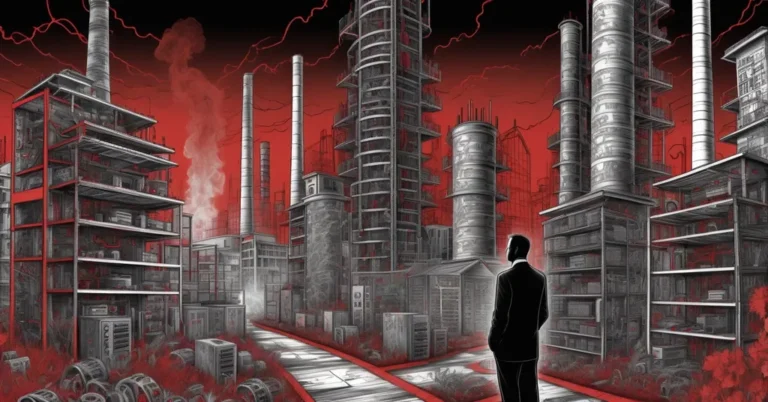
Dandora, data centers and the cost of “greatness”
At the edge of Nairobi, the 40‑acre Dandora dumpsite is framed by scorched circuit boards, twisted metal racks and plumes from burning cables. Former waste picker Solomon Njoroge is blunt: “Inasmuch as we are working for development or greatness to change the world… [hyperscalers] should also consider that there are people somewhere, suffering from what they are calling greatness.”
This matters because global AI and cloud growth will retire vast quantities of servers, GPUs and storage. How those assets are handled, whether repaired, reused, or dumped, will determine whether communities like Dandora pay the environmental and health price of digital expansion.
How big is the problem (and why the numbers still wobble)
Global estimates show e‑waste rising fast. The Global E‑waste Monitor 2024 projects humanity could produce 82 million metric tons of electronic waste annually by 2030 (Global E‑waste Monitor 2024, United Nations University / International Telecommunication Union).
A June report from the United Nations University connects that broader trend to data‑center hardware turnover. The UNU report’s wording is ambiguous: it lists “about 2.5 metric tons each year” and in the same passage refers to the amount as the “equivalent of 250 Eiffel Towers.” Those statements, as published, are inconsistent in units and scale. Until the UNU clarifies the intended units or a corrected figure is released, treat the quoted “2.5” phrasing as unresolved while accepting the broader point, data‑center retirement will add materially to e‑waste.
Definitions, at a glance
For clarity: “e‑waste” means discarded electronic devices and components, covering consumer devices as well as servers, storage and networking hardware. “Hyperscale” data centers are high‑density facilities used by major cloud providers. Industry sources commonly describe them as sites hosting thousands of servers; IBM notes thresholds often cited at 5, 000 servers or more. “Hyperscalers” are the large cloud operators building this capacity at scale.
Why AI and hyperscale build‑outs accelerate churn
Several forces push hardware replacement faster than many expect:
- Performance demands. Training and serving larger, newer models often require the latest GPUs and high‑performance servers.
- Accounting and procurement choices. Shorter depreciation windows or procurement models that favor performance over longevity encourage earlier replacement. Some firms publicly state servers can last up to six years (reported in CNBC), but practice varies.
- Scale effects. Pew Research Center finds more than 1, 500 U.S. data centers in development stages, and hyperscale build‑out across providers concentrates large volumes of hardware that will eventually require end‑of‑life handling.
The human and environmental ledger
E‑waste commonly contains hazardous substances such as lead, mercury, cadmium and brominated flame retardants. Improper handling and informal recycling can release a wide range of pollutants. A nonprofit, Human‑I‑T, cites that improper e‑waste disposal can liberate hundreds to “up to 1, 000” different chemicals into air, soil and water.
At locations like Dandora, academic and public health observers link hazardous exposures to increased respiratory illness, reproductive harm and cancer risk. Many people on the front lines of recovery work do so out of economic necessity. About 45.5% of Kenya’s population lives on less than $3 a day (World Bank Open Data), which helps explain why informal waste pickers handle so much downstream recovery.
“We need to be seen as people who have been recovering millions of tons for decades, ” says Solomon Njoroge. “Waste pickers are not illegal or informal… they are front‑line climate workers.”
University of Michigan professor Richard Neitzel describes that recovery as “green work” in the sense that it returns valuable materials that would otherwise require new mining, but much of it is hazardous and unregulated.
How some companies and institutions are responding
Not all activity is window dressing. Examples to watch:
- Microsoft has built six on‑site Circular Centers and pledged toward zero waste by 2030. Cliff Henson, Microsoft’s corporate vice president of cloud supply chain and engineering, emphasized the need to “pull those [products] back into the process and recycle.”
- Google reported harvesting about 8.8 million hardware components in 2024 that were reused or resold (Google 2025 environmental report). The company’s figures illustrate scale but do not, on their own, prove sufficiency relative to total retirements.
- Startups such as Molg are building modular robotic “microfactories” designed to disassemble electronics on site and recover components. Promising technology, but not yet proven at global hyperscale.
- UN bodies have begun to elevate the issue. The UN passed a December resolution recognizing AI’s opportunities and calling for sustainable development and environmental data to study impacts. UNEP has signaled the need to survey whole value chains. Golestan Radwan, UNEP’s chief digital officer, said: “The basic issue is that the way current AI systems, especially generative AI models, are developed, reward scale, acceleration, and rapid turnover.”
Why circularity is harder than it sounds
Circling hardware back into use collides with technical, economic and social realities:
- Data security vs. reuse. Securely sanitizing storage at hyperscale is nontrivial. Government standards, for example guidance like NIST’s sanitization recommendations, provide pathways for erasure. Yet some regulated sectors and customers still require physical destruction, a secure but environmentally damaging option. Tony Harvey of Gartner summarized the dilemma: “If you want to be 100% secure, the only way to get rid of it is physical destruction, which is not good.”
- Shredding creates emissions risks. Mechanical destruction prevents data leaks but can produce fine metallic and chemical dust that endangers workers and contaminates soil and water unless tightly contained and filtered.
- Design choices impede repair. Many servers and accelerators prioritize density and thermal performance. Glued heatsinks, proprietary fasteners and tightly integrated boards make disassembly and component‑level refurbishment costly or impossible.
- Reverse logistics are expensive. Collecting, transporting and processing retired gear, sometimes across borders, requires a reverse supply chain that few operators have fully budgeted or standardized.
- Informal work is the current reality. Globally, informal waste pickers recover substantial value but often lack PPE, legal recognition, training and fair pay. Formalizing their role is both an ethical imperative and a way to scale safe recovery.
Practical moves for business leaders (next 18 months)
Treat hardware as an asset class that pays back if managed for life extension. Below are prioritized, measurable steps executives can own now.
- Make longevity a procurement requirement. Require modular, repairable designs and supplier guarantees. KPI: include a clause within 90 days requiring vendors to offer documented refurbishment programs or a minimum 5‑year commercial warranty for compute racks.
- Pilot reverse logistics and Circular Centers. Launch a 6‑ to 12‑month pilot that can process a defined volume (for example, one decommissioned rack per week), measure recovery rates and calculate cost per kilogram recovered. KPI: report % of components reclaimed and cost/recovered kg at the end of the pilot.
- Adopt secure, non‑destructive sanitization standards. Fund or join industry pilots that implement validated erasure protocols aligned with NIST or equivalent and independent verification. KPI: percentage of retired storage devices sanitized without physical destruction.
- Reduce demand pressure through software choices. Trial smaller, optimized models and software efficiencies that lower GPU hours. KPI: percent reduction in new high‑end GPU purchases year over year from baseline.
- Integrate and uplift informal workers ethically. Design buyback programs, PPE and training for local recovery workers where business operations intersect with informal sectors. Partner with local organizations for fair compensation. KPI: number of workers transitioned to formal roles and safety training completions.
- Require vendor transparency. Put end‑of‑life pathways, refurbishment rates and component recovery metrics into vendor contracts. KPI: percentage of suppliers reporting lifecycle and EOL plans within 12 months.
Questions you should be asking, short answers
-
How large is AI‑related e‑waste likely to be?
Global e‑waste could reach 82 million metric tons annually by 2030 (Global E‑waste Monitor 2024). Estimates that isolate data‑center contributions vary; a UNU June report contains ambiguous phrasing about the specific mass attributed to data‑center hardware, so treat single‑figure claims about “Eiffel Tower” equivalents with caution until clarified by UNU or industry disclosures.
-
Are cloud providers already doing enough?
Some are making meaningful investments (Microsoft’s Circular Centers, Google’s reported 8.8 million harvested components in 2024), but adoption is uneven and current measures are unlikely to scale automatically to meet projected retirements without broader industry commitments and regulation.
-
Can data security and safe reuse coexist?
Yes, but not without standards and investment. Secure, non‑destructive sanitization aligned to recognized guidance and independent verification can allow reuse while reducing destructive disposal, provided procurement and legal frameworks accept those validated methods.
-
How should waste pickers be included?
Formalize their role through recognition, training, PPE, fair pay and legal pathways into the circular economy. That protects health, improves recovery yields and creates local economic value instead of exporting harm.
Policy levers that would move the needle
Voluntary programs matter, but durable progress needs policy that aligns incentives across the value chain. Models and levers worth pursuing include:
- Extended Producer Responsibility (EPR) rules that require manufacturers and cloud operators to finance and manage end‑of‑life processing.
- Design‑for‑repair and digital product passport rules similar to EU ecodesign or right‑to‑repair initiatives that mandate interoperability, spare parts availability and repair documentation.
- Stronger hazardous waste controls and enforcement tied to international instruments such as the Basel Convention to prevent dumping and unsafe cross‑border flows.
Such measures make it cheaper and easier to choose refurbishment over destruction, and to scale safe recovery domestically rather than externalizing harm.
How to assess sources and verify claims
Key sources for the figures and quotes above include the Global E‑waste Monitor 2024, the United Nations University June report (noted for ambiguous phrasing on units), Google’s 2025 environmental report, reporting in CNBC, Pew Research Center data on U.S. data‑center development, and Human‑I‑T’s summaries on e‑waste chemicals. Where counts or units were unclear in primary reporting, treat headline metaphors (for example, “250 Eiffel Towers”) as illustrative rather than precise until clarified by the original author.
Closing thought
AI and cloud compute are not just lines on a balance sheet; they have a physical afterlife. Business leaders who reframe servers and accelerators as recoverable resources and who push procurement, engineering and policy in tandem will avoid reputational and operational risk, cut material costs and prevent toxic exposure in communities that can least afford it. That’s not just responsible stewardship. It’s smart business.