
TL;DR
Siraj Raval used Miora, billed as an “agentic creative studio”, to turn a three-item brief (brand name, audience, vibe) into a full visual identity in a short demo. The tool appears to apply a single taste correction across later outputs in the demo, but the video is sponsored and leaves key technical, legal, and privacy details unspecified. Run a focused pilot and set legal guardrails before you publish any AI-generated brand assets.
The demo in one paragraph
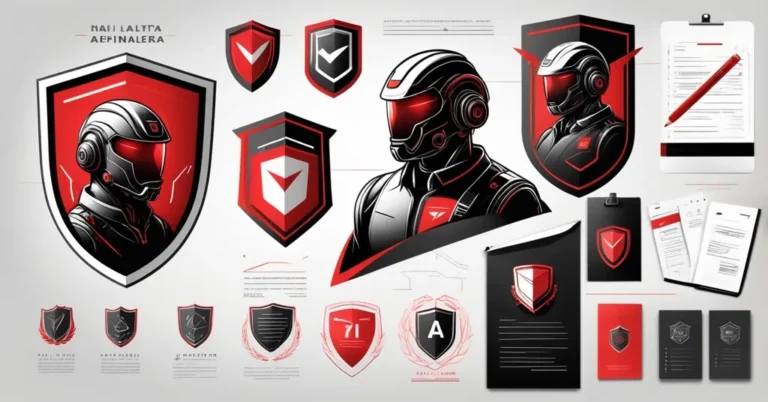
On his channel, Siraj Raval gave an AI one short brief, a brand name, a target audience, and a vibe. Miora produced a logo, color palette, typography, social templates, a product shot, and a brand video. Siraj highlights one behavior as the big reveal:
“I gave an AI one brief: a brand name, an audience, and a vibe.”, Siraj Raval
“The wild part: it remembered my taste corrections automatically.”, Siraj Raval
Siraj also discloses: “This video includes paid promotion.”
What the demo shows (and how it’s presented)
The video walks a single workflow from a minimal brief through concept generation to editable assets, motion, and reuse. Chapter headings call out the demo’s claims: an “agentic creative studio” coordinating multiple creative steps, a “one‑correction test (agent memory)”, a unified “free canvas” where everything is editable, and reusable “skills + specialists” you can save for future runs.
Immediate cautions and unanswered questions
The demo is a proof of concept, not a product spec. Important technical, legal, and operational details are missing from the video. Before you assume the behavior shown equals vendor reliability, verify these items with the vendor or in their public documentation:
- How exactly does “agent memory” persist and apply corrections across assets and sessions?
- Which models, training data sources, or third-party services power the outputs? That affects style limits, bias, and copyright risk.
- What are the commercial licensing and IP ownership terms for generated assets?
- What are data-handling, retention, and deletion policies for briefs and uploaded assets?
- How consistent and robust is the output across different industries, complex briefs, and large asset pipelines?
Note Siraj’s disclosure, the demo is sponsored. Treat the video as a marketer’s walkthrough and confirm capabilities independently before procurement or publication.
Why this demo matters for business leaders
In Siraj’s demonstration, the tool accepted a minimal brief and produced a visually coherent brand package while applying a single user correction forward. If this behavior generalizes, it addresses three pain points teams face when prototyping brand direction:
- Faster concept iteration, fewer manual handoffs when testing visual directions.
- Lower marginal cost for variants, quick generation of social templates and short promos.
- Cross-format consistency, a single palette, typography, and motion language applied to still and video assets.
Those are promising efficiency gains for startups, small marketing teams, and agencies prototyping ideas. The demo alone does not prove reliability at scale or resolve legal and quality control issues.
Practical playbook: run a low‑risk pilot
Do not onboard this class of tool across your brand without measured testing. Run a short, focused pilot with clear acceptance criteria:
- Scope: One representative product line or campaign brief.
- Deliverables: 3 hero assets (desktop/tablet/phone), plus 5 social variants and one 10-15s brand video.
- KPIs: Time from brief to first publishable draft vs. baseline (target: ≥30% time saved); number of review cycles (target: ≤2); manual fixes required post-export (target: ≤3 per hero asset).
- Acceptance criteria: Export files in your required formats (ask for .AI/.PSD/.SVG and .MP4), export-ready quality with no more than the KPI threshold of manual fixes, and successful propagation of a single stylistic correction across all generated assets.
- Legal & privacy checks: Obtain written confirmation of commercial licensing, IP ownership or assignment, and data retention/deletion policy before using assets in paid media.
- Governance: Log hours saved, rounds of edits, and any editorial decisions a human curator had to make to prevent homogenization or brand drift.
Risks you should plan for
Beyond the basic verification items, three business risks deserve explicit mitigation:
- IP and copyright exposure: If underlying models were trained on copyrighted material, outputs can accidentally mimic existing works. Contract legal review and similarity checks are prudent.
- Brand homogenization: AI systems using similar prompts and shared training data can produce convergent aesthetics. Maintain a human curator focused on differentiation and strategic constraints.
- Vendor lock-in and repeatability: Confirm export fidelity (editable source files) and whether “skills” or saved setups can be ported or recreated outside the vendor environment.
Key takeaways, quick questions and honest answers
-
Can Miora produce a full brand from a single brief?
According to Siraj Raval’s sponsored demo, yes: he shows a workflow where Miora generated a logo, palette, typography, social templates, a product shot and a brand video from a brief containing a name, audience and vibe.
-
Did the system remember corrections automatically?
Siraj reports a successful “one‑correction test (agent memory)” where a single stylistic adjustment was applied to subsequent outputs in the demo.
-
Is this a finished replacement for human designers?
No. The demo demonstrates rapid generation and taste adaptation in one example. It does not address nuanced creative strategy, legal ownership, or quality control at scale; human curation remains essential.
-
What should I verify before using assets commercially?
Obtain written terms on commercial licensing/IP, confirm data retention and deletion policies, test export formats for your production pipeline, and run a KPI‑driven pilot to measure real savings and required human edits.
Where to see the demo and follow up
Watch Siraj’s walkthrough for the step-by-step timeline and the editable canvas demonstration. The promotional link is: https://miora.design?utm_source=youtube&utm_medium=influencer&utm_campaign=product_launch&utm_content=SirajRaval. Social handles and channels listed in the demo:
- @Miora_design
- YouTube: https://youtube.com/@SirajRaval
- X: https://x.com/sirajraval
- Instagram: https://instagram.com/sirajraval
- LinkedIn: https://linkedin.com/in/sirajraval
Hashtags used in the demo: #mioradesign #AI #design.
Next steps for leaders ready to experiment
1) Confirm IP and data terms with the vendor. 2) Run the pilot above with measurable KPIs and acceptance criteria. 3) Reserve designer time for curation and differentiation, treat the tool as a creative assistant, not an autopilot for brand strategy.