
Why Robbyant’s LingBot‑VLA 2.0 matters for robotics teams
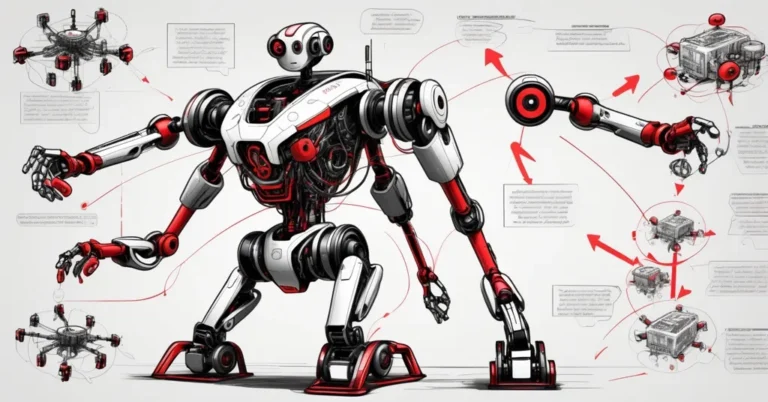
Think of LingBot‑VLA 2.0 as a multi‑socket adapter for robot controllers: a single interface that plugs into many arms, hands, and mobile bases instead of wiring a bespoke solution for each robot. For product and R&D leaders, that means less friction when prototyping language‑guided, vision‑based manipulation across heterogeneous fleets, provided you budget for integration and safety work.
What Robbyant released
- Models and code: an Apache‑2.0 codebase, a technical report, and a 6‑billion‑parameter checkpoint named lingbot‑vla‑v2‑6b.
- Backbone and teachers: the student VLA uses Qwen3‑VL‑4B‑Instruct as its vision‑language backbone and is distilled from two specialist teachers: LingBot‑Depth (geometry/depth supervision) and DINO‑Video (temporally grounded semantics). Robbyant reports that DINO‑Video was trained on 5M clips and leads on 3 of 4 LARYBench metrics; those DINO‑Video claims are noted as reported by Robbyant.
- Dataset scale (reported): roughly 60, 000 curated training hours (≈50, 000 robot hours + ≈10, 000 egocentric human hours) drawn from a larger raw pool (≈90, 000 robot hours + ≈20, 000 egocentric hours), with automated QC and reconstruction steps.
Core engineering choices that make the release practical
- Unified, cross‑embodiment representation: Robbyant uses a 55‑dimensional canonical state/action vector so one policy can be trained across many robot morphologies. The breakdown in the technical material is explicit: arm joint positions (14), end‑effector pose (14), gripper (2), hand joints (12), waist (4), head (2), mobility (3), reserved (4). Each arm end‑effector is encoded as 7 dimensions (XYZ + quaternion).
- Large, curated multi‑embodiment data: videos and robot trajectories are filtered and post‑processed (egocentric SLAM, MANO hand‑pose reconstruction, trajectory checks) before annotation to improve quality at scale.
- Automated temporal annotation: Robbyant uses a strong VLM (Qwen3.6‑27B) to segment videos into subtasks and to label actions from an 18‑category closed vocabulary (15 primitive actions + transit, idle, other).
- Predictive dynamics via dual‑query distillation: training appends two learnable queries, Qt for the current observation and Qt+T for a future chunk, so the student model learns to encode forward predictions under supervision from the teacher models. This injects dynamics awareness without a separate forward model.
- Scaled action head with sparse MoE: the action expert uses a Mixture‑of‑Experts (MoE) architecture with SwiGLU MLP experts and a sigmoid‑bias routing strategy that avoids an explicit load‑balancing auxiliary loss (inspired by DeepSeek‑V3). The repo exposes routing and optimizer options (AdamW default; Muon optimizer available).
Dual‑query distillation, plain English
Instead of just mapping “now → action, ” the model learns to represent the present and a short future at the same time. Two small learnable tokens are appended to the transformer input. One is supervised to match the current observation and the other to match a future observation. The result is a lightweight forward prediction inside the same network, which helps the policy anticipate object motion, contact events, and regrasp sequences without a separate dynamics module.
Reported performance highlights
- Improved scores on the multi‑embodiment GM‑100 bimanual benchmark, with the policy jointly trained across nine tasks per embodiment.
- Example task: Agilex Retrieve keychain success rose from 60.0 to 100.0 when comparing LingBot‑VLA v1.0 to v2.0 (number reported by Robbyant; no confidence intervals provided in the summary).
- DINO‑Video is reported to lead on 3 of 4 LARYBench metrics as a temporal/semantic teacher (reported by Robbyant).
- Example inference timing reported as ~130 ms per inference call on an NVIDIA GeForce RTX 4090D using 10 “denoising” steps (reported by Robbyant; see caveat below about what the steps mean and timing methodology).
Gaps and immediate caveats to watch
Robbyant’s engineering and dataset work are substantial, but several practical details are either reported without full reproducibility data or not present in the high‑level summaries. Check these before you commit engineering time:
- Timing and decoder details: the phrase “10 denoising steps” appears in the reported inference timing. That phrase usually implies an iterative sampling process (diffusion‑style or iterative refinement) and needs clarification. Check the repo for the exact decoding loop, batch/sequence length, and whether timing includes preprocessing or compilation.
- MoE hyperparameters: the release describes sparse experts and sigmoid routing but does not publish the full gating/top‑K/expert counts in the summary. Those hyperparameters materially affect deployability and latency.
- Benchmark context: many performance numbers are reported without per‑task tables, seed variance, or confidence intervals. Treat single reported numbers (for example, 60.0 → 100.0) as promising but not yet independently verified at scale.
- Hardware & deployment constraints: MoE benefits depend on sparse operator support on your accelerator. Targeting embedded or real‑time controllers will likely require extra engineering or an MoE‑free fine‑tune.
- Licensing caution: the code and provided weights are Apache‑2.0, but teacher/backbone or dataset components may have separate licenses. Validate compatibility for commercial products.
What’s included and how to get started (short checklist)
- lingbot‑vla‑v2‑6b checkpoint, Apache‑2.0 codebase, and a technical report.
- Scripts and examples for downloading weights, fine‑tuning, and running on real robots. Example environment specs in the release include Python 3.12 and PyTorch 2.8.0 (as reported in the repo).
- Example fine‑tune: Robbyant demonstrates a RoboTwin 2.0 fine‑tune across 50 tasks (reported by Robbyant).
- Deployment note: the repo surfaces routing/optimizer choices (z‑loss vs. loss‑free routing options, Muon vs. AdamW), and the canonical 55‑dim vector layout is provided in the technical material for reproducible interfacing.
Practical implications for business and R&D teams
What you can realistically do in the next 4-12 weeks with a small robotics team:
- Week 0-1: clone the repo, run the provided simulation example, and verify the environment (Python and PyTorch versions reported in the release).
- Week 2-4: tethered tests on a single robot. Use the canonical 55‑D mapping to translate robot state to the model interface and run safe, low‑speed action loops while logging failures.
- Week 4-12: fine‑tune on a modest in‑domain dataset (hundreds of episodes) for a single production task, add a certified safety controller and rate limits, then run staged trials.
Value proposition: the release lowers initial engineering and annotation cost by providing a prebuilt VLA stack, a cross‑embodiment action representation, and tooling. The remaining work is mainly safety integration, hardware support for sparse MoE operators, and in‑domain fine‑tuning.
Key takeaways, short Q&A
- What exactly did Robbyant release?
They published LingBot‑VLA 2.0: an Apache‑2.0 codebase, a technical report, and the 6B checkpoint lingbot‑vla‑v2‑6b, plus scripts and examples for fine‑tuning and deployment (reported by Robbyant).
- What backbone and teacher signals were used?
Qwen3‑VL‑4B‑Instruct is the vision‑language backbone; training uses distillation from LingBot‑Depth (geometry/depth) and DINO‑Video (temporal/semantic priors), according to the release.
- How big is the dataset?
Robbyant reports roughly 60, 000 curated hours (≈50, 000 robot + ≈10, 000 egocentric) from a raw pool of ≈90, 000 robot and ≈20, 000 egocentric hours, with automated QC and reconstruction.
- How does it support different robot types?
By mapping all states and actions into a fixed 55‑dimensional canonical vector (per‑arm end‑effector as 7D XYZ+quaternion), enabling one policy to serve many morphologies.
- What engineering tricks helped the action decoding?
An MoE action expert with sigmoid‑bias routing and a dual‑query distillation objective that teaches the model to represent both current and short‑horizon future observations.
- Can I run this on real robots now?
Yes for research and prototyping, the repo includes deployment scripts and environment specs, but not as a drop‑in production system without safety controllers, system integration, and verification, especially if your hardware lacks mature sparse MoE support.
Final practical note for decision makers
LingBot‑VLA 2.0 is a practical step toward generalist, multi‑robot manipulation: large curated data, a clear canonical interface, MoE capacity for action decoding, and dynamics‑aware distillation are the release’s distinguishing pillars. For businesses, the direct outcome is faster iteration on multi‑robot pilots, provided you plan for safety engineering, validate licensing for all third‑party components, and confirm hardware kernels for sparse MoE if you need low‑latency production inference.