
How a Small Backyard Solar + Battery Cut My Electric Bill by About $20/Month
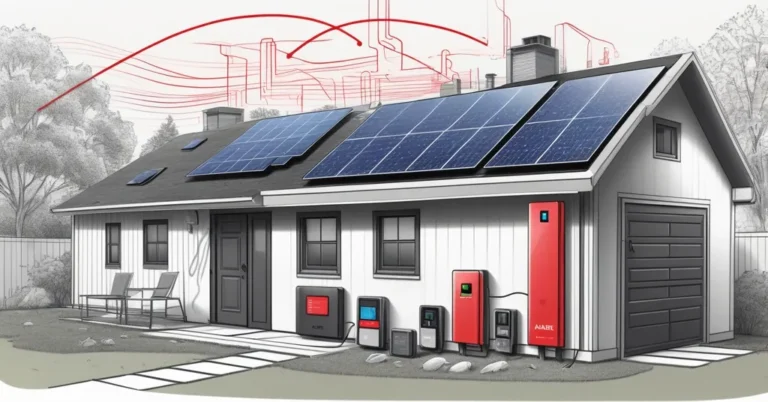
A backyard rig of two 410W panels and an Anker Solix F3800 Plus didn’t make my house fully off-grid, but it quietly trimmed roughly $20 off my monthly bill and kept the fridge humming through a recent afternoon outage. That result is repeatable, practical, and scalable — if you target always-on loads and plan around realistic limits.
Key principle: Treat a small solar battery setup as a reserve tank that smooths baseline energy use (routers, fridge, security, chargers) rather than a replacement for whole‑home loads like central AC or electric dryers.
Quick setup overview
- Core hardware: Anker Solix F3800 Plus (nameplate 3.84 kWh, expandable) and two rigid 410W solar panels (~820W PV).
- Typical production: My backyard array averaged about 3.7 kWh/day and could reach ~5 kWh/day with ideal placement.
- Real-world savings: Roughly $12–$25/month depending on utility rates and sun exposure. My household averaged about $20/month.
- Practical use: Keeps essential loads online (fridge, routers, chargers, select lights and outlets). Not sized for continuous heavy loads.
Assumptions and the math behind ~$20/month
Assumptions
- Location: temperate U.S. city with decent sun (your mileage varies by latitude and shading).
- Panel orientation: reasonably south‑facing, fixed tilt.
- Average measured production: 3.7 kWh/day (≈111 kWh/month).
- Utility rate example: $0.18 per kWh (replace with your local rate).
- System losses (inverter + battery round‑trip): ~10–15% (efficiency varies by gear).
Calculation (before losses): 3.7 kWh/day × 30 days ≈ 111 kWh/month. At $0.18/kWh that’s ≈ $19.98/month — call it $20. After accounting for ~15% system losses, usable offset is closer to 94 kWh/month → ≈ $17/month. That’s why a realistic range is $12–$25/month depending on local rates, season, and placement.
Why these numbers matter
Average U.S. households use around 30 kWh/day, so a small backyard array isn’t attempting to run an entire home. Instead, it targets the baseline: the always‑on devices and a refrigerator that silently consume energy even when everyone’s asleep. If you can shave those baseline kWh, you reduce your grid bill predictably and add resilience for short outages.
Practical anecdote: during a surprise midday outage, the Solix plus panels kept the fridge and router online for several hours. No frantic trips to the garage, just a steady hum — exactly what a small battery setup is designed to buy you: time and peace of mind.
Installation options — from plug-and-play to smart integration
- Direct plug‑in: Plug a fridge or a power strip into the battery. Cheapest and simplest, but manual switching and limited to a few devices.
- Generator inlet + transfer switch: A clean and safe way to power selected house circuits during outages. Transfer switches (manual or automatic) isolate your house from the grid and let you choose which circuits run on battery. This is the most practical DIY/pro hybrid approach.
- Smart home panel integration: Professional install, automatic switching and circuit prioritization, and the option to add an AI-driven controller for optimization. Closer to whole‑home backup behavior without replacing a Powerwall or PWRcell outright.
Safety & permitting checklist (do this before you touch house wiring)
- Use a transfer switch or an interlock kit — never backfeed the grid with ad‑hoc extension cords.
- Check local permitting rules; some jurisdictions require inspections for added inlets, switches, or PV arrays.
- Confirm equipment UL listings and manufacturer guidance for parallel operation with the grid.
- Hire a licensed electrician for panel-to-main integration and for the inlet/transfer switch unless you’re fully confident and certified.
How the Anker Solix F3800 Plus fits the market
The Solix F3800 Plus sits between a portable generator, a fully integrated home battery, and a plug-and-play power station — usable as an expandable home backup. Compared to whole‑home solutions (e.g., Tesla Powerwall or Generac PWRcell), it’s lower cost, lower complexity, and more modular—but also lower capacity and fewer integrated warranties and service contracts.
- Portable power stations (cheap, mobile): Best for camping, occasional use, and single-appliance backup.
- Modular batteries like the Solix (mid): Great for targeted home resilience, DIY or semi‑pro installs, and staged expansion.
- Whole‑home systems (expensive, comprehensive): Best for full home backup, long warranties, and deep integration with home energy systems and EV chargers.
Lifecycle and cost considerations
Don’t treat nameplate kWh as permanent. Expect some degradation over years; warranties differ by vendor and model. Typical consumer lithium batteries can last between 5–15 years depending on chemistry, depth of discharge, cycle frequency, and thermal conditions. Factor in:
- Battery warranty and expected cycle life.
- Panel degradation (roughly 0.5–1% per year typical for crystalline panels).
- Inverter replacement costs or firmware updates if the manufacturer stops supporting a model.
- Maintenance: keep panels free of debris, and monitor battery health via the vendor app or telemetry.
AI, smart control, and business opportunities
Smart controllers and AI agents for energy turn a modest backyard setup into a strategic asset. Practical AI features include:
- Weather‑aware production forecasting (useful for scheduling heavy loads or charging the battery ahead of a cloudy spell).
- Time‑of‑use optimization that charges when grid rates are low and discharges when rates spike.
- Automated load prioritization during outages (keep fridge and comms, shed nonessential circuits).
- Fleet aggregation for businesses: telemetry from dozens of distributed Solix‑style units could be orchestrated into a virtual power plant (VPP) for demand‑response revenue.
For C-suite and facilities leaders: pilot modular solar + battery at 2–5 critical sites (remote retail, telecom shelters, small warehouses). Add telemetry, a simple AI controller, and test aggregation for demand‑response. The capital outlay is modest relative to full Powerwall deployments, but the resilience and potential ancillary revenue make the ROI compelling.
Practical recommendations: start small, measure, then scale
- Measure baseline always‑on loads — fridge, modem/router, security cameras. Use a clamp meter or smart plugs to get kWh/month.
- Run the numbers — plug your local rate into the sample math above and model seasonal changes with NREL PVWatts or a similar tool.
- Pick an install path — plug‑and‑play for experiments; inlet + transfer switch for practical home backup; smart panel if you want automation and growth.
Key takeaways and quick FAQs
-
How much can a small backyard solar setup save per month?
Typical savings range from $12–$25/month. Using an example production of 3.7 kWh/day and a $0.18/kWh rate gives ≈ $20/month before losses; after modest system inefficiencies expect ≈ $15–$18/month.
-
What hardware produced these results?
An Anker Solix F3800 Plus (nameplate 3.84 kWh, expandable) paired with two 410W panels (~820W total) produced ~3.7 kWh/day on average in this backyard test.
-
What can this realistically power?
Essential “always-on” loads: refrigerators, routers, security, chargers, select lights. It’s not sized for continuous heavy loads like central AC or electric dryers.
-
Which installation method balances safety and cost?
A generator inlet plus a transfer switch is the most practical balance for homeowners: safe, code-friendly, and able to power selected circuits.
-
How can AI improve these systems?
AI agents can forecast production, schedule charge/discharge around time-of-use pricing, prioritize circuits during outages, and enable aggregation of distributed assets into virtual power plants.
Next steps
If you want a low‑friction start: measure your fridge and router draws, run the sample calculation with your utility rate, and try a temporary plug‑in setup. If you want operational resilience across sites, plan a 3–site pilot with telemetry, a transfer switch, and a basic AI controller to test orchestration and demand‑response potential.
Small backyard solar panels plus a capable battery like the Anker Solix F3800 Plus won’t eliminate your grid bills overnight, but they do shave recurring costs, provide practical resilience, and create a platform for intelligent energy management — a sensible, scalable first step toward smarter, distributed energy.