
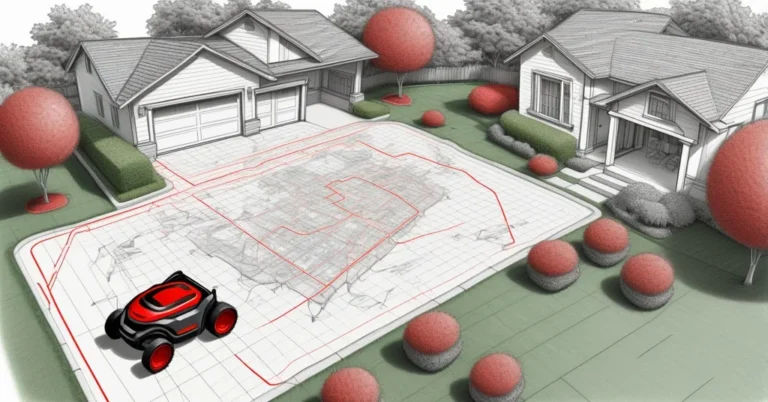
How to Choose the Right Robot Mower for Your Yard
TL;DR: Pick the robot mower that matches your yard, not the flashiest app. Prioritize three things: (1) yard complexity (trees, beds, fences), (2) slope and traction, and (3) daily coverage (can it finish your acreage each day?). If your lawn is simple and flat, a wired‑boundary or basic LiDAR model will save money. If you have an unbordered or irregular yard, look for RTK (Real‑Time Kinematic) GPS or high‑fidelity mapping like LiDAR/EPOS. Read real user reviews about mapping and obstacle handling before you buy.
Robot lawn mowers are sold on glossy apps and “AI‑powered” badges. Those sell confidence. Navigation hardware and drive systems get the job done. Think of robot mowers like shoes: the same sole fits many feet, but if you’re climbing a rocky trail you don’t want flip‑flops.
“Choosing the right robot mower is about the characteristics of your yard, not the headline specs of the mower.”
Step 1 — Describe your yard (the three things that matter)
- Complexity: Are there lots of trees, garden beds, narrow paths, or fences? Complex yards benefit from LiDAR or hybrid systems.
- Slope and traction: How steep is the lawn? Check slope as a percentage or degrees; steeper terrain needs stronger traction or AWD.
- Daily coverage: How many acres do you have, and can the mower cover it in one daily cycle? Match the mower’s rated acres‑per‑day to your yard size.
Example contrast: a 0.10‑acre, fenced backyard with a single tree is a very different problem than an unfenced, one‑acre, hilly property with multiple garden beds. The first can often be handled by a simple wired boundary mower; the second likely needs RTK/GPS or high‑end LiDAR and a robust drive system.
Step 2 — Match navigation and drive tech to yard conditions
Here are the navigation technologies you’ll see and when they make sense. Acronyms explained the first time:
- RTK (Real‑Time Kinematic GPS): A precision GPS method that can give centimetre‑level positioning compared with ordinary GPS’s metre‑level accuracy. RTK is ideal for open lawns without a boundary wire when you want virtual fences and precise no‑go zones.
- LiDAR (Light Detection and Ranging): Uses laser scanning to “see” the environment in real time. Excels around trees, narrow passages and dynamic obstacles because it maps shapes rather than relying on a fixed wire.
- Wired boundary: A buried perimeter wire remains the simplest, most predictable approach for fenced or straightforward lawns. It’s low‑tech but reliable; repairs are required if the wire is cut.
- Cameras and ultrasonic sensors: Useful for object detection and visual mapping, but performance can vary with light, shadows, and privacy concerns. Cameras may require more data handling and raise questions about where images are stored.
- EPOS / local positioning systems: Some systems use an external station to create an accurate local coordinate system—useful for very precise mapping when RTK service is not available.
- AWD / strong drive trains: Physical traction matters. AWD or high‑torque wheels are recommended for steep slopes and soft or uneven ground.
Quick analogies to remember:
- LiDAR = sees objects (good for obstacle-rich yards)
- RTK = knows exact location (good for unbordered, precise no‑go zones)
- Wire = fences you lay underground (simple, dependable)
Navigation tech at a glance (pros, cons, best for)
- RTK/GPS — Pros: virtual fencing, no digging. Cons: needs correction signal/service; can struggle in dense canopy. Best for open, unbordered lawns.
- LiDAR — Pros: excellent obstacle detection and mapping. Cons: higher cost; can be sensitive to very low obstacles depending on unit. Best for wooded yards, narrow passages, and gardens with many features.
- Wired boundary — Pros: low cost, predictable. Cons: installation and repair. Best for simple fenced yards and homeowners who want “set it and forget it.”
- Cameras/vision systems — Pros: can enable pattern cutting and visual recognition. Cons: privacy concerns, variable performance in low light. Best as a complement to other sensors, not a sole solution.
Sample matches — yard types and sample models (examples as of May 2026)
These sample models are offered to illustrate the type of solution that tends to work well for each yard type. Verify current specs and firmware before you buy.
- No fences / open lawns: RTK/GPS‑capable units. Sample models: Yardcare E400, Mammotion Luba 3.
- Fenced yards / drop‑and‑mow: Wired boundary or LiDAR models. Sample models: Eufy E15, Ecovacs Goat A3000.
- Lots of trees / wooded plots: LiDAR or LiDAR+EPOS. Sample: Husqvarna iQ series (LiDAR/optional wire/EPOS).
- Unbordered garden beds: RTK/GPS or precise mapping models. Sample: Mammotion Luba 3, Husqvarna iQ series.
- Bordered beds and tight edging: Hybrid systems (LiDAR/GPS/wired). Sample: Mammotion Yuka, Navimow Series H.
- Pets / lots of moving obstacles: Real‑time LiDAR obstacle avoidance. Sample: Mova LiDAX Ultra 2000, Segway Navimow i2.
- Hills and uneven terrain: AWD or high‑torque systems plus precise navigation. Sample: Mammotion Luba 3, Husqvarna iQ series (AWD variants).
Capacity, battery and coverage—how to check if it can finish your lawn
Manufacturers usually provide an estimated “acres per day” or “recommended lawn size.” Use that number as your baseline: if your yard is 0.3 acres and the mower is rated for 0.5 acres/day, it should be able to complete a full cycle in one typical day.
Practical checklist when comparing capacity:
- Confirm the manufacturer’s acres‑per‑day or recommended area (and whether that assumes ideal conditions).
- Check recharge time and how many cycles per day are realistic—lots of starts/stops reduce effective coverage.
- Remember that complex yards (many obstacles) reduce effective coverage compared with open lawns.
- Ask for slope limits (often given as a percentage grade). Many consumer robots handle 20–35% grades; steeper ground needs AWD or a specialist model.
Maintenance, failure modes and security
- Boundary wire breaks: Common if you do a lot of digging or if mowers get snagged. Repairs require locating and fixing the break—plan for this if you choose a wired system.
- False positives / obstacle handling: Some mowers mistake hoses, garden ornaments or low objects for permanent obstacles. Real user reviews reveal whether a model is over‑cautious or reliably nimble.
- Battery life and replacement: Lithium packs typically last several years (expected lifespan varies by use and climate). Factor replacement cost into long‑term TCO.
- Blade and deck maintenance: Most use multiple small mulching blades. Blade replacement is cheap; keeping blades sharp matters more than blade type.
- Theft protection: PIN locks, geo‑fencing, and tracked GPS help. Verify how the vendor handles recovery and what anti‑theft hardware is built in.
- Privacy and cameras: Camera‑reliant mowers can record images. Check the vendor’s data policy and whether image processing happens locally or in the cloud.
“Many ‘AI‑powered’ or ‘intelligent’ marketing claims are vague; investigate what sensors and navigation tech the mower actually uses.”
Three quick decision questions (simple flow)
- Do you have many trees, narrow paths, or dynamic obstacles (kids, pets)?
Choose a LiDAR‑centric model or hybrid with strong obstacle avoidance.
- Is your lawn unbordered or irregular, and you want virtual fences?
Look for RTK/GPS or EPOS solutions that provide centimetre‑level positioning.
- Are slopes a major factor?
If slopes are steep (check % grade), prioritize AWD or high‑torque drive units and confirm slope ratings with the vendor.
Procurement checklist (for homeowners, facilities teams and landscapers)
- Measure your lawn area (acres) and sketch major obstacles and narrow passages.
- Note maximum slope percentage and whether ground is soft or loose.
- Decide whether you want underground boundary wire or virtual fencing.
- List pets, kids’ play areas, and likely dynamic obstacles.
- Check for RTK service availability in your area (some RTK systems need correction signals).
- Ask vendors for acres‑per‑day, recharge time, slope limit, and theft‑protection features in writing.
- Confirm warranty, local service options, and estimated battery replacement cost.
- Read owner reviews focusing on mapping reliability, return‑to‑dock accuracy and obstacle handling over months.
FAQ — quick answers to common search questions
What is RTK and do I need it?
RTK is a positioning method that adds a correction signal to GPS for centimetre‑level accuracy. You need it if your property has no physical boundary and you want very precise virtual limits or fine‑grained no‑go zones.
Is LiDAR better than GPS?
They solve different problems. LiDAR excels at detecting and avoiding objects; RTK/GPS excels at precise location and virtual boundaries. Hybrid systems often combine both for best results.
Do I need an “AI‑powered” mower?
Not because of the label. Focus on what sensors are on the unit and how the software uses them. “AI” is often marketing shorthand—real performance comes from reliable mapping and obstacle handling.
How much maintenance do robot mowers require?
Expect periodic blade swaps, battery monitoring, seasonal storage (in cold climates), and occasional perimeter repairs if you use a wired system. Regular cleaning and firmware updates help longevity.
How do robot mowers handle pets?
Look for LiDAR or fast‑reacting sensors and good object classification. Many models avoid pets, but read owner reports—some systems are better at distinguishing life from inanimate objects.
Are robot mowers worth it for small yards?
Yes—if you value convenience. But you probably don’t need a top‑tier RTK or LiDAR model for a small, flat, fenced yard. A wired or entry‑level LiDAR model is often cheaper and sufficient.
Final notes
There’s almost always a robot mower that matches your yard’s needs. The expensive, RTK‑enabled machines are worth it when property shapes are complex or when you can’t or won’t install a buried wire. For simple lawns, a wired boundary or lower‑cost LiDAR model will likely give the best value. Before you buy, map your yard, check slope limits, verify acres‑per‑day, and read owner experiences about mapping and obstacle handling.
If you’d like a printable one‑page checklist or a three‑question decision guide tailored to your yard, request it and I’ll produce it for you—handy for procurement teams or to bring to vendor demos.