
Teacher vs Chatbot: How AI Agents Are Rewiring Classrooms
- Executive summary:
- AI agents like ChatGPT shift teachers from content-deliverers to coaches of judgment and process.
- Well-designed pilots can free teacher time, personalize practice, and teach students AI literacy—while demanding new assessment, privacy, and equity guardrails.
- Leaders should run a short, measurable pilot (6–8 weeks), track learning and equity metrics, and invest in teacher training before scaling.
The real shift: roles change, not disappear
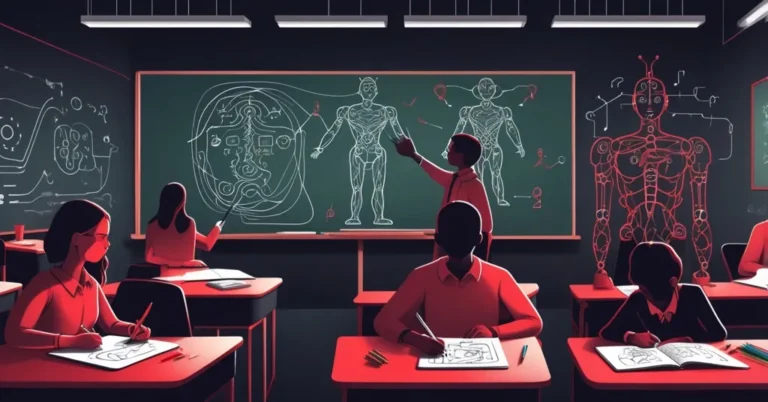
Walking into a classroom with a humming laptop doesn’t look like a duel between flesh-and-blood teachers and lines of code. It looks like a negotiation over roles: who explains, who assesses, and who prepares students to work alongside AI agents. Teachers aren’t being replaced; their work is being reframed. This matters for pedagogy, for equity, and for the talent pipelines that businesses will hire from.
“A good teacher does more than deliver facts; they coach curiosity, context and judgment—skills a chatbot can support but not replace.”
Think of an AI agent as a scalable, on-demand tutor and a production assistant. ChatGPT-style systems can generate practice problems, offer step-by-step help, and draft feedback. That reduces repetitive labor—copying slides, generating worksheets, giving baseline feedback—so teachers can focus on diagnosing misconceptions, mentoring projects, and coaching critical thinking.
Practical classroom examples
Here are concrete ways teachers are using AI agents today:
- Differentiated worksheets: A teacher prompts an agent to create three versions of a math worksheet at different difficulty levels and then annotates common error patterns for targeted mini-lessons.
- Draft feedback: Students submit an essay draft; the agent highlights unclear sentences and suggests sources. Students must annotate the AI’s suggestions and submit a revision log explaining what they kept, changed, or rejected.
- Simulation practice: Language students role-play interviews with an agent configured to simulate different dialects or professional settings.
Sample teacher prompt (for a 9th-grade history class): “Create 8 short-response questions about the Industrial Revolution. Include three scaffolded hints per question for students who struggle, and mark each question as easy/medium/hard.”
Benefits that matter to leaders
Leaders should view classroom AI through two lenses: learning outcomes and workforce readiness. On the learning side, AI agents can increase practice volume, provide immediate formative feedback, and free teacher time for high-impact activities. On the workforce side, students exposed to AI gain early AI literacy—prompt engineering, source evaluation, and model critique—which looks increasingly like a baseline job skill alongside Excel.
That crossover matters for “AI for business.” Graduates who can prompt, evaluate, and collaborate with AI agents will approach roles in sales, research, and operations differently. Expect onboarding to shift: companies will assess AI literacy and give new hires chances to demonstrate how they critique model outputs and integrate AI into workflows.
Risks and the guardrails that stop them
The upside is real, but so are the pitfalls. The most common harms are:
- Shortcuts and cheating: When students can generate essays instantly, assessments must reward process and revision.
- Invented facts: Models sometimes invent facts or misattribute sources—this is when a model invents facts, and students must be trained to spot it.
- Bias: AI reflects patterns in its training data and can amplify unfair stereotypes.
- Data privacy: Which student interactions are stored? Who can access them? Can vendor policies expose student data?
- Equity gaps: Schools with poor connectivity or older devices may fall further behind.
Mitigations are practical: redesign assessments, require students to annotate AI outputs, implement strict data retention and access policies, and fund devices and connectivity. Leaders must ask vendors clear questions about accuracy, update schedules, model provenance, and data retention.
How to run a short, effective pilot (a practical playbook)
Run a 6–8 week pilot before any district- or organization-wide rollout. Keep it focused and measurable.
1. Choose one clear use case
Examples: draft feedback for writing, math tutoring, or lesson-plan generation for teachers. Don’t boil the ocean.
2. Define success metrics
- Student learning: pre/post assessments, completion rates, and quality of revisions.
- Teacher impact: hours saved on admin tasks, time spent on coaching, teacher satisfaction surveys.
- Equity: device access rates, participation by under-served students, and outcome differentials by subgroup.
- Risk incidents: number of hallucinations flagged, privacy breaches, or inappropriate outputs.
3. Train teachers on prompts and model limits
Short workshops on prompt engineering and spotting when a model invents facts. Give teachers a set of go-to prompts and red-flag examples to use in class.
4. Build assessment rubrics that reward process
Require annotated AI output, reflection logs, and oral defenses for major assignments. This turns an AI shortcut into a learning opportunity.
5. Require privacy and vendor checks
Ensure vendors comply with local regulations (FERPA, GDPR where applicable), have clear data deletion policies, and allow export of student data. Avoid getting stuck with one supplier without an exit path.
6. Measure, iterate, decide
Collect quantitative and qualitative data, iterate on prompts and privacy settings, then decide to scale, adjust, or stop.
Sample rubric & prompt examples
Rubric (20 points) for an AI-assisted essay revision:
- AI Evaluation (6 points): Student identifies 3 AI suggestions, explains why each is valid or not, and cites evidence.
- Revision Quality (6 points): Improvements reduce vague phrasing, add at least two credible citations, and correct logic errors.
- Reflection (4 points): Student writes 150 words on what they learned from AI feedback.
- Process Log (4 points): Timestamped drafts showing iteration and teacher comments.
Prompt examples:
- Teacher prompt (elementary math): “Create five word problems about fractions for grade 4, include one hint per problem and one challenge extension.”
- Student prompt (high school English): “Summarize Act 2 of this play in 200 words and list three themes with one supporting quote each.” Then require source checks for each quote.
- Sales simulation (career readiness): “Act as a skeptical procurement manager. Ask probing questions about our product’s ROI and privacy safeguards.”
Case study: a district pilot that turned into a playbook
Riverbend Unified (pseudonymous) ran a six-week pilot across three high schools focused on writing feedback. The district selected a lightweight chatbot integrated with their LMS, limited to draft feedback and reflection prompts. Teachers received two half-day workshops on prompt design and spotting invented facts. Students submitted first drafts; the agent highlighted unclear sentences and suggested sources. Crucially, every AI suggestion required a student annotation explaining whether they accepted it and why.
Outcomes: teachers reported saving two hours per week on baseline feedback and spent that time leading small-group revision clinics. Students turned in more polished second drafts and, according to teacher surveys, showed better source-checking behavior. Equity checks revealed gaps—students without reliable home internet submitted fewer drafts—so the district paired the pilot with a device-loan program and evening lab hours. The pilot’s success was not only about time saved; it produced a district playbook: mandatory teacher PD, a standard rubric, vendor privacy checklists, and an A/B evaluation framework to test future use cases.
Equity and policy: what leaders must fund
AI can help learners with disabilities through text-to-speech, simplified explanations, and adjustable pacing—but only if platforms support accessibility. Leaders must budget for:
- Devices and broadband subsidies or loan programs
- Targeted teacher stipends for PD
- Local data governance policies and legal review
- Ongoing vendor audits and a procurement exit strategy
Policy suggestions: require opt-in data sharing, maintain local copies of student records, and publicly disclose when AI is used in assessment or feedback.
From classroom to career: why businesses should pay attention
Businesses hiring entry-level talent will see a baseline shift: AI literacy matters. That doesn’t mean new graduates will be AI experts, but they will increasingly be expected to:
- Prompt and critique AI outputs
- Use AI to synthesize research and draft client-facing materials
- Spot when an AI invents facts and validate sources
Leaders in sales and operations should adjust onboarding to test these skills, and consider partnerships with local districts to co-design career-ready curricula (sales simulations, AI-assisted analytics projects). AI Automation is as much culture as technology; early exposure in schools shapes workplace expectations.
Leader’s checklist: fast decisions that move the needle
- Start small: Pick one use case and one grade band for a 6–8 week pilot.
- Measure smart: Pre/post assessments, teacher time logs, equity indicators, and privacy incidents.
- Train first: Short PD on prompts and model limits for every teacher in the pilot.
- Protect data: Require vendor policies on data retention, deletion, and export.
- Redesign assessments: Reward process—annotations, logs, oral defenses—not only final products.
- Budget for equity: Devices, connectivity, and targeted supports for under-served students.
- Decide quickly: Use pilot data to scale, iterate, or stop within one semester.
FAQ
Will ChatGPT replace teachers?
No. Chatbots handle repetitive tasks, but teachers provide human judgment, motivation, and the social coaching students need. The role shifts toward mentorship, assessment design, and cultivating critical thinking.
How can teachers use chatbots without encouraging shortcuts?
Require students to critique, annotate, or defend AI-generated work. Use rubrics that reward process, and design assessments where raw AI output is insufficient without human revision.
What are the biggest risks schools must manage?
Cheating, invented facts, bias, data privacy, and widening access gaps. Mitigations include redesigned assessments, vendor vetting, explicit privacy policies, and investments in devices and connectivity.
How does classroom AI affect business hiring?
New hires will need skills in prompting, evaluating AI outputs, and collaborating with AI agents. Businesses should test these skills in interviews and design onboarding that emphasizes model critique and responsible use.
Next step
Run a focused 6–8 week pilot: pick one use case, train teachers, enforce simple privacy checks, measure learning and equity outcomes, and iterate. The fastest path to clarity is a small experiment that delivers real data—and a clear decision point for scaling.
Prompting is the new Excel skill. Equip students to ask better questions of AI, and teach them how to challenge the answers. That’s how classrooms stop being places where AI supplies shortcuts and start being places where AI teaches judgment.