
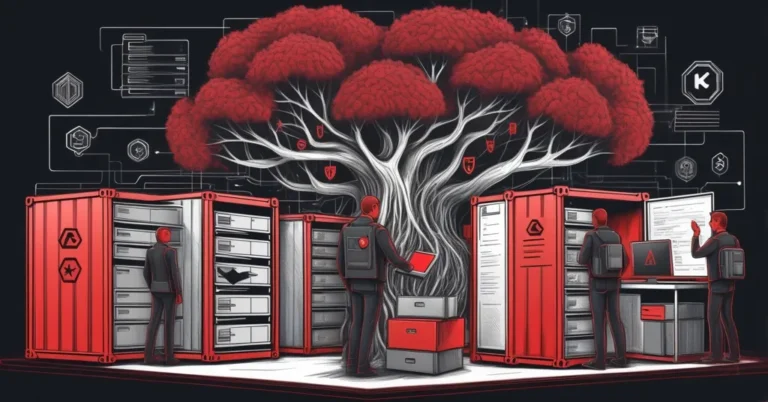
GitAgent — GitOps for AI agents: portability, auditability, and enterprise controls
Why fragmentation is the real problem for AI agents
AI agents are already doing real work: drafting sales proposals, triaging approvals, and orchestrating multi-step automations. Yet every major orchestration framework—LangChain, AutoGen, CrewAI, OpenAI Assistants (ChatGPT/Assistants API), Claude Code—expects its own way of packaging prompts, tools, memory, and permissions. This creates vendor lock‑in, governance blind spots, and mounting operational debt when teams need to move or audit agents.
Elevator pitch
GitAgent is an open-source spec and CLI that treats an AI agent as a structured Git repository. Define persona, skills, rules, permissions, and human-readable memory as files in a repo, validate and review changes via Git workflows, then export that single source of truth to multiple runtimes.
How GitAgent works — the simple flow
- Author: create a Git repo that declares an agent’s manifest, persona, duties, skills, rules, and memory.
- Validate & review: run validation tooling and manage changes through branches and pull requests with CI gates and human reviewers.
- Export & run: use the CLI to map the repo to the target framework’s schema (OpenAI Assistants, Claude Code, LangChain, CrewAI, AutoGen, etc.).
Repo layout (core components)
- agent.yaml — manifest and metadata.
- SOUL.md — persona, identity, instructions (human-readable).
- DUTIES.md — Segregation of Duties (SOD) and permission matrix.
- skills/, tools/, rules/ — declarative capability definitions.
- memory/ — long-term state as Markdown (context.md, dailylog.md), version-controlled and auditable.
Tiny examples (illustrative)
agent.yaml
name: sales-assistant
version: 0.1
entrypoint: skills/engage_customer.md
SOUL.md
Persona: Senior sales engineer. Tone: consultative, concise. Objective: draft proposals and flag pricing exceptions.
DUTIES.md
role: sales_agent — allowed: draft_proposal, suggest_discount
role: sales_manager — allowed: approve_discount
These files are intentionally human-readable so reviewers and compliance teams can understand exactly what an agent is allowed to do.
“Treat the agent as a structured directory in Git so the same definition can be exported to different orchestration layers.”
Business benefits: portability, governance, and auditability
- Framework-agnostic portability: one repo, multiple runtimes via an export workflow (for example: gitagent export -f langchain).
- Git-native supervision: memory updates or new skills become branches and pull requests—human reviews, CI checks, and rollbacks are first-class controls.
- Readable, versioned memory: storing state in Markdown converts opaque agent memory into diffs and audit trails auditors can inspect.
- Enterprise SOD & compliance: DUTIES.md plus validation tooling enforces role separation suitable for regulated regimes like FINRA, SEC, or bank policies—when integrated with existing compliance workflows.
Practical use cases
- AI for sales: a proposal assistant drafts client-facing documents, writes to CRM, and requests approvals for discounts. Any change to pricing rules or memory triggers a PR that compliance or finance must approve.
- AI automation for approvals: an approval agent flags exceptions, creates a PR with supporting context, and waits for a named approver role defined in DUTIES.md before executing.
Real-world adoption questions and mitigations
GitAgent solves many governance gaps, but practical friction remains. Here are the top concerns and recommended mitigations.
Exporter fidelity
Question: How well can a high-level agent definition map to each runtime’s API and semantics?
Mitigation: maintain a test matrix and exporter acceptance tests. Create runtime-specific adapter tests (smoke tests for prompts, tool wiring, and error handling). Treat exporters like SDKs: version them, run CI on exports, and include runtime-specific integration tests as part of your pipeline.
Secrets and sensitive memory
Question: Git + human-readable memory sounds risky for PII and secrets.
Mitigation:
- Never store secrets in plain Markdown. Use encrypted blobs (SOPS, age) that are Git-tracked but encrypted, or store secrets in a secret manager (HashiCorp Vault, AWS Secrets Manager) and reference them via secure pointers in memory files.
- Apply CI scanning (gitleaks, truffleHog) and pre-merge policies to block leaks.
- Use branch protection and role-based access so only approved CI/service accounts can push encrypted artifacts or export artifacts.
Vector DBs and RAG workflows
Question: Many agents depend on embeddings and vector stores—where do they fit?
Mitigation patterns:
- Pointer-first hybrid: store human-readable memory in Markdown and keep embeddings in an external vector DB. Memory contains stable identifiers and last-updated hashes that link to vectors.
- Indexed snapshot: version small, crucial retrieval pieces in Markdown and generate vectors at deploy time. Keep large corpora in managed vector stores with access controlled by runtime credentials.
Runtime orchestration limits
Question: Does GitAgent handle async multi-agent dialogues or long-running tasks?
Reality: GitAgent is a packaging and governance layer, not a runtime orchestrator. Use specialized runtimes for concurrency and long-running workflows; keep orchestration policies declared in rules/ and let the export map those rules to runtime features. For mission-critical orchestration, add integration tests that validate concurrency semantics post-export.
Quickstart and CI checklist
Try a minimal local experiment to evaluate fit:
git clone https://github.com/open-gitagent/gitagent
cd examples/sales-assistant
gitagent validate
git checkout -b feature/price-cap
—edit DUTIES.md and memory/context.md—
git commit & push; open a PR for review
gitagent export -f langchain
Recommended CI gates
- Lint and schema-validate agent.yaml and SOUL.md
- SOD validation (gitagent validate)
- Secrets scan (gitleaks/truffleHog)
- Unit tests for skills (mock tool calls)
- Integration smoke test on exported runtime
- Policy check (OPA/Gatekeeper) for compliance rules
Checklist for adoption—engineering + compliance
- Map critical agent behaviors to clear DUTIES.md roles.
- Design memory retention and redaction policies; decide what is human-readable vs encrypted.
- Build exporter tests and run them regularly against each targeted runtime.
- Integrate secret managers and CI scanners before allowing exports to production.
- Define PR templates: include changed memory files, SOD impact, security checklist, and runtime tests.
- Pilot with a low-risk agent (e.g., internal knowledge assistant) before moving to customer-facing automations.
Final thought and next step
Bringing GitOps patterns to AI agents is a practical lever for teams that want portability, human-in-the-loop controls, and auditable state. GitAgent isn’t a magic wand—exporter fidelity, secrets handling, and runtime orchestration require engineering effort—but it turns many of today’s governance problems into DevOps problems we already know how to solve.
Explore the spec and CLI on GitHub: github.com/open-gitagent/gitagent. Start with a small pilot: validate an agent, wire a secrets pattern, and enforce SOD via PR review. If it performs as promised, GitAgent can become the packaging standard that makes enterprise AI automation more portable, auditable, and controllable.