
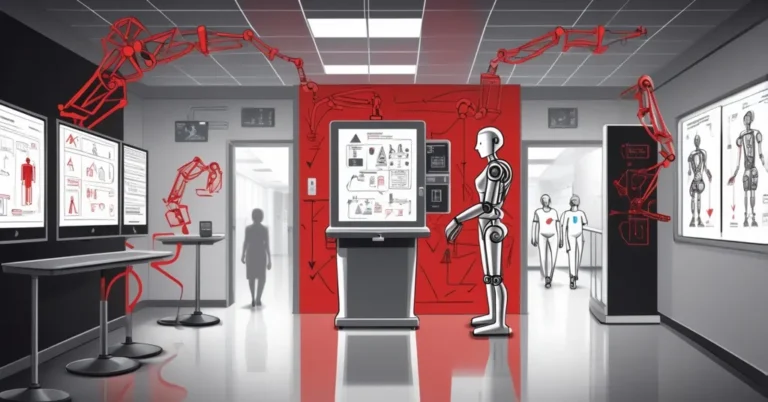
Kaiser’s Intake Overhaul: Automation, Algorithmic Triage, and the Risk to Patient Safety
Kaiser Permanente moved many first‑time mental‑health intakes from licensed clinicians to scripted clerks and online questionnaires. That switch, launched in January 2024, is now tied to worker strikes, regulatory complaints and reports of delayed care for seriously ill patients.
What changed — and why leaders should care
Before January 2024 a typical first‑time behavioral‑health intake at Kaiser was conducted by a licensed clinician who asked open questions, judged risk in real time, and used clinical training to schedule an appropriate appointment. Kaiser replaced large swaths of that process with scripted clerical screening (staff who follow fixed prompts) and e‑visit questionnaires (online forms patients complete before an appointment). The stated goals were efficiency and faster access.
Those goals collide with a harder truth: standardized scripts and forms miss nuance. Clinicians and their union say the result has been delayed care for higher‑risk patients and an influx of lower‑risk patients who move quickly through intake — clogging crisis resources.
Frontline consequences and a human vignette
Therapists represented by the National Union of Health Care Workers (NUHW) documented more than 70 alleged negative care outcomes reported to regulators since January 2025. That tally appears in NUHW’s complaint to the California Department of Managed Health Care and comes alongside a one‑day strike by roughly 2,400 northern California mental‑health staff.
One clinician’s short scene captures the stakes. After a patient arrived at emergency care only when a crisis escalated, a therapist breathed, “Thank God they’re still alive.” The line is blunt: delayed or mis‑triaged intakes can have immediate, life‑threatening consequences.
Clinicians are also seeing operational problems. “It’s not the same level of care as being assessed by a licensed therapist,” said Carolyn Staehle, describing how milder cases sail through while severe cases appear later and sicker. At one Walnut Creek triage team staff reported losing two‑thirds of members over two years — a staffing erosion that amplifies risk and fuels anxiety among remaining clinicians. “Am I next? What is my future?” asked triage worker Harimandir Khalsa.
How the automation works (plain English)
These are the core pieces:
- Scripted clerical screening: Non‑clinical staff ask a fixed set of questions and record answers. Because the interaction is constrained, follow‑up nuance can be missed.
- E‑visit questionnaires: Patients complete online forms before or instead of a live intake. Questionnaires standardize data collection but can’t capture tone, hesitation or context.
- Algorithmic triage: Software can score patient answers and offer recommended scheduling urgency (this is “algorithmic triage” — software that scores responses to recommend how soon someone should be seen).
- AI note tools (example: Abridge): AI‑powered notetaking that transcribes and summarizes encounters. Staff raised concerns about transparency and data retention; Kaiser says use is voluntary and requires patient consent.
When clerical answers are entered into scoring software, the system can suggest a scheduling decision. NUHW alleges clerical inputs combined with software scores influenced who got fast appointments. Kaiser disputes that claims clerical staff or algorithms make clinical determinations, saying AI tools are intended to support clinicians, not replace clinical judgment.
Kaiser’s position and vendor issues
“We believe AI can be helpful when it supports clinicians — by reducing administrative work or improving efficiency — but it does not replace clinical judgment or human assessment.” — Kaiser
Kaiser publicly frames new tools as clinician supports and states it is expanding behavioral‑health staffing. That claim sits against unions’ reports of staffing losses in specific triage teams and against prior enforcement history — a tension administrators will need to resolve with clear metrics and transparency.
Vendors like Abridge (an AI note‑taking product) are part of the discussion. Clinicians worry about where summaries and transcripts live, how long they’re kept, who can access them, and whether staff are pressured to adopt tools without adequate training or consent frameworks. Kaiser says Abridge is optional and requires patient consent; clinicians still want stronger guardrails on data retention and auditability.
Regulatory and legal backdrop — context that raises the stakes
This dispute doesn’t happen in a vacuum. Kaiser agreed to a $200 million settlement with California in 2023 over delayed access to behavioral health. In 2025 the U.S. Department of Labor reached a $31 million settlement alleging misuse of questionnaire responses to block care. NUHW has lodged complaints with the California Department of Managed Health Care alleging improper screening and use of algorithms in triage.
Regulators now face a multi‑front problem: enforcing timeliness and access rules, determining when administrative screening crosses into clinical decision‑making, and clarifying obligations around algorithmic transparency and patient data. HIPAA, state licensing laws and consumer protection statutes will all influence outcomes.
Why this matters for executives and boards
Three business risks stand out:
- Patient safety and liability: Delayed or mis‑triaged care creates direct clinical risk and potential legal exposure.
- Operational risk and workforce stability: Loss of experienced clinicians and rising staff anxiety degrade service capacity and institutional knowledge.
- Reputational and regulatory risk: Prior settlements show regulators are willing to levy large penalties when access problems persist; lack of transparency around automation will invite further scrutiny.
Efficiency gains matter. But when AI automation touches clinical intake — the gateway to care — executives must balance throughput with a simple governor: preserve human clinical judgment where life and safety are at stake.
Practical checklist for C‑suite leaders evaluating AI automation in mental‑health intake
-
Require pilots with safety metrics.
Run controlled pilots, measure time‑to‑appointment, escalation rates to emergency care, and clinical outcomes. Stop or redesign if harm signals emerge.
-
Mandate clinician final authority.
Ensure clinicians retain final scheduling and risk‑assessment decisions; algorithms should produce suggestions, not orders.
-
Insist on transparency and explainability.
Vendors must document scoring logic, validation studies, and known failure modes. Contracts should permit independent audits.
-
Lock down data governance.
Define retention limits, access controls, and patient consent processes for AI‑generated transcripts or summaries.
-
Protect the workforce.
Negotiate contractual protections that preserve clinical roles, provide retraining and require disclosure before role eliminations tied to automation.
-
Require external validation and monitoring.
Use third‑party validators for model performance and bias; monitor post‑deployment outcomes continuously.
-
Set clear escalation paths.
Define which answers or scores automatically trigger clinician review and immediate outreach.
-
Measure staff experience and clinical confidence.
Survey clinicians regularly; high discomfort with tools is a signal to pause and reassess deployment and training.
Tradeoffs and counterpoints
Automation can reduce administrative burden, shorten simple intake processes, and free clinicians for higher‑value work. For systems overwhelmed with demand, well‑designed e‑visits and structured intake can increase throughput and decrease wait times for routine cases.
But the counterpoint is structural: mental‑health triage is not a binary sorting problem where a score reliably isolates risk. Nuance — tone of voice, spontaneity, nonverbal cues and follow‑up questions — matters for judgments about suicidal ideation, psychosis, or domestic danger. That nuance resists full replacement by scripted questions or off‑the‑shelf algorithms. Where harm is possible, governance must err on the side of human oversight.
Regulatory likely moves and what to watch
Expect regulators to push for clearer definitions of “clinical triage” versus administrative intake. Enforcement actions will likely require systems to show they can measure access, document clinician oversight, and produce audit trails for algorithmic decisions. Settlements and fines will be possible where evidence shows automation degraded access or delayed care.
Boards and healthcare executives should track three signals: documented patient harm tied to intake changes, significant clinician attrition in triage teams, and regulator subpoenas or formal complaints. Those are the red flags that require immediate, transparent remediation.
Final take
This is about more than one health system’s intake process — it’s about where organizations let automation decide who gets care. Kaiser’s rollout highlights a central lesson for any leader adopting AI in healthcare: efficiency without measured safeguards invites clinical risk, legal exposure and workforce unrest. Keep human judgment at the center, demand transparency from vendors, and treat deployments as clinical interventions that require the same rigor as new therapies.
“Human work needs to stay with human beings.” — Ilana Marcucci‑Morris