
Federated LoRA: Federated Fine‑Tuning for Privacy‑Preserving LLM Personalization
TL;DR
- Federated LoRA combines federated learning with LoRA adapters (Low‑Rank Adaptation) so organizations can adapt large language models (LLMs) on private texts without centralizing raw data.
- Clients train tiny LoRA adapters locally and only share those compact adapter weights; the server aggregates them with FedAvg (server‑side weighted averaging).
- There’s a runnable Colab prototype that uses Flower for orchestration, Hugging Face & PEFT for model plumbing, and bitsandbytes for k‑bit quantization — ideal for pilots but not a production system by itself.
Executive hook: why this matters for business
Need an LLM that understands your company’s internal language without copying private documents to a central server? Federated LoRA lets each site fine‑tune locally and only send compact adapter weights to a central orchestrator. That reduces bandwidth, lowers compute load, and keeps sensitive text on the client side — a practical pattern for early enterprise pilots in regulated environments.
What problem Federated LoRA solves
- Customizing LLMs for domain-specific jargon, internal SOPs, or regulatory workflows without moving raw text offsite.
- Reducing the cost and time of iterative personalization by training and exchanging small adapter weights instead of multi‑GB model checkpoints.
- Enabling cross‑site collaboration: multiple teams can contribute improvements while retaining control of their data.
How Federated LoRA works (plain English, 3 steps)
- Local update: Each client loads a shared base LLM and attaches LoRA adapters (LoRA = Low‑Rank Adaptation, a parameter‑efficient adapter that updates a tiny subset of model weights). The client trains only those adapters on private local text.
- Adapter upload: After local training, the client sends the adapter parameter deltas — not the raw text or full model weights — to a central server.
- Aggregation and broadcast: The server merges adapter updates using FedAvg (server‑side weighted averaging of client updates) and broadcasts the aggregated adapter back to clients. Clients can apply the global adapter or keep local personalization layers.
Why exchange adapters instead of full weights?
LoRA adapters typically occupy megabytes, not gigabytes. That means much lower network transfer and faster iteration. It also avoids storing copies of private documents on a central machine — an operational win for privacy and compliance.
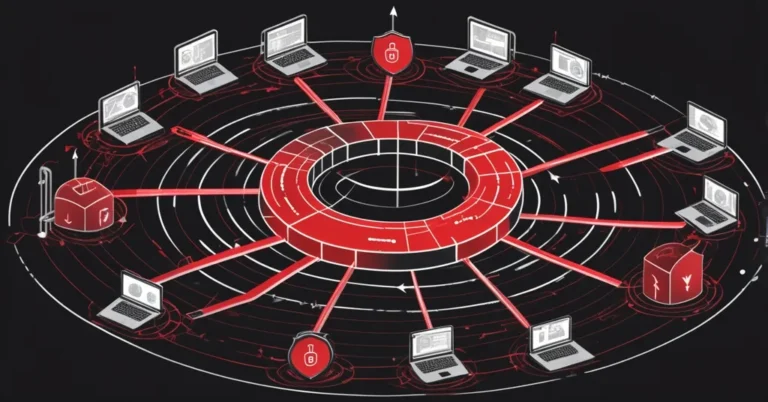
Federated LoRA coordinates client-side LoRA training, server-side aggregation, and evaluation so private text stays local and only lightweight adapter parameters traverse the network.
Prototype demo — what you can run in Colab
A practical end‑to‑end notebook demonstrates the pattern and adapts to the runtime environment. Key toolset highlights:
- Flower — federated learning orchestration and simulation.
- Hugging Face Transformers — model and tokenizer APIs.
- PEFT — tooling to attach LoRA adapters.
- bitsandbytes — k‑bit quantization for smaller memory footprints on GPUs.
- Ray — optional distributed simulation backend.
- Demo code: example repo and notebook available at the Marktechpost GitHub account.
The notebook simulates a small federation (for example, three clients, a few rounds of training), adapts automatically to GPU or CPU (TinyLlama 1.1B Chat on CUDA; distilgpt2 fallback on CPU), runs local evaluation before and after updates, and builds a final LoRA‑augmented model for inference validation.
Concrete vignette
An insurance company pilots federated LoRA to adapt a claims‑triage assistant. Each regional office trains adapters on its claims notes (sensitive PII removed if necessary). Weekly, the regional adapters are aggregated and redistributed. Regions keep local adapters for custom workflows while benefiting from cross‑region improvements to the shared adapter.
Privacy, security & known limits
Exchanging only adapter weights reduces what you broadcast. That lowers exposure. It does not, however, make you immune to sophisticated attacks.
- Not a formal privacy proof: Adapter updates can still leak information through membership inference, model inversion, or gradient leakage attacks.
- Mitigations required for high‑risk data: Add differential privacy (DP) to client updates, use secure aggregation or multi‑party computation (MPC), and maintain strong access controls and audit logs.
- Heterogeneity and client churn: Real clients differ in data volume and quality. FedAvg works but may need adjustments (adaptive weighting, robust aggregation) when some clients dominate or behave maliciously.
Sending only adapter weights reduces exposure and bandwidth, but think “reduced risk” not “risk eliminated.” Formal protections (DP, secure aggregation) are required for regulatory guarantees.
Production considerations & scaling
Pilots in Colab are useful for validation. Production deployments add operational dimensions:
- Orchestration: Use a robust federated orchestration platform (Flower, custom controllers) that handles scheduling, retries, and client authentication.
- Communication efficiency: Compress adapters, schedule off‑peak uploads, and implement delta compression for partial adapter updates.
- Versioning & rollback: Treat adapters like code artifacts: version them, sign them, and support quick rollback to a safe adapter snapshot.
- Safety & validation: Validate aggregated adapters in a sandbox with test suites that check for hallucinations, policy violations, and alignment regressions before rollout.
- Monitoring & drift detection: Track metrics per client and globally: perplexity, precision/recall on labeled tasks, and user feedback signals.
- Governance: Maintain a threat model, an approval flow for adapters, and a data retention policy for training artifacts and logs.
Pilot checklist for teams
- Pick a representative, small dataset per client and run the Colab demo to validate concept and UX.
- Perform a privacy threat model: which attacks matter for your data class? Decide DP epsilon budgets if needed.
- Instrument secure channels (TLS), client auth, and server hardening before any cross‑site exchange.
- Set up a validation pipeline: automated tests, safety checks, and manual review gates for any aggregated adapter.
- Define rollback procedures and SLAs for client availability and orchestrator uptime.
- Assign an owner for long‑term governance of the personalization program.
Key takeaways
- Federated LoRA is a pragmatic route for privacy‑conscious model personalization: it keeps raw text local and exchanges compact adapter weights for aggregation.
- It’s feasible to prototype in Colab, but production requires privacy hardening (DP, secure aggregation), robust orchestration, and governance.
- Adapter sizes and communication savings are substantial: adapters are often megabytes versus multi‑GB model checkpoints, making iterative personalization practical.
Questions & concise answers
- Can you fine‑tune an LLM on private texts without sending the texts to a server?
Yes — clients can train LoRA adapters locally and only transmit adapter weights. Raw text remains on the client or inside the organization’s silo.
- Is prototype work feasible in Colab?
Yes — the demo adapts to CPU or GPU runtimes, uses TinyLlama or distilgpt2 as fallbacks, and demonstrates the full federated LoRA loop end‑to‑end.
- Does exchanging only LoRA adapters eliminate privacy risks?
No — it reduces bandwidth and exposure but does not prevent advanced model‑extraction or inversion attacks. Use differential privacy and secure aggregation for stronger guarantees.
- How does the server combine client updates?
FedAvg — weighted averaging of client adapter deltas — is the basic strategy. More robust aggregation methods may be needed for heterogeneous or adversarial fleets.
Technical appendix (quick reference)
- Common components: Flower (federated orchestration), Hugging Face Transformers, PEFT (LoRA), bitsandbytes (k‑bit quant), Ray (simulation), datasets & accelerate (training).
- Example LoRA hyperparameters from a prototype: rank R = 16, alpha = 32, dropout = 0.05. (Move these into tuning experiments for your data.)
- Training heuristics: small batch sizes and gradient accumulation help when running in constrained environments; LR ~ 2e‑4 with cosine warmup is a reasonable starting point.
- Adapter size vs model: Adapters are commonly in the 1–10 MB range versus full model checkpoints that are multiple GBs — a large practical saving for communication and storage.
- Repository & demo: starter notebooks and code can be found on the Marktechpost GitHub account: https://github.com/marktechpost. Look for the federated LoRA notebook and Colab quickstart in the README.
Next steps — a suggested plan for your team
- Run the Colab demo with a small, representative dataset from one team. Validate student metrics and observe output quality changes.
- Complete a privacy threat model and decide on DP/secure aggregation needs.
- Design a validation pipeline for safety tests and a rollout plan with rollback controls.
- Scale progressively: from a handful of clients to dozens, then hundreds — measuring communication, compute, and model quality tradeoffs at each step.
FAQ
- Can Federated LoRA work with commercial LLMs?
Yes, if the model’s license permits adapter application. Confirm compatibility and licensing before integrating with proprietary models.
- Is FedAvg the only aggregation option?
No. FedAvg is simple and widely used. For heterogeneous or malicious clients consider robust aggregators (median, trimmed mean) or adaptive weighting.
- How do I choose DP parameters?
DP tuning depends on data sensitivity and regulatory requirements. Start with conservative privacy budgets, consult privacy engineers, and simulate the utility/privacy tradeoff.
Federated LoRA is not a silver bullet, but it is a practical lever for organizations that need to personalize LLMs without centralizing private text. Use it to run controlled pilots, validate privacy mitigations, and build the monitoring and governance that production deployments demand.