
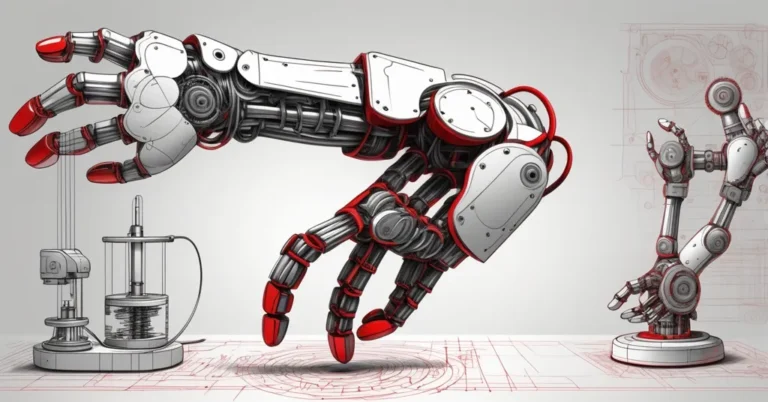
Brains over Brawn: How Robotic Foundation Models Make Cheap Robot Arms Smarter
TL;DR
- Physical Intelligence trains large, general-purpose “robotic foundation models” on messy, real-world interaction data so inexpensive robot arms can perform many tasks with less per-robot engineering.
- The startup has raised over $1 billion and is valued near $5.6 billion; most of the spend is on compute, not exotic hardware.
- Near-term wins are likeliest in logistics, grocery and light manufacturing; home robots and delicate human-facing tasks still face safety, supply-chain and social hurdles.
What they’re building — plain and simple
Physical Intelligence is training what it calls robotic foundation models: large, general-purpose models trained on broad physical interaction data so the same “brain” can be reused across different robot arms and tasks. Think “ChatGPT, but for robots”—a single model that understands how to grasp, push, pick, and compensate for messy real-world physics, then adapts to a new arm or conveyor belt with far less additional engineering.
The team combines academic robotics credibility (UC Berkeley’s Sergey Levine and ex-DeepMind researchers like Quan Vuong) with venture muscle from Lachy Groom, a Stripe veteran who is funding and running the company, and backers including Khosla Ventures, Sequoia and Thrive Capital.
“It’s like ChatGPT, but for robots,” Sergey Levine said, describing models trained from collected physical interaction data.
Why this matters to business leaders
For executives evaluating AI automation, the promise is straightforward: lower the marginal cost of onboarding new robot hardware and shorten pilot-to-scale timelines. If a single generalist model can be fine-tuned quickly to a new arm or task, companies can buy cheaper arms, avoid bespoke software integrations for every vendor, and deploy more broadly across warehouses, small factories and retail stores.
Key commercial implications:
- Faster pilots: Reusing a shared model reduces per-pilot engineering, so a pilot that previously took months to integrate could be compressed.
- Lower capital cost: Off-the-shelf arms commonly appear in bundled retail configurations around $3,500; Physical Intelligence estimates raw materials cost under $1,000. The idea: spend more on compute and software, less on specialized hardware.
- Vendor flexibility: Cross-embodiment learning reduces lock-in—shop-floor hardware swaps become less painful if the model adapts quickly.
How it works (without the academic jargon)
The approach layers three practical pieces:
- Data collection in real settings. Test stations and “test kitchens” gather diverse, messy interaction data: different objects, surfaces, lighting, and human presence. Partners include warehouses, grocery stores, small manufacturers (a local chocolate maker, for example) and home-like settings.
- Large-scale model training. The bulk of spending goes to GPUs and large-scale training runs to build a generalist model that encodes physical behaviors across many contexts.
- Transfer and fine-tuning. When deploying to a new arm, teams fine-tune the foundation model with a smaller amount of platform-specific data—cutting onboarding time and cost versus training from scratch.
Sensors matter. Vision cameras, force-torque sensors and sometimes touch sensors provide the raw inputs. Models learn to predict actions that reliably move real objects, account for friction and deformation, and take safe actions around people. That practical, physical intuition—”physical common sense”—is what differentiates a model that only understands images from one that can handle a slippery package on a tilted conveyor.
A short vignette: teaching a cheap arm to pick chocolates
Imagine a small chocolatier wants automation for packaging. A $3,500 bundled arm is tempting but fragile and imprecise. Physical Intelligence runs a pilot:
- Collects hours of footage of workers picking chocolates, plus sensor data when the arm attempts the same tasks in a test kitchen.
- Trains a foundation model on diverse picks: soft chocolates, different tray spacings, occasional misaligned pieces.
- Fine-tunes the model for the chocolatier’s arm and conveyor geometry with a few dozen minutes of additional real attempts and human corrections.
- Initial deployment hits targets for throughput but shows failure modes—sticky wrappers, variable temperatures affecting chocolate texture—flagging where human oversight or improved grippers are needed.
Result: a usable automation for repetitive steps with lower integration cost than a custom-built industrial robot—but not a plug-and-play replacement for skilled human packers yet. That’s a common mid-term ROI profile for many pilots: decent productivity lift, clear failure modes to fix, and a roadmap for incremental improvements.
Real constraints you can’t paper over
Robotics still runs into practical barriers that cloud-only AI avoided:
- Hardware fragility and lead times. Physical parts break, suppliers have long lead times, and cheap arms have narrower operating envelopes.
- Safety and regulation. Human-facing environments require validated safety measures, sensors, and often human-in-the-loop controls that slow deployments and add cost.
- Sim-to-real gap. Physics simulations help, but simulated behaviors don’t perfectly match messy, real-world interactions—models need real data to be robust.
- Integration complexity. Grippers, belts, vision systems and conveyor timing all must work together. Software improvements reduce but don’t eliminate this systems engineering work.
The competitive framing: research-first vs commercialization-first
Physical Intelligence has taken a research-first posture: spend heavily on compute and data to build a broadly capable model that pays off later. That contrasts with commercialization-first rivals, like Skild AI, which emphasize rapid deployment, simulation-based development and near-term revenue. Skild publicly noted revenue in the tens of millions over a short period and argues some foundation approaches lack physics-grounded training.
Neither path is guaranteed to win. The likely market: a mix. Specialized, pragmatic systems will grab straightforward dollar wins now (logistics, perimeter security, repetitive assembly). Generalist robotic brains could unlock higher-value, cross-domain automation later—if they prove safe, reliable, and cost-effective at scale.
For the C-suite: checklist to evaluate robotics vendors
- Data and model portability: Can the vendor transfer models across your existing hardware, or do you need new arms?
- Integration time: What is the typical pilot timeline from integration to measurable KPIs?
- Failure-mode transparency: Do they report common failure cases and remediation steps?
- Safety certifications and human-in-loop controls: What guarantees and processes exist for human safety?
- Cost breakdown: Ask for a TCO comparison—hardware, compute/licensing, integration, and ongoing maintenance.
- Data ownership and privacy: Who owns the collected interaction data and models derived from your site?
What to watch next
- Pilot announcements from major retailers and logistics players—proof that cross-embodiment models can scale in complex environments.
- Regulatory guidance around robots operating near people—new rules could raise compliance costs.
- Milestones from Physical Intelligence and rivals: commercialization dates, revenue disclosures, and published benchmarks tied to real-world tasks.
- Advances in tactile sensing and low-cost gripper durability—improvements there shrink the gap between clever software and reliable hardware.
Glossary: quick terms for boardroom conversations
- Robotic foundation model — A large, general-purpose model trained on diverse physical interactions that can be adapted to many tasks and platforms.
- Transfer learning — Reusing a trained model for a new robot or task with less extra training.
- Cross-embodiment learning — The ability to apply knowledge learned on one robot body to another, lowering onboarding costs.
- Sim-to-real gap — The difference between simulated physics and messy real-world interactions that models must overcome.
- Physical common sense — Understanding of weight, friction, deformation and safe interactions that lets robots act reliably in the physical world.
Final forecast for decision-makers
Expect a two-track market over the next 12–36 months. Practical, specialized automations will continue to generate near-term ROI for predictable tasks in logistics and light manufacturing. At the same time, research-first plays that build robust robotic foundation models could shift the playing field over several years by reducing per-platform engineering costs and enabling more flexible automation. Executives should pilot both approaches strategically: buy pragmatic solutions for immediate savings, and run targeted pilots with foundation-model vendors to maintain optionality if those generalist brains prove their promises on safety, cost and reliability.
Want to take action now? Start with a small, well-scoped pilot that isolates integration risk, demands transparent failure metrics, and clarifies who owns the data. That lets you capture immediate value while keeping a seat at the table when the next generation of robot brains arrives.