
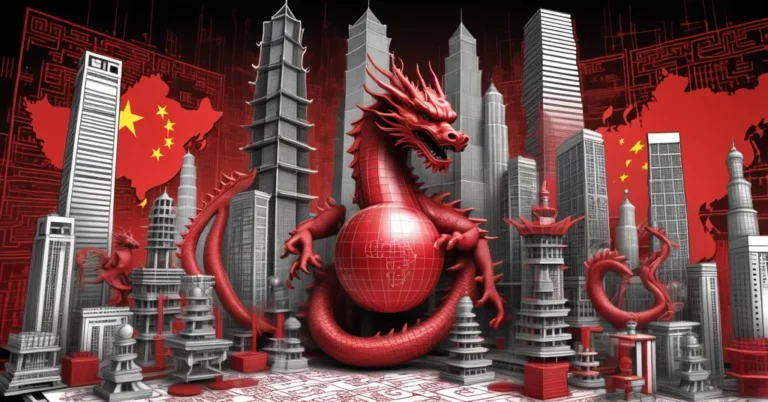
China Trains MoE Models on a Fully Domestic Stack — Business & Geopolitical Implications
Mixture-of-Experts (MoE) models are no longer just an academic curiosity inside labs — they’re central to a strategic race over who controls the AI stack. TeleAI, the research arm of China Telecom, says it trained TeleChat3, a family of MoE large language models, end-to-end on a fully domestic stack: Huawei’s Ascend 910B chips and the MindSpore framework. That combination of architecture and nationalized infrastructure has immediate implications for AI supply chains, vendor risk, and enterprise strategy.
Why TeleChat3 matters
Think of a Mixture-of-Experts model like a specialist call center: instead of every question being handled by every agent, calls (tokens) get routed to the few specialists best equipped to answer. That routing lets models grow to hundreds of billions or even trillions of parameters while keeping average compute per token lower than a dense model of equivalent size. The trade-off is engineering complexity — routing, memory sharding, and inter-node communication become hard problems at scale.
TeleChat3 reportedly ranges from roughly 105 billion parameters up to models TeleAI calls “trillions.” The team credits Huawei hardware and software for handling the burden of MoE training. As TeleAI puts it:
“the platform met the ‘severe demands’ of training large-scale MoE models and ‘address[ed] critical bottlenecks in frontier-scale model training.’”
That statement is both technical and political: training frontier-scale MoE models without Western silicon or core frameworks is a milestone along Beijing’s five-year push for AI self-reliance, a drive accelerated by recent US export controls and entity listings that limit access to advanced chips and tools.
What Mixture-of-Experts actually buys you — and what it doesn’t
MoE models are an attractive lever when premium GPUs are scarce. They allow teams to present larger parameter counts and richer capacity without linearly multiplying costly compute. But the practical benefits depend on a cluster of supporting systems:
- Distributed systems engineering to keep routing latency negligible.
- Optimized kernels and frameworks that squeeze performance from the chip/fabric.
- High-quality, well-curated training data and validation pipelines.
- Operational tools for serving, load-balancing, and monitoring expert routing in production.
Without these elements, a large MoE model can be expensive to train, awkward to deploy, and inferior on benchmarks to a smaller but better-optimized dense model.
Benchmarks and the parity question
TeleAI’s public benchmarking shows TeleChat3 trailing OpenAI’s GPT-OSS-120B on several evaluations. That gap underscores a simple point: silicon and framework parity are necessary but not sufficient. The remaining gaps are likely in model engineering, optimization tricks, dataset scale and curation, and long-tail tooling — areas that mature ecosystems polish over years.
Chinese groups are closing some of those gaps. DeepSeek’s V3 (December 2024) helped popularize MoE inside China, and a Tsinghua-linked image model reportedly topped open-source image-generation scores on Huawei chips. Ant Group has also claimed training a 300-billion-parameter MoE “without premium GPUs.” Those announcements show capability and ambition, but details remain sparse: exact chip inventories, training recipes, and reproducible benchmark data are not always public.
Supply-chain and market ripple effects
Geopolitics has tangible market consequences. The US approved sales of Nvidia’s H200 accelerator to China, but media reports indicate some H200 shipments were later blocked or delayed at customs, prompting component suppliers to pause production pipelines. Nvidia publicly argues that its GPUs and ML frameworks remain the best tools globally for training large-scale MoE models; the reported shipment frictions coincided with a single-day share decline of roughly 3% for Nvidia and assorted moves for competing chipmakers.
At the same time, Chinese tech indices have shown outperformance in recent windows — a local tech gauge was up roughly 13% and a Hong Kong Chinese tech measure up about 6% in the referenced month, both outperforming Nasdaq 100 returns. Those market swings reflect both optimism about domestic stack progress and volatility tied to policy signals and supply uncertainty.
The broader takeaway for planners: export approvals from one government don’t remove endpoint frictions. Customs enforcement, supplier readiness, and diplomatic signaling all layer on top of policy and can introduce sudden operational headaches.
What this means for business leaders
Three strategic realities follow from the TeleChat3 milestone.
- Multi-stack reality is increasingly likely. Expect at least two optimized ecosystems — a US-led stack centered on Nvidia GPUs and PyTorch/TensorFlow tooling, and a China-led stack built around Ascend chips and MindSpore — each with their own accelerators, optimizations, and operational playbooks.
- Model portability will be a competitive advantage. Firms that design for hardware-agnostic deployments, standard export formats (ORT/ONNX), and cross-stack testing will reduce vendor lock-in and incident risk.
- Engineering and data matter as much as silicon. The top-performing models combine hardware, firmware, and vast investments in data pipelines, reproducible evaluation suites, and inference-serving systems. Chasing parameter count headlines without that engineering investment will underdeliver.
Questions leaders should be ready to answer
Can large MoE models be trained entirely on Chinese hardware and software?
Yes — TeleChat3 claims end-to-end training on Huawei Ascend 910B chips and MindSpore, signalling a domestic-stack capability.
Are domestically trained Chinese MoE models matching top Western models today?
Not consistently — TeleAI’s benchmarks show TeleChat3 trailing GPT-OSS-120B on several evaluations, indicating remaining gaps beyond hardware.
Does MoE remove the need for premium GPUs?
MoE reduces average compute per token and enables larger parameter counts, but routing complexity, memory patterns, and systems engineering still require significant infrastructure and expertise.
Are chip and export-policy frictions transient or a durable bifurcation risk?
They create immediate supply-chain risk and raise the odds of a longer-term bifurcation as countries invest to close gaps domestically; planning for a multi-stack future is prudent.
Practical checklist for CIOs and product leaders
- Audit your AI supply chain: map which components (chips, frameworks, managed models, pre-trained weights) are single-sourced and whether they cross jurisdictions.
- Build portability tests: export models to ONNX/ORT, run inference on alternative accelerators, and measure performance and cost delta.
- Negotiate SLAs and support: for any critical hardware/stack, secure cross-border support commitments and firmware update guarantees.
- Invest in distributed-systems talent: MoE and other large-scale paradigms require engineers familiar with sharding, routing, and network bottlenecks.
- Validate vendor benchmarking claims: insist on reproducible evaluation suites and raw metrics rather than headline parameter counts.
- Plan multi-cloud or multi-stack deployments where strategic workloads require resilience against supply shocks or geopolitical disruption.
Questions to ask your AI vendors
- Where were your largest models trained? Request specifics on hardware, frameworks, and any third-party providers.
- Can you provide a reproducible benchmark suite? Ask for data, evaluation code, and settings used to produce public numbers.
- How portable is your model to alternative accelerators? Test conversions to ONNX and run basic inference across at least two hardware backends.
- What’s your support plan for firmware and security updates? Confirm timelines and cross-border servicing options.
Risks and unknowns to watch
Several open questions will determine how quickly domestic-stack models become enterprise-grade alternatives:
- Data provenance and scale — public claims rarely include training corpora details; data quality is a major driver of downstream performance.
- Reproducibility — many announcements omit full training recipes or hyperparameters needed for independent verification.
- Operational costs — unit inference cost, latency for routing-heavy MoE models, and maintenance overhead could offset parameter-count advantages.
- Policy volatility — customs, export rules, and diplomatic actions can rearrange vendor availability on short notice.
Suggested visuals and alt text
- MoE vs Dense Model Routing Diagram — alt text: “Diagram comparing Mixture-of-Experts token routing to dense model processing.”
- Timeline of Recent China AI Milestones — alt text: “Timeline showing December 2024 DeepSeek V3, TeleChat3 release, and export-control events.”
- Stack Comparison Table (Ascend 910B vs Nvidia H200) — alt text: “Table summarizing key specs and ecosystem maturity for Ascend 910B and Nvidia H200.”
The technical achievement of training large MoE models on a domestic stack is real and strategically meaningful. That progress does not immediately erase the advantages of mature toolchains, datasets, and operational know-how concentrated in other ecosystems. For business leaders, the sensible response is not panic but preparation: assume a multi-stack future, stress-test portability, and prioritize vendor transparency. The next few quarters will be noisy with competitive signaling and market gyrations — the companies that plan for portability and resilience will convert disruption into advantage.