
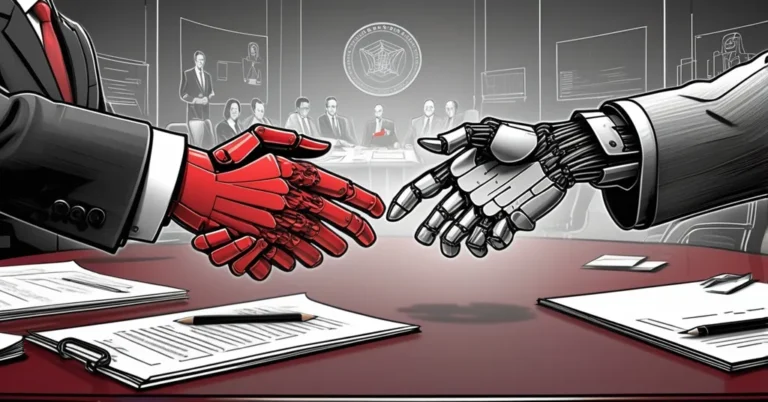
When AI Labs Met the Pentagon: Why Tech’s Ethics Became Defense Partnerships
TL;DR: In under a year, several leading AI labs shifted from public limits on military use to formal defense partnerships. The drivers were economic (very high model costs), infrastructural (cloud contracts and secure environments), human (hires and board moves), and geopolitical (US–China competition and rising techno‑nationalism). Boards should treat defense deals as strategic inflection points — not ethical checkboxes — because they reshape talent, markets, export risk, and public trust.
Fast timeline, fast pivot
The change was rapid. Early in 2024 Anthropic, Google, Meta, and OpenAI had public statements restricting military applications of their models. Within about a year many of those positions shifted: OpenAI rescinded restrictions and engaged on Pentagon projects (January 2024); Meta authorized use of Llama by the US and select allies (late 2024); Anthropic announced a defense partnership with Palantir and relaxed its restrictions; OpenAI moved into collaboration with Anduril; and Google revised its AI principles in February 2025 to allow development and use of weapons-related technologies.
Those moves were not isolated PR backtracks. They are best read as a coordinated structural reaction: a market and political environment that began to reward alignment with national security priorities and to make defense funding an efficient way to amortize the huge costs of building frontier AI.
Why AI labs pivoted to defense partnerships
Costs push choices. Training and iterating on GPT‑class, general‑purpose models consumes enormous compute and engineering resources. Estimates for top-tier model development run from tens to hundreds of millions of dollars depending on scale and rounds of fine-tuning. Government contracts offer patient, large-scale revenue that helps spread that cost and de‑risk commercialization.
Cloud becomes the conduit. Major cloud providers — Amazon Web Services, Microsoft Azure, Google Cloud — are not neutral utilities. Longstanding intelligence and defense contracts mean these clouds already host classified workloads, provide specialized secure environments, and offer procurement paths for defense customers. That infrastructure makes it operationally straightforward to move from commercial pilots to defense deployments.
People and signals matter. Hiring former intelligence officials, appointing national‑security veterans to boards, and venture capital signaling create social proof. When top funds and founders signal openness to defense work, more startups and execs follow — especially when capital markets reward scale and direct revenue.
Geopolitics and rhetoric reshape incentives. A shift in public framing — from “engage with China” to “compete with authoritarian states” — legitimized defense ties as strategic necessity rather than ethical compromise. A growing techno‑nationalist current in the tech ecosystem explicitly prizes reshoring, state contracts, and alignment with national security goals.
“General‑purpose technologies such as GPT accelerate faster with a large, demanding, and revenue-generating application sector,” as David J. Teece has argued — a succinct economic logic for defense funding as a catalyst for model progress.
Concrete examples that matter for boards
- Policy reversals: Several labs publicly shifted policies between 2024 and early 2025 to permit or engage with defense customers.
- Partnerships: Anthropic partnered with Palantir; OpenAI entered collaborations with defense-oriented firms; Meta opened Llama to US/allied defense use. These are direct commercial and technical linkages, not merely permissive licensing edits.
- Cloud contracts: Large cloud providers’ long history of intelligence contracts means the same vendors supporting commercial AI are positioned to support classified or defense deployments.
Immediate consequences — four front‑level impacts
Talent and culture. Defense work attracts certain talent (security-cleared engineers, ex‑defense personnel) and repels others (staff with ethical objections). Expect higher churn in teams where classified projects and commercial roadmaps collide.
Regulatory and export risk. Defense ties invite export controls, investment screening, and potential market fragmentation. Firms with national‑security alignments may face restricted access in other jurisdictions and heighten geopolitical countermeasures.
Product strategy forks. Dual‑use systems can split into classified and open commercial variants, complicating roadmaps, testing regimes, and compliance requirements for both lines.
Reputational exposure. Employee dissent, activist campaigns, and customer backlash become real governance risks. Boards must manage communications, disclosure, and commitments to employee recourse.
The safety vs. arms‑race tradeoff
Direct state involvement can improve certain safety practices: classified testing environments, rigorous operational evaluation, and formal certification paths. But it can also accelerate deployment pressure, prioritize near‑term capability over long‑term systemic risk mitigation, and reduce transparency — constraining independent auditing and public scrutiny.
Which effect dominates depends on governance design. State funding plus robust public oversight and interagency safety standards can institutionalize better practices. State funding without transparency or independent checks risks an unchecked acceleration of dangerous capabilities.
What boards and executives should do now
Defense partnerships change the game. Here’s a practical checklist for C‑suite leaders, general counsel, and board members to translate strategy into governance.
- Map exposures. Identify all revenue streams, partnerships, and cloud dependencies tied to national‑security customers or secure government environments.
- Quantify costs vs. strings. Assess how defense contracts affect product roadmaps, IP rights, data governance, and downstream commercialization opportunities or restrictions.
- Update risk registers. Add scenarios for export controls, sanctions, and market fragmentation. Model revenue sensitivity to restricted geographies.
- Create a conflict policy. Define how classified work may diverge from commercial commitments, and set rules for personnel rotation and ethical recourse.
- Require independent red teams. Mandate dual‑track safety reviews (internal and independent) for dual‑use systems before any defense deployment.
- Preserve staff options. Offer clear policies on dissent, opt‑outs, and whistleblower protections for employees uncomfortable with military work.
- Prepare a communications playbook. Pre‑draft public and customer messages for potential controversies tied to defense work.
- Engage policymakers. Participate in democratic governance of AI — help shape export‑control rules and procurement standards that balance security and openness.
Three scenarios to watch
- Safety institutionalized (best case): Governments create transparent procurement and auditing standards; defense funding helps professionalize safety engineering. Trigger: coordinated public procurement standards and multilateral testing regimes.
- Market fragmentation (probable): Export controls and procurement preferences split global AI markets into blocs, forcing firms to juggle incompatible compliance regimes. Trigger: accelerated export controls and reciprocal trade measures.
- Arms‑race acceleration (risk): Competitive pressure prioritizes speed over safety across firms and states, reducing cooperation on shared safeguards. Trigger: public framing that equates speed with decisive strategic advantage and substantial defense procurement tied to rapid fielding.
Short checklist for functional leaders
- HR: Audit teams for clearance needs and retention risks; offer clear policies for staff assignment to classified projects.
- Legal & Compliance: Map IP encumbrances, export‑control exposures, and procurement contract clauses.
- Product & Engineering: Institute mandatory red‑team reviews and separate development pathways for classified variants.
- Communications & Investor Relations: Prepare investor disclosures and customer-facing FAQs on defense engagements.
“A once‑dominant Silicon Valley Consensus that prized globalization and light regulation is fracturing; what replaces it matters — for markets, safety, and geopolitics.” — Nick Srnicek
What this means for AI for business and automation strategies
For commercial buyers of AI automation, sales leaders, and product strategists the entanglement between AI labs and defense creates both risk and opportunity. On one hand, defense validation of robustness may raise trust in certain enterprise use cases (secure automation, mission‑critical agents). On the other, tighter export rules and split model variants inflate vendor lock‑in risk and complicate multi‑region deployments.
Procurement teams should insist on contractual clarity about data provenance, model lineage, update cadences, and audit access. Sales and partnerships must evaluate whether a supplier’s defense ties will constrain joint go‑to‑market approaches or customer trust in sensitive sectors.
Final note for leaders
Defense partnerships are not merely moral dilemmas — they are strategic inflection points that reshape competitive positioning, regulatory exposure, and organizational culture. Boards and executives must stop treating them as checkboxes and start treating them as portfolio decisions that require explicit governance: measurable risk limits, employee protections, independent safety reviews, and transparent stakeholder communications.
Decisionmakers who proactively map exposures, update governance, and engage with policymakers will be best positioned whether the next decade brings tighter safety institutionalization, fractured global markets, or an accelerated strategic competition. The single Silicon Valley playbook is gone; the next dominant model will be written by companies and governments that choose not only where to sell AI, but how to govern it.